
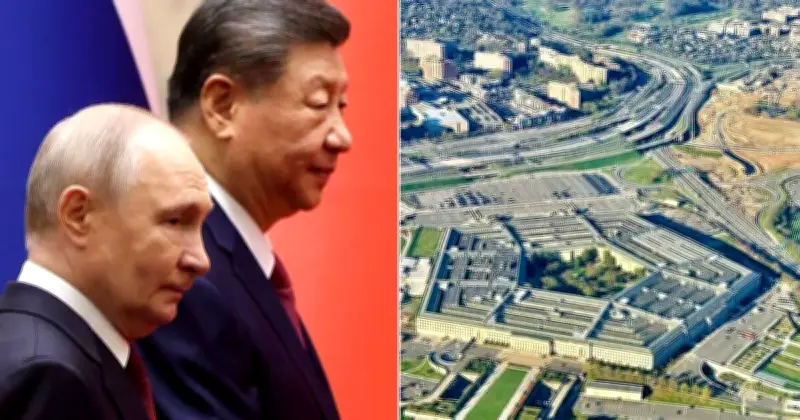
The Pentagon is rewriting its nuclear strategy in preparation for a potential conflict with Russia and China, according to a newly published report. The overhaul, led by Defence Department policy chief Elbridge Colby, emphasizes the possible use of shorter-range tactical weapons in the event of a regional war.
Shift from Cold War Doctrine
NBC News, citing five sources familiar with the plans, reports that the new draft represents a significant departure from decades of established U.S. nuclear doctrine. The strategy focuses on tactical options—shorter-range weapons designed for battlefield deployment—rather than the long-range arsenal associated with Cold War deterrence.
The primary objective, should such a conflict materialize, would be to prevent it from escalating into a full-scale nuclear exchange and to stop either China or Russia from exploiting a moment when Washington's focus was directed elsewhere.
Taiwan Concerns
Among the foremost concerns regarding China is the prospect of an invasion of Taiwan. On Wednesday, August 5, Taiwan launched its annual military exercises to rehearse its response to a potential Chinese invasion. The live-fire exercises are designed to assess the Taiwanese military's ability to sustain round-the-clock defensive operations and counter China's "gray-zone tactics," which stop just short of outright military confrontation. Civil preparedness drills will gauge how the population copes with disruptions to internet connectivity.
Russia and Nuclear Escalation
Concerns over nuclear escalation continue to loom over Russia and the ongoing conflict in Ukraine. In May, Belarus' authoritarian President Alexander Lukashenko confirmed he had allowed Russia to station some of its tactical nuclear weapons on Belarusian soil. In December, Russia announced that its latest intermediate-range nuclear-capable Oreshnik missile system had become fully operational in Belarus, a country that shares borders with Ukraine and NATO members Poland, Latvia, and Lithuania. In 2024, the Kremlin unveiled a revised nuclear doctrine that brought Belarus under Russia's nuclear protection umbrella.
Russian President Vladimir Putin has stated that Moscow will retain control over its nuclear weapons deployed in Belarus, but would allow its ally to select targets in the event of conflict.
Global Threat Warning
Earlier this year, in May, Mauro Miedico, Director of the U.N. Counter-Terrorism Center (UNCCT), warned that "the threat has never been so high as it is today." He noted that terrorist groups and individuals engage much more strongly with new technologies, recruiting experts including AI specialists, and that drones have been used in terrorist acts. "This potentially makes it more possible that they will launch a dirty bomb via drone," he added.




