
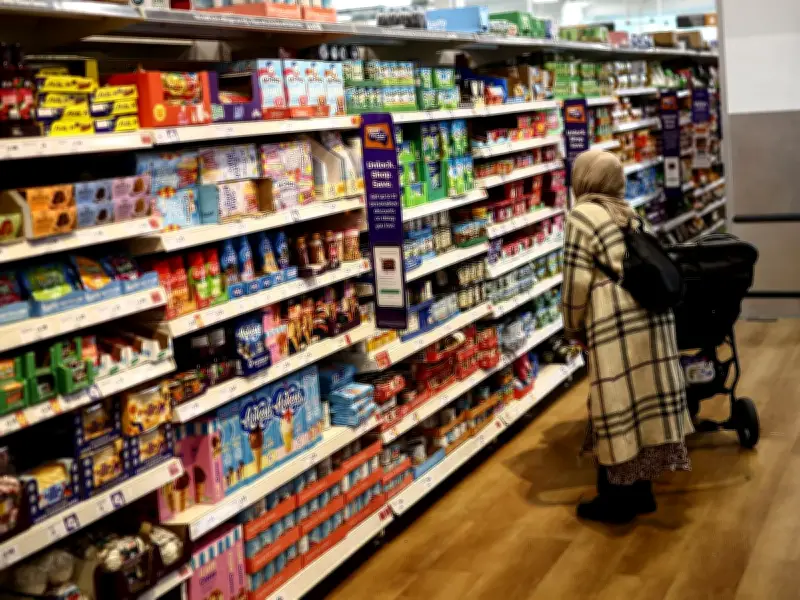
A petition on the Parliament website is calling for a new law that would stop supermarkets from throwing away edible food, with surplus stock instead donated to food banks and local charities. The campaign comes as research shows the scale of waste in UK grocery retail.
According to London Business School, supermarkets in the UK wasted around 200,000 tonnes of food, equivalent to more than 350 million meals, at a cost of about £1 billion per year.
Heatwave and drought hit harvests
The push for a food-waste law comes as the UK experiences another heatwave, adding to drought and successive heatwaves that followed a very wet winter. Farming leaders say they face “the worst harvest in years” and are asking the Government for more support to build resilience.
Gavin Lane, president of the Country Land and Business Association (CLA), which represents 28,000 farmers, said: “Farmers are telling us this is the worst harvest in years. A sodden winter followed by drought has left wheat at half its usual height and some crops not worth harvesting.”
Parts of the country are experiencing their third drought in five years, following droughts in 2025 and 2022. Lane said: “What was once extraordinary is becoming part of farming in Britain, and Government must start planning for it. We know that proper government investment in resilient farming systems, from reservoirs to wildfire prevention, could help farmers cope with these new extremes.”
He also said that a well-funded “sustainable farming incentive” – the main plank of the Government’s agri-environmental subsidy scheme – open to all farms regardless of size or type “would also give farmers a reliable source of income should the weather wipe out their harvest”.
“Farmers have shown again and again that they can adapt and deliver solutions, but resilience has limits. If we want them to keep feeding the country, they need proper support. Otherwise, this harvest could be their last,” Lane said.
Petition targets major supermarkets
The petition names Sainsbury’s, Tesco, Asda, Aldi, Morrisons, Waitrose and Lidl, and demands that all edible food be banned from disposal. It says: “Everyday, UK supermarkets throw away tonnes of edible food while millions of people rely on food banks to survive. We believe this is wrong, and that food that is safe to eat should not end up in bins when many families, pensioners, and workers are going hungry.
“We call for the Government to ban all supermarkets from throwing away all edible food, and require them to donate any surplus food that is edible and is approaching the best-before-date or with minor imperfections to be donated to food banks and local charities. Ending food waste could reduce hunger, cut environmental damage, and show real social responsibility. No one should go hungry while good food is thrown away.”
The petition has been signed by 6,800 people. If it reaches 10,000 signatures, it will trigger a response from the Department for Environment, Fisheries and Rural Affairs; at 100,000, it would be considered for debate in Parliament.
Industry and charities urge action on food security
Last week, major food companies including Tesco and Danone joined charities in a letter to Andy Burnham calling for food security to be made a national priority on a par with energy and defence. The letter, also signed by Sainsbury’s, Aldi, Waitrose, Co-op, Barnardo’s, Amnesty International UK, WWF-UK, health campaigners, investment companies and farming organisations, warns that the next “food shock” is inevitable.
The letter says: “Each new shock lands on a food system with less capacity to absorb it. British production of fruit and vegetables has fallen 16% since 2015, and we now import 78% of our supply. The next food shock is not a question of if, but when.” It adds that food must no longer be an afterthought for government, and that decisions across health, farming, planning and trade should secure better access to healthy, sustainable food for everyone.
It goes on to highlight the cost of inaction: “The cost of doing nothing on this issue is already falling on those with the least resource, with food insecurity already affecting 15% of households with children. Economic pressures continue to push a healthy diet further out of reach for many, with the NHS then left to pick up the bill.”
The letter urges Mr Burnham to introduce a Good Food Bill, described as a legally binding framework to improve national food and nutrition security, public health and food system resilience.




