
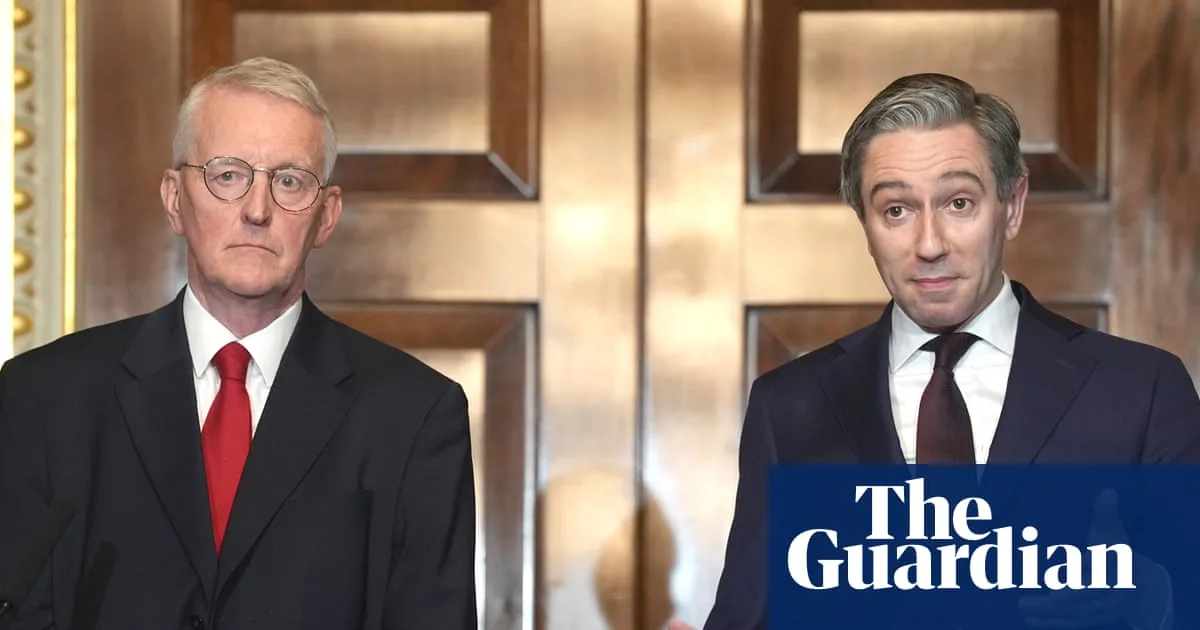
The British and Irish governments are set to announce a new framework for dealing with the legacy of Northern Ireland's Troubles, aiming to resolve a long-standing political issue. The proposals, to be outlined on Friday afternoon, will require legislation from both sides to create a reformed agency investigating Troubles-era crimes.
The move marks a shift from the controversial Legacy Act passed by the previous Conservative government in 2023, which granted amnesty from prosecution to former troops. The new framework has already drawn criticism from Lord Richard Dannatt, former head of the British army, who described potential investigations into elderly soldiers as 'vexatious'.
Northern Ireland Secretary Hilary Benn and Irish Foreign Minister Simon Harris will publish the proposals after a year of negotiations. Harris described them as 'a night and day improvement' on the Legacy Act. However, Ireland's interstate lawsuit against the UK at the European Court of Human Rights is expected to remain pending until new legislation is passed.
The framework will convert the existing Independent Commission for Reconciliation and Information Recovery into a new legacy commission with greater investigative powers. A separate agency will provide information to families seeking details about relatives' deaths. The Irish government insists the commission must comply with the European Convention on Human Rights.
The British government faces pressure from veterans' groups to shield former soldiers from prosecutions, while victims' groups seek truth and justice. Lord Dannatt warned against returning to what he called 'vexatious investigations', but Mark Thompson of Relatives for Justice disputed this characterisation, noting that almost 4,000 Troubles-related deaths remain unsolved.




