Prime Minister Sir Keir Starmer has robustly defended his government's first major Budget, stating it required everyone to make a contribution in order to safeguard vital public services and support families amid the ongoing cost-of-living crisis.
A Budget for 'Contribution' and Public Services
Chancellor Rachel Reeves unveiled a financial plan that sets Britain on a path to a record tax burden, implementing £26 billion in tax increases. This significant fiscal move was prompted by weaker-than-expected economic forecasts, which created substantial holes in the government's initial spending plans.
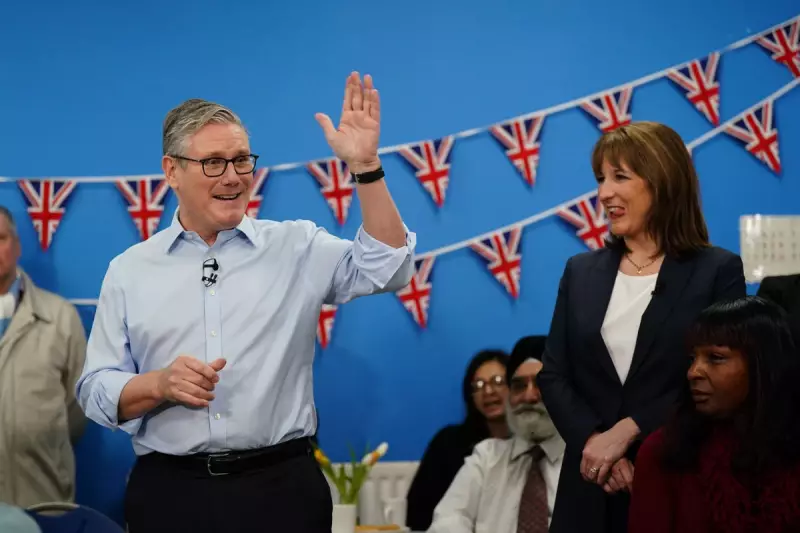
Sir Keir, speaking during a visit to a community centre in Rugby, Warwickshire, directly addressed the nation. He emphasised that the decisions were necessary to ensure the stability of the NHS and the quality of schools for future generations. He told the BBC, "We have asked everybody to make a contribution... to make sure that we can protect our NHS, which needs to be there for them and their families when they need it."

Scrapping the Two-Child Cap and Tax Changes
A central and costly measure in the Budget was the abolition of the two-child benefit cap, a policy the Prime Minister labelled as "abhorrent". This move is projected to cost £3 billion a year by 2029/30 but will lift an estimated half a million children out of poverty.
Rejecting claims that the announcement was a tactical move to appease restless Labour MPs, Sir Keir told Sky News, "It's impossible to argue that this is a position that has been adopted just in the last few weeks. It is my long-standing ambition. I'm proud to be the Prime Minister who has done more on child poverty than any prime minister ever."
To fund this and other government spending, the Chancellor opted against a large income tax rise, instead introducing a series of smaller levies. These new revenue streams include:
- A new pay-per-mile tax for electric vehicles.
- Increased taxes on online betting.
- A so-called "mansion tax" on properties valued over £2 million.
However, the government faces accusations of breaking its manifesto pledge not to raise taxes on working people. This stems from the decision to freeze income tax thresholds until 2030/31, a measure known as fiscal drag. The Treasury's own figures show this freeze will result in:
- 780,000 more basic-rate taxpayers.
- 920,000 more higher-rate taxpayers.
- 4,000 more additional-rate taxpayers by 2029/30.
Economic Outlook and Political Defence
The Budget was delivered against a backdrop of revised economic forecasts from the Office for Budget Responsibility (OBR). The watchdog downgraded growth forecasts for the coming years, including a reduction for 2026 from 1.9% to 1.4%.
Despite this, the Prime Minister pointed to a positive revision for the current year, with GDP growth for 2025 upgraded from 1% to 1.5%. "Growth was predicted at 2025 at 1%, the figures came in yesterday, it is 1.5%. It is 50% more than was forecast. That is significantly more," Sir Keir stated, expressing determination to continue defying pessimistic predictions.
In the face of criticism over tax rises, the Prime Minister's core message remained one of necessity and shared responsibility, framing the Budget as an essential step to build a stronger foundation for the country's public services and economic future.