Starmer's Unprecedented Admission: I Considered Manifesto Breach on Tax
Starmer Admits He Considered Income Tax Manifesto Breach

In a dramatic move to shield his Chancellor, Sir Keir Starmer has taken the unprecedented step of publicly admitting that he personally considered breaching a key Labour manifesto commitment on income tax.

A Defence That Binds Leader to Chancellor

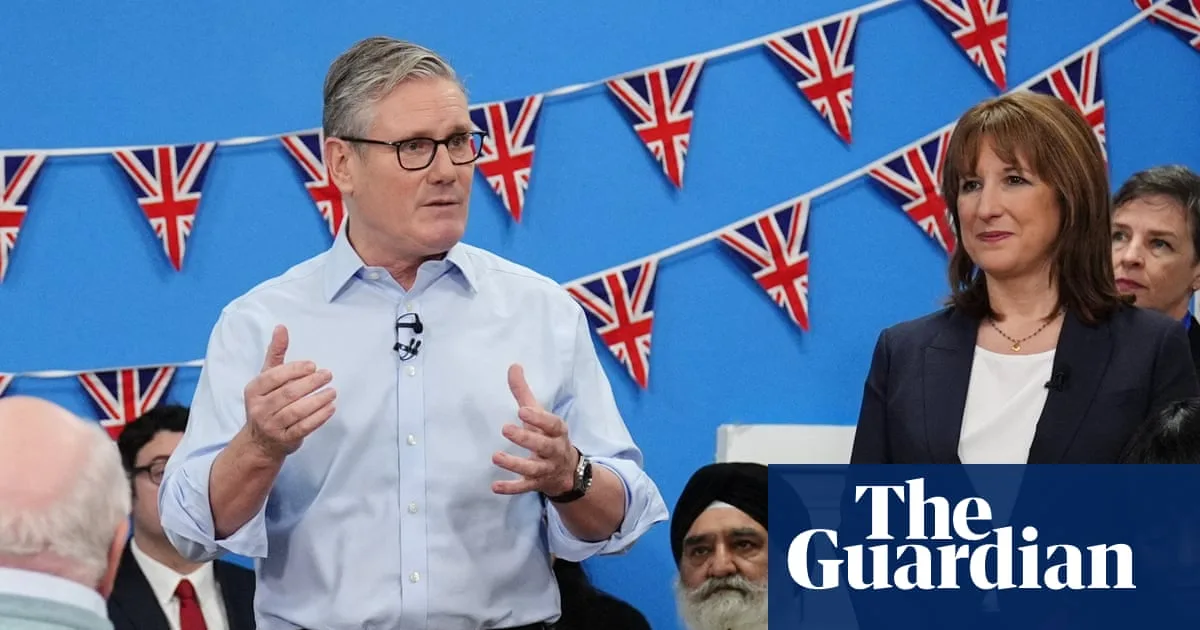
Assembling journalists at a community centre in Southwark on Monday morning, the Prime Minister sought to refocus attention on core budget measures like the cut to energy bills and the lifting of the two-child benefit cap. However, the conference became a striking display of loyalty to Rachel Reeves.

Starmer explicitly stated he was the one receiving the critical forecasts from the Office for Budget Responsibility (OBR) and considering the contentious move. "I didn't want to get to that place, but I recognised we might have to," he said, defending Reeves against accusations she misled the public and markets over the fiscal plans.

He firmly rejected claims of misleading conduct, stating, "There was no misleading – I simply don't accept it." Throughout an hour of questions, Starmer repeatedly underlined that the final choices in the budget were his own, binding his political fate ever closer to that of his Chancellor.

The Real Context: Political Survival Over Ambition

The decision to ultimately avoid a manifesto breach cannot be divorced from the context of Starmer's own precarious political position. The revelation comes in a week where his leadership faced renewed internal threat following briefings against Health Secretary Wes Streeting.

This episode highlights a critical reality: prime ministers almost never sack their chancellors, and doing so often precipitates their own downfall. Former Chancellor Kwasi Kwarteng famously warned Liz Truss of this exact consequence. Starmer now faces the same stark equation with Reeves.

Some economically literate Labour MPs express deep concern that this was a budget crafted for self-preservation, lacking in ambition while ordinary living standards continue to stagnate. Predictions point to the worst parliament on record for living standards, offering little hope for growth-minded MPs.

Fallout and the Blame Game

Starmer also turned his fire on the OBR, expressing "bemused" fury at the timing of a productivity downgrade and labelling the early budget leak due to poor cybersecurity a "serious error." The subsequent resignation of OBR chair Richard Hughes over the security failings has, in the view of some in Westminster, left Reeves more exposed.

Opposition attacks, including three separate calls from Conservative MP Kemi Badenoch for Reeves to be sacked, have thus far failed to land a decisive blow. However, the real risk to Starmer and Reeves may not be the opposition, but the restless Parliamentary Labour Party (PLP), dissatisfied with a safety-first fiscal approach.

While much of the PLP welcomes the end of the two-child benefit limit, there is precious little else in the budget to energise the party's base or outline a transformative vision for the economy. The budget's core purpose appears to be the preservation of the Prime Minister's authority, setting the stage for further internal tension ahead.