
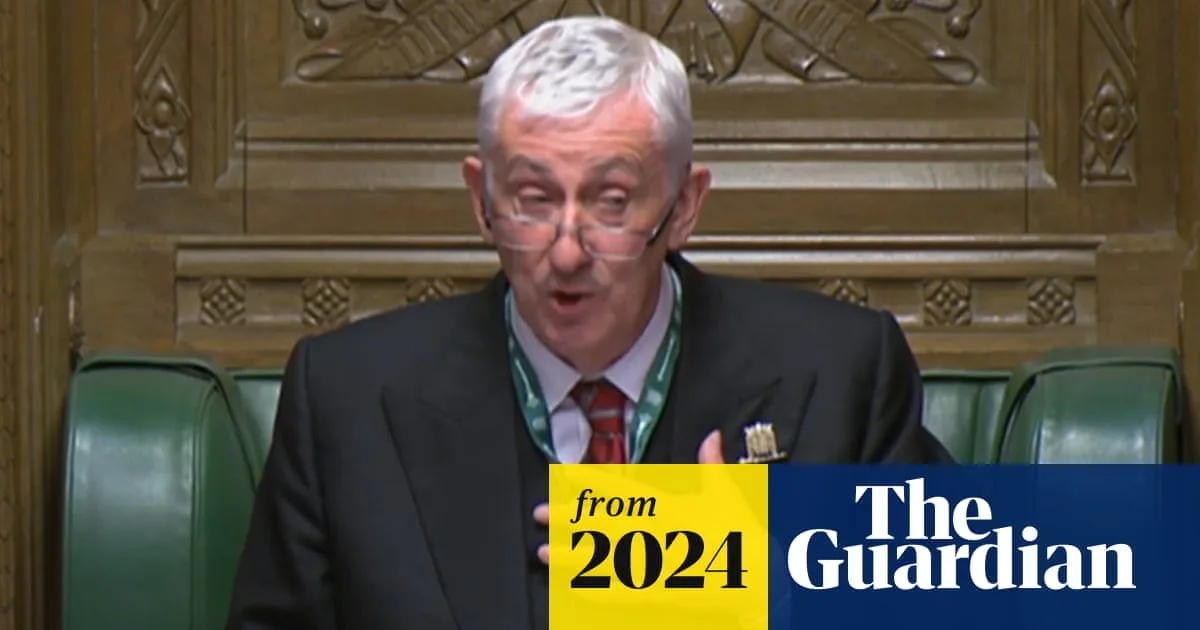
Commons Speaker Sir Lindsay Hoyle issued an unprecedented apology after a fractious and chaotic parliamentary debate on Gaza. The speaker said: “It is clear that today did not show the house at its best. I will reflect on my part in that of course.” He added: “I have tried to do what I thought was the right thing for all sides of this House. It is regrettable, and I apologise, that the decision didn’t end up in the place that I wished.”
The chaos arose after Hoyle upended years of parliamentary precedent by allowing Labour to bring its own amendment on Gaza to a vote. The move allowed Labour leader Sir Keir Starmer to avoid a major rebellion from his own MPs, who had threatened to back the Scottish National Party’s motion demanding an “immediate ceasefire” unless Labour offered its own alternative. Up to 100 Labour MPs were reportedly ready to rebel, with at least two shadow cabinet ministers prepared to resign.
Conservative and SNP MPs reacted with fury to Hoyle’s decision. Penny Mordaunt, the Leader of the House of Commons, announced the government would not participate in the votes, allowing Labour’s amendment to pass unopposed. She accused Hoyle of “hijacking” the debate and said he had “undermined the confidence of the Commons”. SNP Westminster leader Stephen Flynn said: “We have seen the SNP opposition day hijacked.”
Hoyle defended his decision, saying it was motivated by threats to the personal safety of MPs. Several Labour members who abstained on a previous SNP motion in November later faced abuse and personal threats. With hundreds of protesters gathered outside Westminster, Hoyle said he wanted to give MPs a route out. Despite this, the speaker faced criticism from his own clerk, Tom Goldsmith, who wrote that Hoyle’s decision was “a departure from the long-established convention”.
Conservative MP William Wragg tabled a motion of no confidence in the speaker, which by Wednesday evening had been signed by 33 MPs, mostly from the SNP. Hoyle later accepted Mordaunt’s apology, saying he hoped to rebuild trust. Labour’s amendment, which called for an “immediate humanitarian ceasefire” subject to conditions such as Hamas no longer threatening violence against Israel, passed without a vote after Tory and SNP MPs walked out.




