Policy Exchange Report Uncovers Troubling Divisions in British Society
A recent report commissioned by Policy Exchange has polled the views of more than 1,000 British Muslims on a range of critical issues, revealing deeply concerning conclusions that signal growing rifts within our society. The findings suggest it is time for the country to acknowledge these divisions and take proactive steps to address them.
Stark Contrasts in Views on Iran
As expected, the vast majority of the British public deplores the Iranian regime, which has been responsible for the deaths of thousands of its own citizens in recent weeks and has launched aggressive attacks on UK soil and against British military interests globally. Consequently, only 8 per cent of the wider British population holds a favourable view of Iran.
However, the report indicates that 39 per cent of British Muslims have a favourable view towards Iran, representing well over a third of that community. This significant disparity raises urgent questions about how such a worrying situation has developed.
The Role of the Israel-Palestine Conflict
The core of this issue lies in the Israel-Palestine conflict, which has galvanised a large proportion of Britain's 4 million Muslims in recent years. There is a concern that this conflict has at times been exploited by bad-faith actors aiming to drive a wedge through society.
Radical preachers, online influencers, and other commentators have often encouraged British Muslims to prioritise their Muslim identity over their British nationality, aligning themselves with Palestinians in conflict with Israel. This alignment persists despite Iran being a Shi'ite theocracy, while approximately 85 per cent of British Muslims are Sunnis—a division typically set aside in Britain when it comes to Israel.
Broader Geopolitical Alignments
The report further reveals profound differences in how Muslims and non-Muslims in Britain view global powers. British Muslims tend to express dramatically more favourable views towards China and Russia, both of which are hostile to British interests, compared to the rest of the population.
- Only 8 per cent of Britons have a favourable view of Russia, but this rises to 29 per cent among British Muslims.
- For China, the figures are 15 per cent and 38 per cent respectively.
This is particularly troubling given both countries' records of human rights violations against their own Muslim citizens, posing challenges to national unity in an increasingly dangerous world.
Generational Shifts and Integration Challenges
While many British Muslims, including younger individuals, are well-integrated into society, the report finds that younger Muslims are more likely to identify as 'Muslim first and foremost' compared to their elders. This trend may stem from the fact that older generations, often born and raised in dysfunctional Muslim-majority countries, have firsthand experience of hardships and are more grateful for their welcome in Britain. In contrast, younger British Muslims have known no other home.
Public Religiosity and Multiculturalism
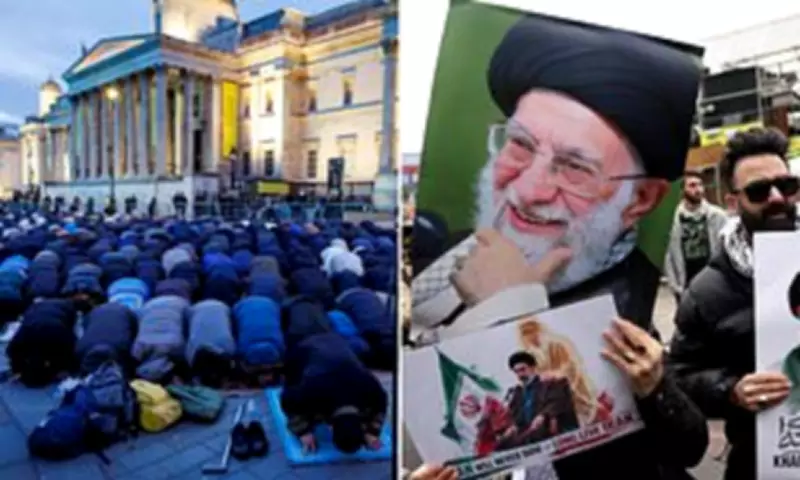
Islam holds real influence in modern Britain, as demonstrated by events like the recent iftar ceremony in Trafalgar Square, celebrated as the largest in the Western world by London mayor Sir Sadiq Khan. However, the report argues that such devout public religiosity necessitates greater efforts to integrate minorities.
For decades, successive governments, both Labour and Tory, have adhered to multiculturalism, prioritising diverse cultures over the indigenous one. This approach, by emphasising differences rather than commonalities, has inadvertently fostered division. The report confirms that we are now reaping the sad results of this policy.
Dr Rakib Ehsan, a Senior Fellow at Policy Exchange, authored the report, urging a reevaluation of integration strategies to bridge these growing societal gaps.