Reform UK's Scottish Ambitions Falter as Poll Numbers Crash
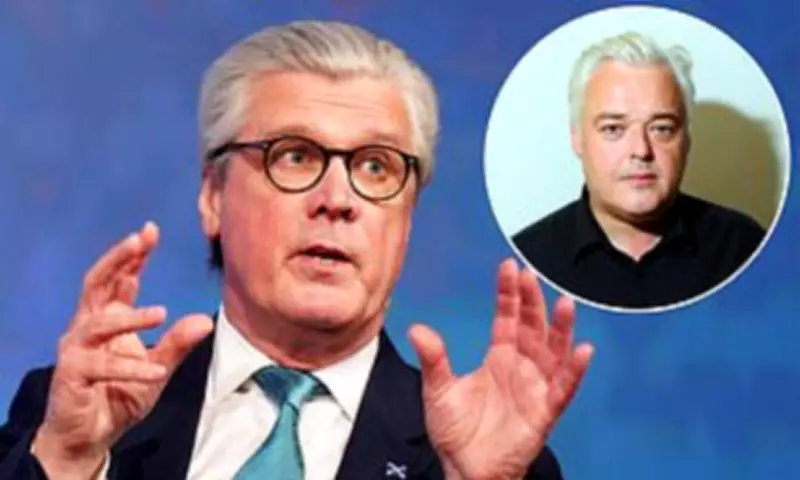
Lord Malcolm Offord was heralded as a transformative figure for Scottish politics, a radical disruptor poised to dramatically reshape the political landscape. When Nigel Farage announced the former Conservative peer's defection to Reform UK last December, he proclaimed that Mr Offord would elevate the party to "a new level" in Scotland. Since that declaration, there has been extensive speculation about Reform's Scottish leader potentially becoming a kingmaker following May's Holyrood election, possibly influencing whether Labour's Anas Sarwar could assume office if SNP leader John Swinney fails to secure a majority.
Poll Reveals Dramatic Decline in Support
A recent Norstat survey published over the weekend confirms that Mr Farage was indeed correct about Mr Offord taking Reform UK to a new level in Scotland. Unfortunately for the aspiring MSP, that level represents the party's lowest polling position in more than a year. The survey indicates Reform UK now commands support from just 15 percent of voters in both constituencies and regional lists, marking a significant drop of four points in each category since February. This decline suggests Mr Offord's appeal among the electorate is diminishing rapidly.
Malcolm Offord has demonstrated himself to be an ineffective politician, appearing unprepared and awkward in interviews while lacking the charisma essential for genuine voter connection. The recent revelation that Mr Offord shocked attendees at a rugby club dinner with a homophobic and cruel joke—so offensive that he subsequently donated to a gay rights charity—has undoubtedly contributed to this erosion of support.

The Business-to-Politics Transition Problem
The political arena is littered with failed careers of individuals like Malcolm Offord who attempt to transition from business to politics. These figures, often characterized by their Thomas Pink shirts and signet rings, built their success in environments where they rarely faced opposition. Their brashness and boorishness were tolerated because they occupied alpha positions, leading them to misinterpret this tolerance as genuine approval.
Reform UK's Scottish leader—installed by Mr Farage rather than elected by party members—possesses a compelling personal narrative for someone in his position. Rising from an unremarkable background in Greenock, Mr Offord established an impressive career in private equity investment before being elevated to the House of Lords as a Conservative peer. This success story would be far more inspiring if told by someone more likable than Reform UK's Scottish leader, whose demeanor resembles that of a minor villain in a soap opera.
Scrutiny and Campaign Challenges
Political life brings a level of scrutiny for which Mr Offord and similar figures are fundamentally unprepared. This lack of preparation has been evident during numerous interviews where the Reform representative has delivered answers ranging from vague and tetchy to outright nonsensical. While Malcolm Offord may have contributed to shrinking support for his party, Reform UK—currently represented by a single MSP at Holyrood, the defector from the Conservatives Graham Simpson—is still projected to send several members to the Scottish parliament after the May 7 election.
If the party maintains the 15 percent support recorded in the Norstat poll, it would return 16 MSPs, making it the third largest group at Holyrood. However, there remains potential for further decline. The party's fortunes have suffered not solely because of Mr Offord, whose current approval rating stands at minus 32—a nine-point drop since February—but also due to campaign challenges including candidate departures and damaging scrutiny over past remarks, including support for far-right agitator Tommy Robinson.

Strategic Implications for Scottish Politics
Publicly, First Minister John Swinney expresses horror at the prospect of Reform UK gaining ground in Scotland, recently accusing some of the party's supporters of racism during an interview. However, the truth is that the SNP leader would actually welcome strong Reform UK performance on May 7. Substantial support for Reform UK would come primarily at the expense of Conservatives and Labour rather than the Scottish Nationalists. A solid Reform bloc would mean a more divided unionist opposition at Holyrood, potentially benefiting the SNP.
Scottish Labour leader Anas Sarwar has experienced little to celebrate recently. His attempt to force Sir Keir Starmer's resignation proved unsuccessful, and multiple polls that two years ago suggested he might become First Minister now indicate Labour could finish third behind Reform UK in May. The "Offord effect" may have altered this likelihood, as voters uneasy about supporting Reform UK next month are now more inclined to switch to Tory or Labour rather than the SNP.
Identity Crisis in Scottish Politics
Reform UK struggles to establish a distinct identity in Scotland, partly due to Malcolm Offord's inadequacy as a political leader but also because, fundamentally, it remains an English nationalist party. Similar to its predecessors under Nigel Farage—UKIP and the Brexit Party—Reform UK's preoccupations reflect those of Middle England. For years, Mr Farage made no serious attempt to campaign in Scotland, recognizing that the same energy—a mixture of personal frustration and government anger—that fueled support for his parties also drove backing for the SNP.
There was little point pursuing the grievance vote in Scotland because the Nationalists had that demographic firmly secured. However, political times are changing. Nigel Farage is no longer the hate figure he once was in Scotland, and he is poised—through Malcolm Offord, the man to whom he gifted his party's Scottish leadership—to exert considerable influence on the national debate.
Reform UK's decline in the polls represents not just disappointment for Nigel Farage but devastation for John Swinney. The First Minister was counting on the new political upstarts further fracturing the unionist vote in key constituencies. A drop in Reform support strengthens both Labour and Conservatives in Edinburgh and the North-East. Malcolm Offord has already succeeded in taking Reform UK to a new level in Scotland. The question remains how much further he can help his chaotic party fall before May 7.