Pope Leo XIV's Political Engagement Sparks Intense Debate
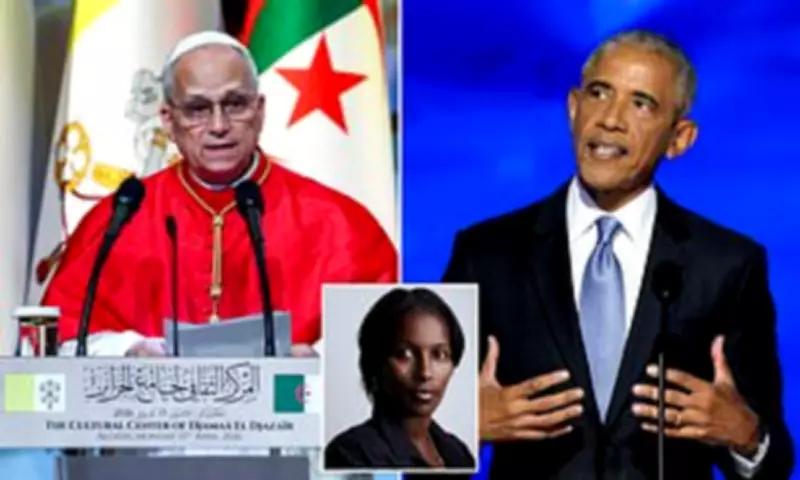
On April 9, Pope Leo XIV held a significant meeting with David Axelrod, a veteran Democratic Party strategist widely recognized as the architect behind Barack Obama's rise to power. Merely four days later, on April 13, Pope Leo delivered the first in a series of pointed public critiques targeting President Donald Trump and his Republican administration. This sequence of events has ignited a fierce debate about the Vatican's increasing involvement in partisan politics.
Coordinated Political Strategy or Mere Coincidence?
Hal Lambert, founder of Point Bridge Capital and a noted observer of American political dynamics, perceives clear coordination where others might see coincidence. 'This is 100 percent political, ok? This is all about trying to hurt President Trump's Catholic vote during the midterms and Republicans in the midterms,' Lambert stated during a CNN appearance on Monday. This perspective suggests a deliberate strategy rather than happenstance.
A Pope who dines with partisan operatives and subsequently launches attacks against a sitting president has, in the view of many critics, abandoned his spiritual duties. Instead of functioning as a shepherd of souls, he has transformed into a political actor—and one lacking grace, according to detractors. This incident aligns with a broader pattern emerging from the Vatican in recent times.

Selective Condemnations and Interfaith Gestures
When Hamas militants killed 1,200 Israelis on October 7th, Pope Francis swiftly condemned Israel, yet the atrocities and kidnappings perpetrated by Hamas passed without explicit condemnation from the Vatican. Meanwhile, Pope Leo has maintained conspicuous silence regarding the systematic persecution of Christians in majority-Muslim nations. This includes the burning of churches and slaughter of Christian communities in northern Nigeria, forced conversions in Pakistan, and disappearances in Egypt.
Each of these incidents represents a direct manifestation of a civilizational clash that Pope Leo appears unwilling to acknowledge. 'I have said this for more than twenty years. I have paid for saying it. And I will say it again: the West is losing this war. Not on the battlefield, but in the cathedrals, the chanceries, and the press conferences of men who were elected to be shepherds and have chosen instead to be diplomats,' remarked one commentator.
As this controversy unfolds, Pope Leo visited Algeria, bowing at the Great Mosque of Algiers with shoes removed and pen in hand at the Golden Book. While respecting Muslim places of worship, critics object to the theological implications of such gestures—the implicit suggestion, increasingly explicit in Vatican discourse, that differences between Islam and Christianity are merely cultural and that interfaith harmony requires erasing doctrinal distinctions.
Immigration Policy and Strategic Concerns
Pope Leo's first major conflict with the Trump administration centered on immigration enforcement, where he condemned policies that the administration had been explicitly elected to implement. Ironically, immigration represents the most powerful strategic weapon for those seeking to advance Islamic civilization over the West, according to analysis beyond just critics.
This perspective finds support in the teachings of Yusuf al-Qaradawi, the influential Islamist theologian of the modern era who commanded millions of followers. Qaradawi advised against wasting time with bombs, instead advocating conquest of Europe through immigration, settlement, and demographic growth via Muslim women's fertility. This doctrine of demographic conquest operates openly and effectively.
In response, Western populations across Europe and America have repeatedly voted for restrictive immigration policies through successive election cycles. Pope Leo has addressed none of this with theological seriousness—not a word about Qaradawi's doctrine or the theological premises driving migration strategy. Instead, he employs humanitarian language with exquisite timing against governments attempting to respond to voter demands.

Broader Implications and Moral Leadership
The damage extends beyond immigration. As the Islamic Republic of Iran—a regime that recently massacred tens of thousands of its own citizens—races toward nuclear capability, Pope Leo lends moral authority to opposition movements, providing effective cover for a theocratic regime under which one of the world's largest underground Christian churches has developed. This regime murders people for converting, yet Iranian Christians worshipping in secret at mortal risk receive a Pope who extends solidarity gestures to the very civilization persecuting them.
Moral leadership—articulating what deserves defense, why Western civilization's foundations matter, why the Church produced universities, hospitals, and individual conscience—constitutes the Pope's proper domain. This essential work remains undone. Scripture itself identified this failure long before Pope Leo's tenure, with contemporary Vatican officials bearing uncomfortable resemblance to the Pharisees of Christ's time—guardians so consumed by institutional power maintenance that faith becomes incidental.
The appropriate response to such corruption was demonstrated in sacred spaces, leaving no ambiguity. When Christ found the temple occupied by men who remade it in their image, he didn't seek common ground but drove them out. This same refusal to mistake vessel for content, this willingness to act on faith's actual demands, is what ordinary Catholics and those concerned about the Church's decline must courageously insist upon.
None of this eliminates coexistence possibilities. World civilizations must find ways to live alongside each other, and that work holds value. However, coexistence built on erasure rather than honest reckoning has never outlasted the differences it refused to name. The clash of civilizations proceeds indifferent to ill-advised pronouncements and diplomatic communiqués, reaching its conclusion with or without Church participation.
The historical question remains: Were shepherds tending their flock or signing guest books in foreign mosques when the decisive hour arrived?