
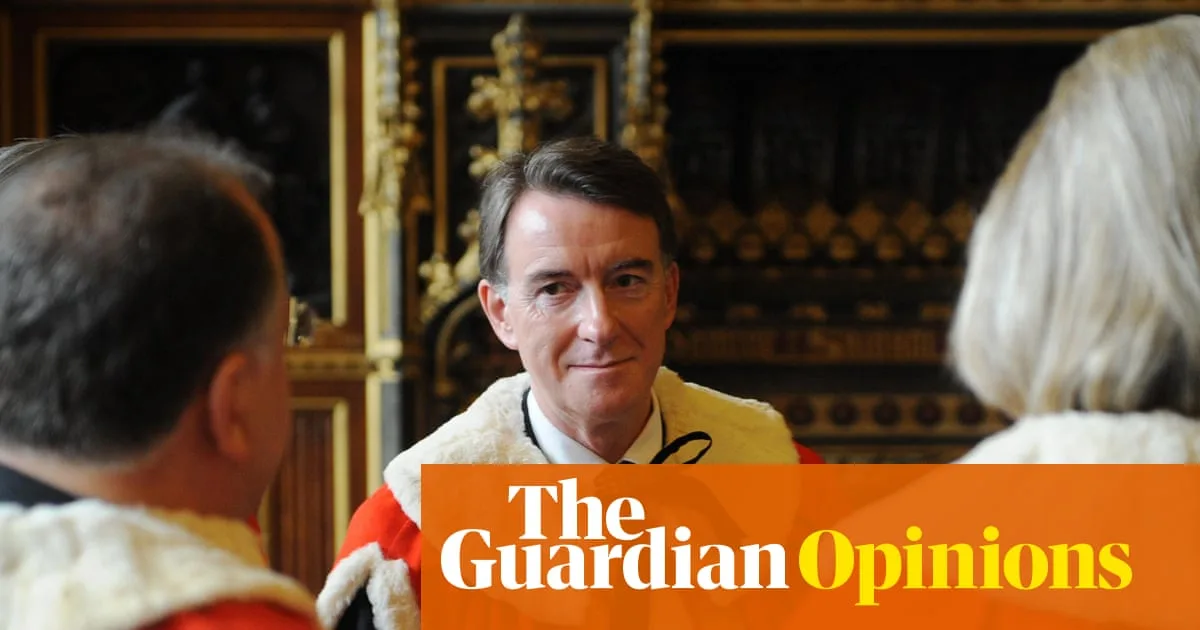
Peter Mandelson's resignation from the House of Lords has reignited criticism of the second chamber, with a fellow peer arguing that the system allows disgraced figures to retain influence and misuse their positions. Prime Minister Sir Keir Starmer has said the government is seeking to strip Lord Mandelson of his peerage, though under current rules he would keep the title unless removed by an act of Parliament or death.
Writing in an opinion piece, Jenny Jones, a Green Party peer, noted that Mandelson was first elevated to the Lords in 2008 despite being forced to resign twice as a minister. She cited his failure to declare a home loan in 1998 and his involvement in helping a Millennium Dome funder obtain a British passport in 2001. Starmer later appointed Mandelson as US ambassador despite his links to Jeffrey Epstein being well documented, Jones said.
Jones said the Mandelson case reflects a broader culture of 'cash for access' in the Lords. She pointed to a report from last February showing that nearly 100 peers were paid to give political or policy advice by commercial firms, with one former minister earning millions from 30 companies. Multiple peers are paid by foreign governments, including repressive regimes, she added.
The peer also highlighted recent disciplinary cases, including the Earl of Shrewsbury, who was banned from the Lords for the second time in three years after claiming travel expenses to attend a business conference. Ian Duncan, a deputy speaker, was found to have breached rules by facilitating an introduction between Terrestrial Energy's chief executive and a new energy minister. David Evans and Richard Dannatt were suspended after being found to have offered parliamentary services for payment. Jones also noted that Michelle Mone retains her peerage despite lying about her involvement in a company that sold faulty Covid PPE, costing taxpayers more than £100m.
Jones, who describes herself as coming from a 'poor working-class background', said that while many peers take their duties seriously, the chamber lacks democratic legitimacy and is undermined by those who treat politics as a business opportunity. She called for peerages to be taken away as a form of reform, saying the current system is 'semi-feudal' and in need of public trust.




