Government's Herzog Visit and Protest Ban Deepens Australian Community Rifts
In a move that has sparked significant controversy, the Australian government's decision to roll out the red carpet for Israeli President Isaac Herzog while simultaneously establishing "exclusion zones" for the public is being labelled a misstep. This action is likely to deepen the rift between already polarised communities, according to George Newhouse, a former mayor of Waverley and member of the Jewish community.
Balancing Safety and Free Speech in a Tense Climate
Jewish Australians must be safe from fear or harassment, a point underscored by recent events such as the terrorist shootings at Bondi. However, shielding President Herzog from legitimate protest is not the answer. Allowing fair and peaceful criticism of a foreign head of state, even amid a deeply fraught Middle Eastern crisis, is not antisemitism. Not all protests have a violent intent or target a group as illegitimate, yet many Jewish people in Australia feel under attack, with concerns heightened by daily news coverage and security measures at schools and synagogues.
After the Bondi tragedy, the New South Wales government empowered the police commissioner to impose limits or bans on protests. The problem lies in the broad application of these laws, which treat every protest as the same without regard to intent, conduct, or risk. In the context of violent attacks in Melbourne and Perth, it raises critical questions about what it means to have a safe and thriving democracy that protects citizens while safeguarding free speech.

Lessons from History and the Power of Peaceful Protest
George Newhouse reflects on growing up in an era inspired by Martin Luther King Jr., who championed nonviolence as the answer to political and moral questions. Retracing the Freedom Riders' journey in the American south, Newhouse was reminded of the violence faced by peaceful protesters and the importance of defending the right to protest. True safety, he argues, is not built by sweeping dissent from the streets but by ensuring every citizen can peacefully call for justice without facing intimidation, harassment, or violence.
Sadly, recent months have seen Jews murdered at religious festivals and communities feeling vulnerable due to protest messaging. Incidents like neo-Nazi attacks at Camp Sovereignty in Victoria and an attempted bombing at a peaceful Invasion Day protest in Western Australia, now deemed a terrorist act, highlight the complex landscape. The NSW police commissioner explicitly cited Herzog's upcoming visit in expanding protest restrictions, implying public dissent could threaten domestic peace and security.
The Moral Imperative and Community Impact
As a former mayor, Newhouse understands the deep personal impact of the Bondi shootings, which violated a sanctuary for many Jewish Australians. Bondi is more than a postcode; it's a place of community, prayer, and belonging. Respecting this collective trauma is a moral imperative. In this moment of division, Dr. King's legacy offers guidance: peaceful protest is not an act of hate but an expression of care for a nation's moral health, emphasising that true peace is the presence of justice, not merely the absence of tension.
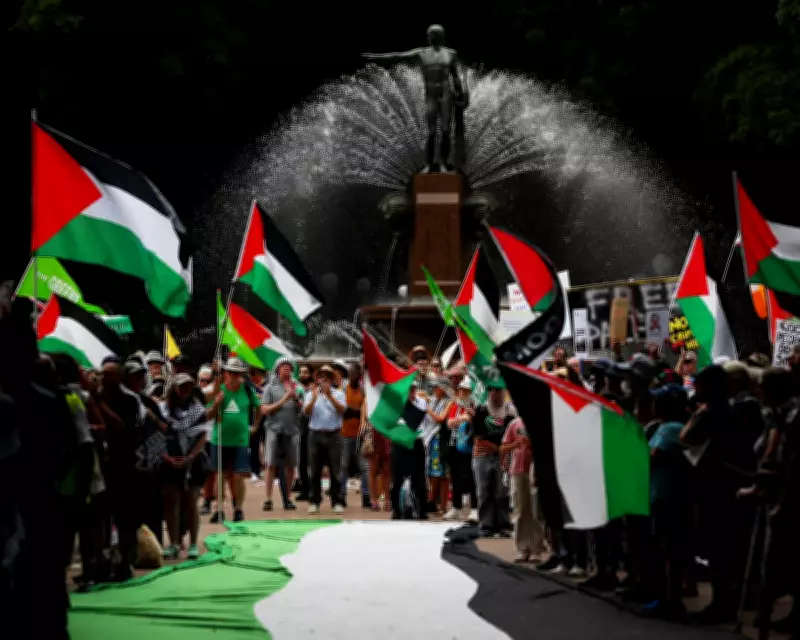
By restricting the right to protest, the state seeks an artificial quiet at the expense of justice. The government's approach with Herzog's visit risks deepening polarisation. People must be able to peacefully voice objections to issues like the war in Gaza, violence in the West Bank, or terror by Hamas. Protest, when done peacefully and without hate, is not only legitimate—it is vital for democracy.
Clarifying Support for Protest and Addressing Risks
Support for protest is not support for hatred or intimidation. The power of protest lies in its values, not just its volume, and it loses moral force when laced with threats or dehumanising rhetoric. We must challenge injustice with integrity, ensuring peaceful protest never becomes a platform for antisemitism or the dehumanisation of any community. Labor's vague hate speech laws risk undermining democracy instead of defending it, as noted in related commentary.

The Bondi tragedy should have united Australians in grief and resolve, but the so-called "Bondi laws" are being used to shield a visiting politician from accountability. If the state decides which leaders are too controversial to criticise, it undermines the implied constitutional freedom of political expression. Allowing fair criticism of a foreign head of state is not antisemitism, and protest itself is not an attack on Jewish people. We cannot let terrorists win by driving deeper wedges between communities.
Moving Forward with Justice and Free Expression
Jewish Australians must walk through Bondi without fear, but Palestinians and their allies must also be able to stand in Martin Place and criticise the Israeli government's conduct. Perhaps now is the time to reclaim Dr. King's dream, forged in love and tested by fire. Love cannot be legislated, but we can protect the freedom to express it. The challenge is balancing the right to protest with the responsibility to keep all communities safe, asking whether we have tipped the scales too far in one direction.
In moments like this, our commitment to both justice and free expression will determine the kind of country Australia becomes. George Newhouse AM calls for a nuanced approach that respects safety while upholding democratic principles, ensuring that peaceful dissent remains a cornerstone of our society.