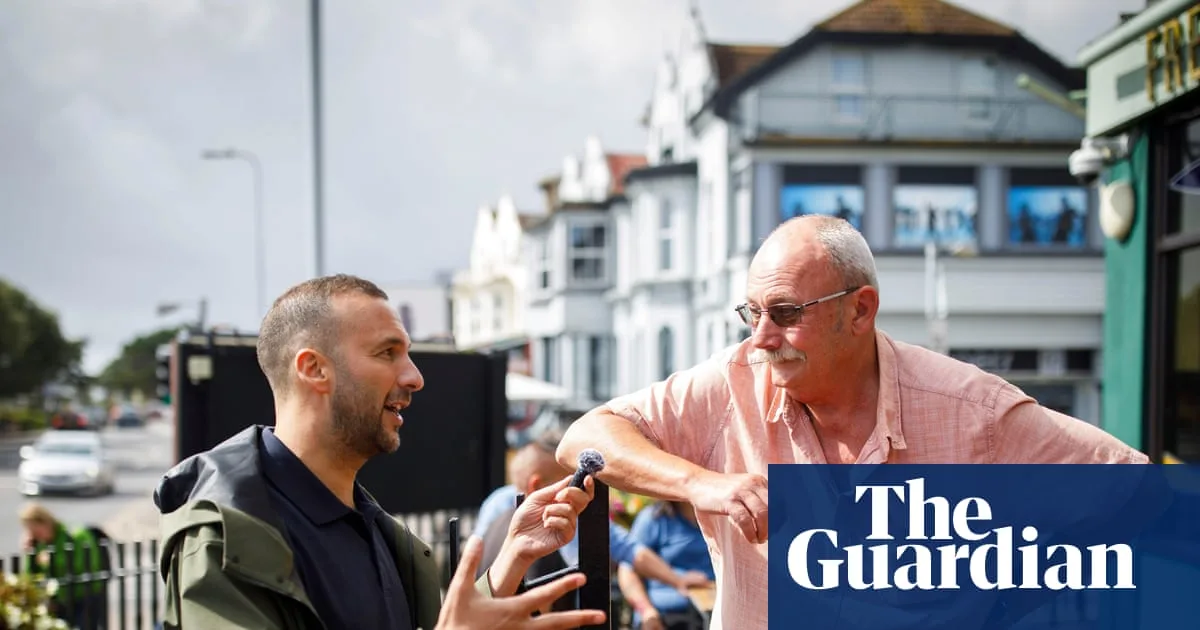
Zack Polanski, the newly elected leader of the Green Party in England and Wales, has visited Nigel Farage's constituency of Clacton-on-Sea as part of a strategy to counter what he calls the 'politics of division' espoused by Reform UK. Polanski, who won the leadership with 85% of the vote, spent a day talking to voters about their views on policies such as zero-hours contracts and fire-and-rehire, which he claims Farage supports.
During the visit, Polanski spoke to several locals, including some who had voted for Farage. One man, Stuart, 49, expressed shock upon learning of Farage's stance on zero-hours contracts, saying: 'I voted for him. Now he definitely doesn't have my vote.' However, others like Tom, 39, a former Conservative voter who now backs Reform, described Farage as 'a showman' and remained supportive.
Polanski criticised Labour and Prime Minister Keir Starmer for failing to challenge Reform's rhetoric, particularly on immigration. He accused Starmer of 'implicitly condoning' Farage's recent press conference on the issue, which Polanski described as 'despicable'. The Green leader argued that mainstream parties are not doing enough to push back against what he sees as far-right-adjacent politics.
The visit is part of a broader social media strategy by Polanski to increase the Greens' visibility. Since becoming leader, he has given 61 interviews and launched a podcast series, 'Bold Politics with Zack Polanski', which reached fourth in the UK news podcast charts. Polanski hopes to counter the 'sheer repetition and emotive storytelling' from figures like Farage by telling an alternative story focused on community organising and local wins.
Polanski acknowledged the challenge of winning over voters who view Green policies as unrealistic, but he remains optimistic. 'It's a kind of nihilism that I understand how people end up in,' he said. 'The only antidote is to keep winning at local level, to keep community organising.' He contrasted his approach with Farage's, stating that while Farage wants to dismantle democratic institutions, he is critical of them only because of the people running them and vested interests.