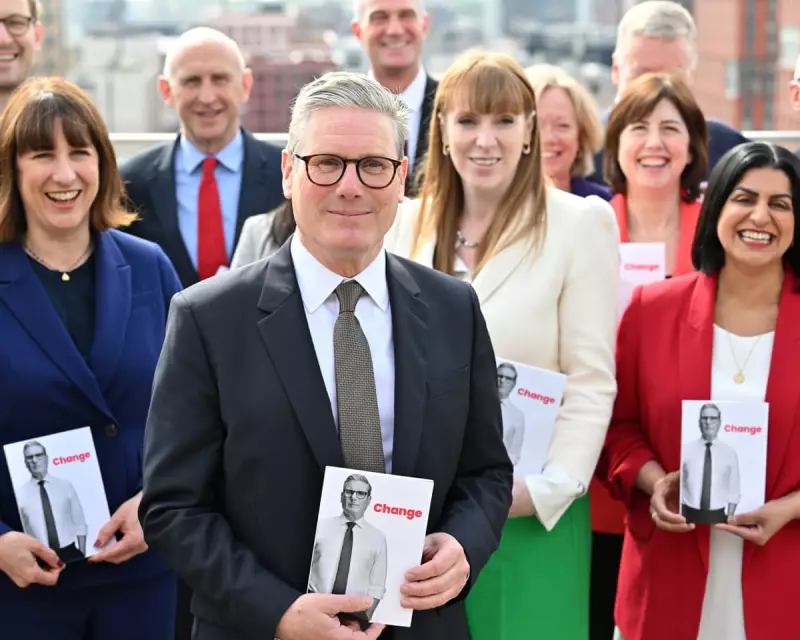
The launch of Labour's election manifesto in Manchester on 13 June 2024 was a pivotal moment in the campaign, with Sir Keir Starmer and his shadow cabinet setting out their stall for government. Yet, according to former Labour MP Tony Wright, the party made a critical error by boxing itself in with rigid promises.
The 'Irresponsible' Tax Pledge
In a recent intervention, Wright has sided with commentator Martin Kettle, labelling as "irresponsible" Labour's manifesto commitment not to raise any of the main revenue-raising taxes. He compares this move to sending an army into battle without its most effective weapons. Wright contends this strict vow was entirely unnecessary, given that Labour's victory was largely propelled by a public desire to remove the Conservatives from power, rather than unwavering support for every detailed policy.
He suggests a far more sensible approach would have been for Labour to state it had no desire or intention to raise taxes, while crucially adding that final decisions would depend on the economic circumstances inherited. This, Wright argues, would have avoided the "straitjacket" the government now finds itself wearing as it grapples with the nation's finances.

Manifestos Are a Prospectus, Not a Contract
Wright's critique opens a broader debate about the purpose and weight of election manifestos. He posits that they should be viewed as a broad prospectus for government, not a legally binding contract. A key reason, he notes, is that it is impossible to discern why an individual casts their vote—whether it is because of a specific manifesto pledge or in spite of it.
"All elections produce is a mandate to rule," Wright writes, "and ruling means responding to changing circumstances and challenges." This fundamental principle of governance, he believes, is undermined by treating every manifesto line as an unbreakable vow.
The Case for Smart Policy U-Turns
Pursuing this logic, the former MP for Cannock Chase challenges what he calls the "lazy language about U-turns." He asserts that implementing a bad policy simply because it featured in a manifesto is clearly foolish. True good government, Wright argues, is about having the wisdom and courage to replace a failing policy with a better one. Such adaptability should be welcomed as a sign of responsive leadership, not criticised as a betrayal of promises.
Ultimately, Wright's analysis serves as a cautionary tale for any future government: while manifestos set a direction, the unpredictable nature of events demands a pragmatic and flexible approach to policymaking once in office.