Crypto Donation Ban Threatens Reform UK's Financial Lifeline
The political landscape shifted dramatically this week as the government announced a comprehensive ban on political donations made via cryptocurrency. This move delivers a severe blow to Reform UK's funding capabilities while simultaneously casting an unflattering light on Nigel Farage's Trumpian approach to mixing politics with personal business ventures.
Starmer's Strategic Strike Against Farage
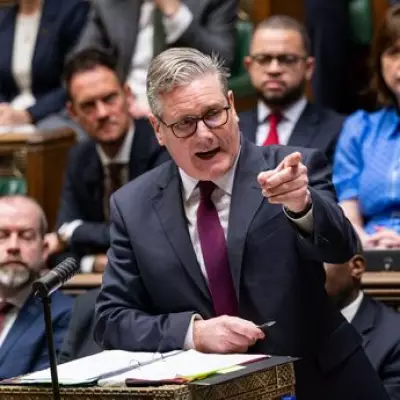
During Prime Minister's Questions, Keir Starmer managed to weave multiple references to the ongoing conflict in the Middle East into his exchanges with Nigel Farage. When Farage pressed the government about its "Plan B" for addressing small boat crossings, Starmer countered by highlighting Farage's initial support for the American-Israeli military action against Iran before his subsequent reversal.
Starmer's barb about Farage's paid Cameo videos - "He'll say anything" - underscored what many see as the Reform leader's transactional approach to politics. This perception has been reinforced by Farage's various business interests that seem at odds with his political messaging about reindustrialisation and supporting the "real economy."

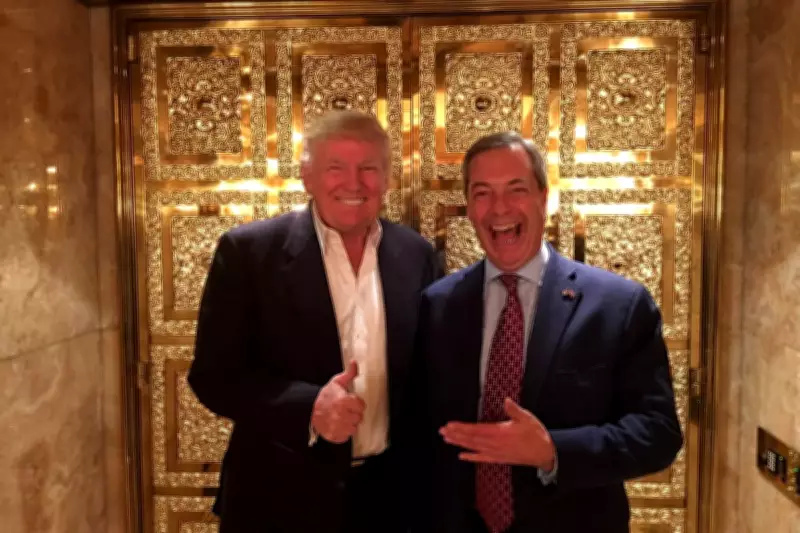
The Trumpian Shadow Over British Politics
Nigel Farage's admiration for Donald Trump has become increasingly problematic as the American president's unpopularity grows in Britain. Trump's controversial actions - from attempting to purchase Greenland from Denmark to insulting British troops' service in Afghanistan and launching military actions with potentially catastrophic economic consequences - have made his political style toxic to many British voters.
Farage's business ventures mirror Trump's gold-obsessed aesthetic in concerning ways. The Reform leader has served as a promoter for Direct Bullion, which markets "tax-efficient gold" investments to the public. While Liberal Democrat leader Ed Davey didn't mention Farage by name when condemning Trump's "corruption" in the Commons, the association was unmistakable to observers.
Crypto and Gold: Questionable Foundations
Farage's financial interests extend beyond gold to include cryptocurrency advocacy. This month alone, he invested £215,000 in Stack, a cryptocurrency company chaired by Kwasi Kwarteng, the short-lived chancellor under Liz Truss. These investments in assets with no inherent value - whether cryptocurrency or gold - seem contradictory for a politician who claims to champion traditional industry and economic stability.
The new legislation creates a perfect storm for Reform UK's funding. Not only does it ban cryptocurrency donations entirely, but it also imposes a £100,000 annual cap on donations from British citizens living abroad. This double restriction directly targets Christopher Harborne (also known as Chakrit Sakunkrit), the British-Thai billionaire who donated £9 million to Reform last year and an additional £3 million this month.
Closing Loopholes and Exposing Conflicts
Communities Secretary Steve Reed confirmed the legislation would be backdated, effectively restricting Harborne to less than one-hundredth of his previous annual contributions. This serves Labour's dual purpose of crippling Reform's financial pipeline while drawing public attention to the party's unconventional funding sources and potential conflicts of interest.
Labour MP Liam Byrne, who chairs the Business and Trade Committee, offered a pointed analysis: "Populism isn't just a political movement. It's a business model. Investors make fortunes on volatility. Some are now bankrolling the politicians who create it."
The Libertarian Contradiction
Cryptocurrencies naturally appeal to political libertarians seeking monetary systems independent of nation-states. Yet Farage represents something of a contradiction - while attracting such donors, he remains fundamentally an anti-immigration social conservative rather than a true libertarian. His past opposition to gay marriage, which he still considers "wrong" despite David Cameron's 2014 legislation, illustrates this ideological tension.

The timing of these financial revelations raises questions about Farage's priorities. His focus on money-making ventures seems peculiar for someone supposedly dedicated to the single-minded pursuit of political power. The situation echoes concerns about foreign influence in British politics, particularly following the conviction of Nathan Gill - a former Farage associate and European Parliament member - for accepting Russian bribes.
Broader Implications for British Democracy
For years, critics have questioned why British voters living predominantly abroad should be permitted to make substantial donations to UK political parties. The anonymity provided by cryptocurrency donations presented another vulnerability in the system. While some may accuse Labour of political cynicism in commissioning a review of foreign influence, these are legitimate concerns about electoral integrity.
The new restrictions represent long-overdue closures of problematic loopholes in political financing. While Farage's most committed supporters may dismiss these developments as irrelevant, the association with Trumpian self-enrichment and questionable funding sources creates significant obstacles for Reform UK as it attempts to attract undecided voters. The gilt-edged taint of financial controversy could ultimately prove to be Nigel Farage's political undoing.