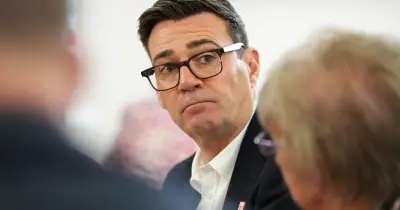
Prime Minister Andy Burnham has declared he wants “to move beyond constitutional questions” and “focus on solutions for people right now” during a landmark speech in Motherwell.
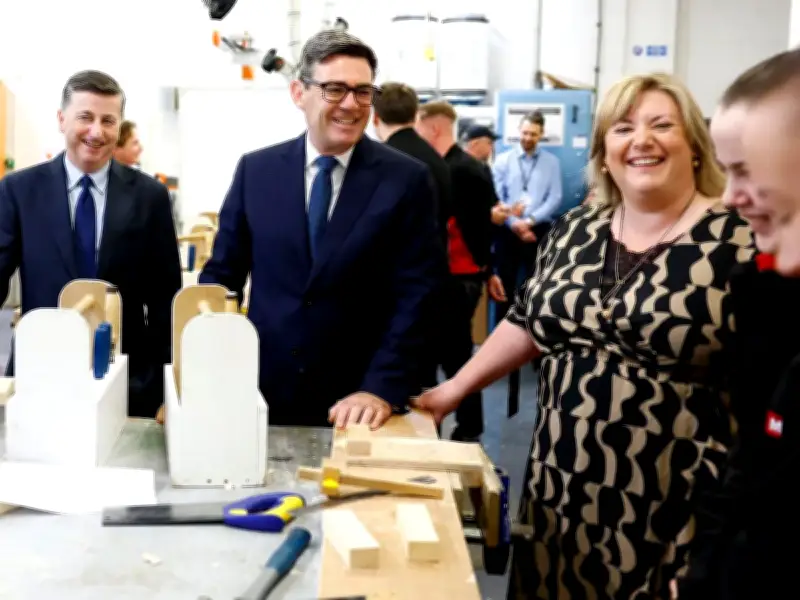
Speaking on a visit to a college built on the site of the former Ravenscraig steel works, Burnham said devolution was “never meant to end at the doors of Holyrood”. He called for a new spirit of cooperation between Westminster and the Scottish Government that could see powers devolved from both governments and back into local communities.
Serious and genuine offer
In his first major intervention in Scottish politics since entering Downing Street in July, Burnham said he was making a “serious and genuine offer” to John Swinney’s Scottish Government to work together on devolving power.
The Prime Minister said: “We won’t agree on everything, and we’re not going to, and we shouldn’t try because there are some things we will disagree on. But that does not mean, just because you can’t agree on everything, it doesn’t mean you can’t agree on anything.
“We can agree on some things and I know that because I’ve worked with John over a long period of time.”
He added: “I want to make a serious and genuine offer to the Scottish Government. I want to move on from the old politics of conflict.”
Regional economic empowerment
Burnham said he wanted to design a new model of “regional economic empowerment” across Scotland, including an offer of devolution from the Department for Work and Pensions. That would mean “localised employment support”, similar to the one in England but shaped by the Government in Holyrood.
Burnham called for “deeper” devolution in Scotland, describing it as “one of the most centralised nations in Europe”. He said devolution “was never supposed to stop at the doors of the Scottish Parliament”.
He said: “It was always meant to be the start of something deeper, the foundations of a nation where communities had more of a say in their own future, and where the norm was always to push power out until it reached every person and every postcode.
“Instead, we’ve ended up with a situation where Scotland, the most devolved nation in the UK, is itself one of the most centralised nations in Europe.
“And I don’t say that to score points, genuinely I don’t. I say that because I believe we need to be honest about that if we really want to get growth in every postcode.”
Referring to his drive to increase devolution for English regions, he added: “I want those same opportunities for Scotland and Scottish regions; the chance to stop looking back at what was once here and start looking forward to what’s coming next.”
Independence referendum question
Asked by the Record whether he would rule out a second Scottish independence referendum during his premiership, Burnham did not directly respond but said he had set out his views on the issue “very clearly” to John Swinney.
The Prime Minister said: “I think unions of countries are better because you can face a challenging world in a more confident and stronger way, in my view, when you collaborate and you work together.”
He said he had communicated his view to Swinney. Burnham said: “He has a different view, but let’s accept there’s a different view there and then work on together what we can agree on.
“My view won’t be changing, but let’s now move forward where we can make some progress.”
Asked whether devolving power more locally in Scotland would make independence more or less likely, the Prime Minister said: “I just feel we all have to move beyond the constitutional questions.
“In my view, people in Scotland are suffering from the cost of living crisis, like they are in England and everywhere else, and I think our job is to focus on the practicalities, to focus on solutions for people right now.
“As I said at the end, too much time is wasted on those dramas, it consumes too much energy.
“Get into the things that can make a difference in people’s lives now, get doing the things that can take young people off benefits in their 20s and give them an opportunity now, we can do it.
“And do things to help people with the cost of living now, putting buses under public control in Glasgow or elsewhere. We can do it now and help people.”