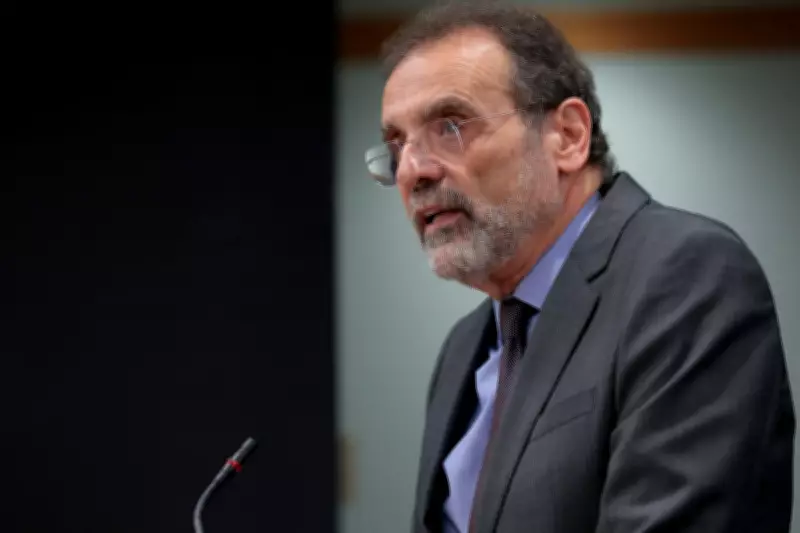
Architect's White House Ballroom Project Baffles Colleagues Amid Trump Tensions
Shalom Baranes, the 75-year-old architect who has agreed to oversee President Donald Trump's controversial White House ballroom addition, has left colleagues in Washington, D.C., completely perplexed by his decision to take on the project late in his distinguished career.
A Legacy of Federal Architecture
Baranes is a highly respected figure in architectural circles, known for his work on dozens of contemporary additions to federal buildings. His portfolio includes high-profile projects such as the renovation of the Department of Homeland Security headquarters, the Federal Reserve Building, the American Red Cross Building, and the Treasury. Perhaps most notably, his firm was responsible for renovating the Pentagon after the September 11, 2001, attacks, a project he has described as his proudest moment.
Political Contradictions
What makes Baranes' involvement in the ballroom project particularly surprising is his history of criticism toward the Trump administration's immigration policies. As the son of Jewish Libyan refugees who arrived in the United States at age six, Baranes has been vocal about his opposition to harsh anti-immigration measures. In a 2017 Washington Post op-ed, he expressed hope that the administration would ensure travel bans were temporary, stating, "My hope is that the Trump administration will take actions to ensure that the travel ban is indeed temporary, so that good, hard-working individuals fleeing tyranny can find a new home as I did."

In a recent interview with the New York Times, Baranes reiterated these criticisms, calling current policies "heartbreaking" and emphasizing that "this country depends on immigration." This stance has led many in his professional circle to question his motivations for accepting the $400 million, 90,000-square-foot ballroom project, which has faced scrutiny from architects, the public, and lawmakers alike.
Colleagues Express Bafflement
Reactions from Baranes' peers range from confusion to understanding. Nancy MacWood, a preservationist familiar with his work, told the New York Times, "I am totally baffled why he would take this on." Similarly, David M. Schwarz, an architect who has known Baranes since their Yale School of Architecture days, said, "I don't understand why he would put himself in such a hot seat right now."
When the Washington Biz Journal announced Baranes' involvement in December, editors and reports posed questions like, "Why would he do this?" and "Wonder if the firm needs the business?" Baranes has denied that financial need motivated his decision, though the exact amount he will earn remains undisclosed due to a nondisclosure agreement with the White House.
Support from Some Quarters
Not everyone is puzzled by Baranes' choice. Richard Nash Gould, a New York architect and Trump supporter, told the New York Times, "If I had to pick who would do this job, it would be Shalom. He's happy, he's bulletproof and he's really smart. Why wouldn't he? It's an incredibly interesting job."
Project Background and Trump's Vision
Baranes took over the ballroom project after the original architect, James McCrery II, stepped down. President Trump has championed the addition, calling it a "beautiful addition" that will be "added on very soon," citing the White House's lack of a sufficiently large entertaining space for state dinners and other events. Renderings show the massive structure attached to the main residence.
Despite the controversy, Baranes appears to be setting aside personal feelings about the administration's policies to focus on the architectural challenge. His legacy, cemented by 2006 when the Washington Post noted it would be "hard to find an architect who knows more about designing in Washington," now includes this polarizing project, leaving the architectural community to ponder the complexities of professional ethics and political alignment in federal design work.