
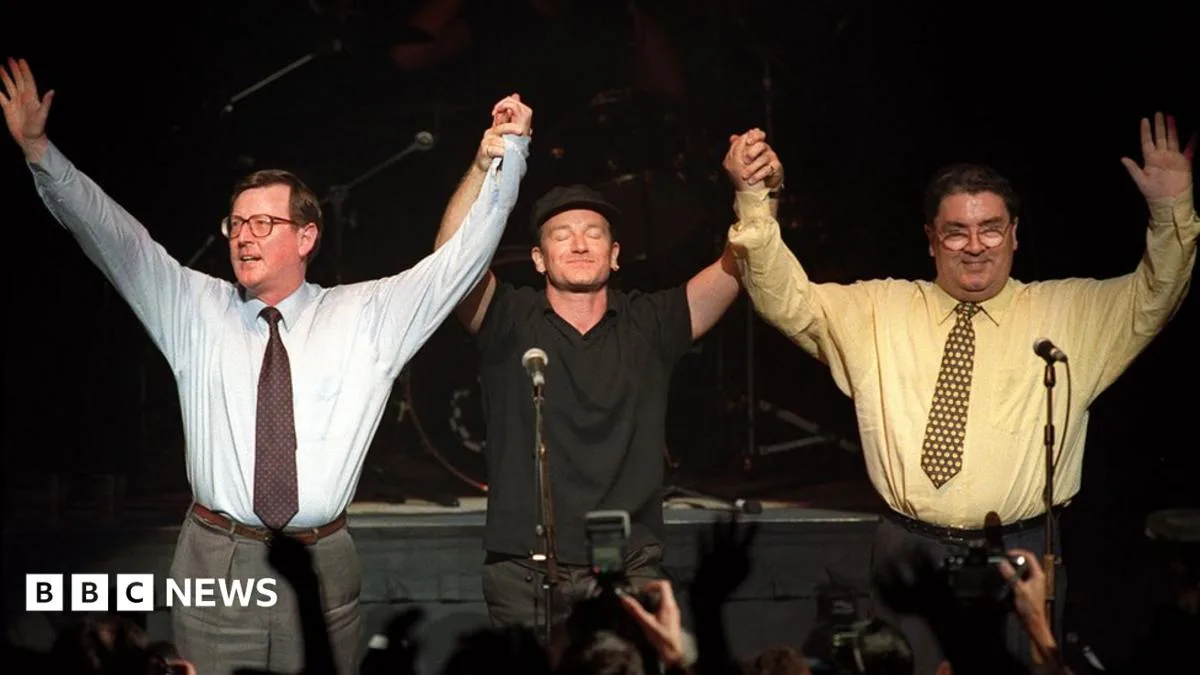
Newly uncovered documents have revealed that former Northern Ireland First Minister David Trimble and the late Reverend Ian Paisley held secret peace talks in the months leading up to the Good Friday Agreement. The talks, which were kept hidden from the public and even from Trimble's own party, were aimed at bridging the divide between unionists and nationalists.
Trimble, who died this week at the age of 77, was a key architect of the 1998 peace deal. The documents show that he and Paisley, then leader of the Democratic Unionist Party, met several times in a bid to secure unionist support for the agreement. Paisley was initially opposed to the deal but later became a supporter.
The talks were held in secret because of the deep divisions within unionism at the time. Trimble's decision to negotiate with Sinn Féin had already caused a split in his own Ulster Unionist Party, and any hint of a deal with Paisley could have been disastrous.
The documents, which were found in Trimble's personal archive, also reveal that the two men discussed the possibility of a power-sharing government that would include both unionists and nationalists. This was a radical departure from the traditional unionist position of refusing to share power with Irish republicans.
Trimble's role in the peace process earned him the Nobel Peace Prize in 1998, which he shared with SDLP leader John Hume. He served as First Minister from 1998 to 2002, and again briefly in 2007.
The revelation of the secret talks has shed new light on Trimble's legacy. He was often criticised by hardline unionists for his willingness to compromise, but the documents show that he was also willing to work with his fiercest opponents to achieve peace.




