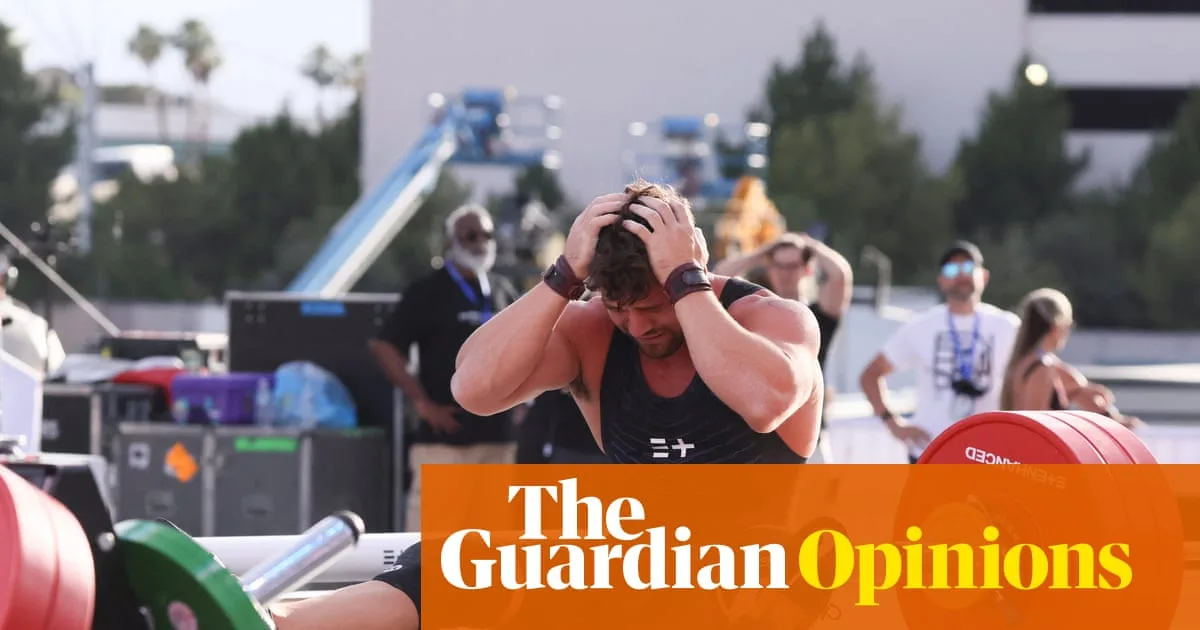
I woke up in Las Vegas on Monday to an avalanche of messages from people across elite sport asking about the Enhanced Games. Some wanted to know what it was really like. Most, though, wanted to dance on its grave.
So much for the organisers’ promises that we would witness multiple world records. So much for their ridiculous claim to be the “Super Bowl of athletics, swimming and weightlifting!” Hubris meet nemesis. Perhaps the most farcical moment came just before the women’s 100m final. Only one athlete in the modest field had ever broken 11 seconds. But that didn’t stop the announcer floating the idea that Florence Griffith Joyner’s world record of 10.49sec might be under threat. “Are we going to witness history?” she asked. “Let’s hope so.” Of course we weren’t. Tristan Evelyn, who was competing as a drug-free athlete, won in 11.26sec – a time that would have barely made it out of the first round of the 2024 Olympics.
But I have some bad news for my friends in high-level sport, who despise the Enhanced Games and everything it stands for. It is not going away. At least not yet. When I spoke to its chair, Christian Angermayer, on Sunday night he revealed the plan for next year was to invite fitness influencers to race alongside elite athletes. A legends section may also follow, he reckoned. Shortly afterwards, the Australian swim coach Brett Hawke revealed that his phone had been buzzing with elite stars wanting to sign up. Can you blame them? Hunter Armstrong competed clean and walked away with $250,000 (£186,000). That’s 12½ times what gold at the World Aquatics championships pays. While World Athletics offers significantly more – the winner of each event in its Ultimate Championships will get $150,000 – Angermayer believes he can also lure big track stars over. So dismiss the Enhanced Games all you like. But don’t ignore the underlying reasons why some are tempted. You can’t pay a mortgage with morals.

Ultimately, though, I believe the Enhanced Games will fail. Not next year. But probably over the next five to six years. The organisers are rich and smart, but they don’t come across as caring deeply about sport. The event felt like a trip to the Upside Down, with fitness influencers showing off their abs and asking each other which protocol they were on. Yet the athletes were disarmingly honest, clear-eyed about being medical subjects and marketing tools. They understood the risks and gravitated towards the rewards. Before I arrived in Vegas, I thought the Enhanced Games people were grifters. Now I think it is more accurate to say they are evangelicals. They truly believe these drugs have changed their lives. And they want others to enjoy them, albeit while burning a few hundred dollars a month.