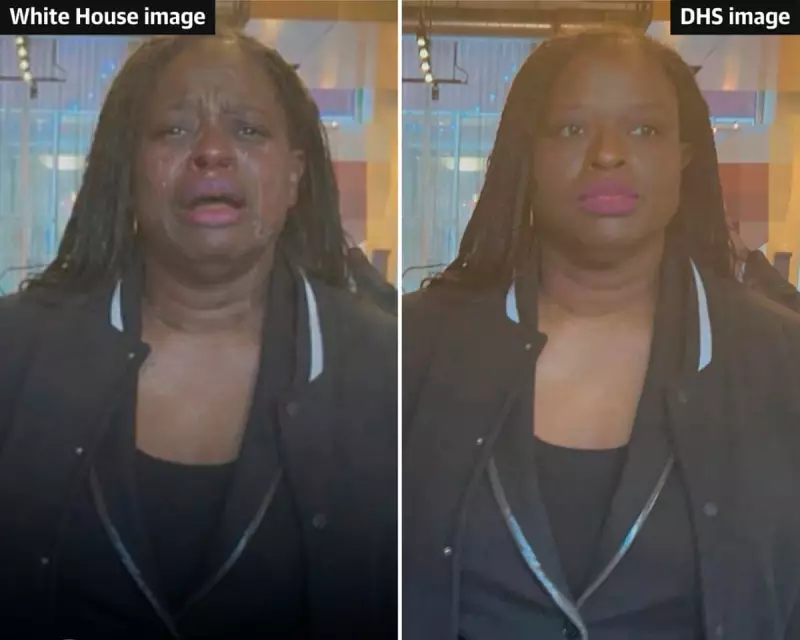
White House Faces Criticism Over Digitally Altered Protest Image
The White House has come under scrutiny after posting a digitally altered image of activist Nekima Levy Armstrong, who was arrested following an ICE protest in Minnesota. A detailed Guardian analysis has confirmed the image was manipulated to make Armstrong appear dramatically distressed, with her skin tone noticeably darkened in the altered version.
Analysis Reveals Significant Alterations
Guardian examination shows the original image depicted Armstrong looking composed, while the White House version presents her as visibly sobbing. The digital manipulation extends to her complexion, which appears significantly darker in the altered photograph. This incident marks at least the 14th instance where the White House X account has used AI-generated or altered content since Donald Trump's second term began, according to Poynter's October reporting.
Protest Context and Official Response
Armstrong was among three individuals arrested on Thursday in connection with a demonstration that disrupted church services in St Paul, Minnesota. The protest has become a focal point in discussions about immigration enforcement and activist tactics.

When questioned about the image alteration, the White House responded by sharing a post from deputy communications director Kaelan Dorr. His statement emphasized continued law enforcement and meme creation, stating: "YET AGAIN to the people who feel the need to reflexively defend perpetrators of heinous crimes in our country I share with you this message: Enforcement of the law will continue. The memes will continue. Thank you for your attention to this matter."
Broader Implications for Digital Ethics
This incident raises significant questions about the ethical use of digital manipulation by official government accounts. The alteration of both emotional expression and physical appearance in official communications represents a concerning development in political messaging tactics.
The White House X account, boasting approximately 3.5 million followers, has increasingly incorporated AI-generated content into its communications strategy. This trend coincides with growing concerns about misinformation and digital authenticity in political discourse.
International Reactions and Related Developments
Meanwhile, international attention has focused on several related developments:
- NATO Controversy: Donald Trump has provoked outrage among British MPs and veterans by claiming NATO troops avoided frontline service in Afghanistan. Critics have highlighted the 457 British military deaths in the conflict and Trump's own avoidance of Vietnam service.
- Trilateral Talks: The United States, Ukraine, and Russia are preparing for their first three-way talks since Russia's 2022 invasion. The meeting in Abu Dhabi follows discussions between Vladimir Putin, US envoy Steve Witkoff, and Jared Kushner.
- Gold Prices Surge: Gold has reached a record high of $4,967 per ounce, driven by geopolitical uncertainties, concerns about Federal Reserve independence, and anxieties about currency debasement from high debt levels.
Additional News Highlights
Other significant developments include:
- A fundraiser for five-year-old Liam Ramos, seized by immigration officers in Minneapolis, has raised over $110,000
- Major health insurance executives faced Congressional scrutiny over rising healthcare costs
- Water-related violence has nearly doubled since 2022, with 419 incidents recorded in 2024
- Liza Minnelli has released her first new music in 13 years using AI-generated backing tracks
The White House image alteration incident continues to generate discussion about digital ethics, political communication standards, and the appropriate use of emerging technologies in official government messaging.