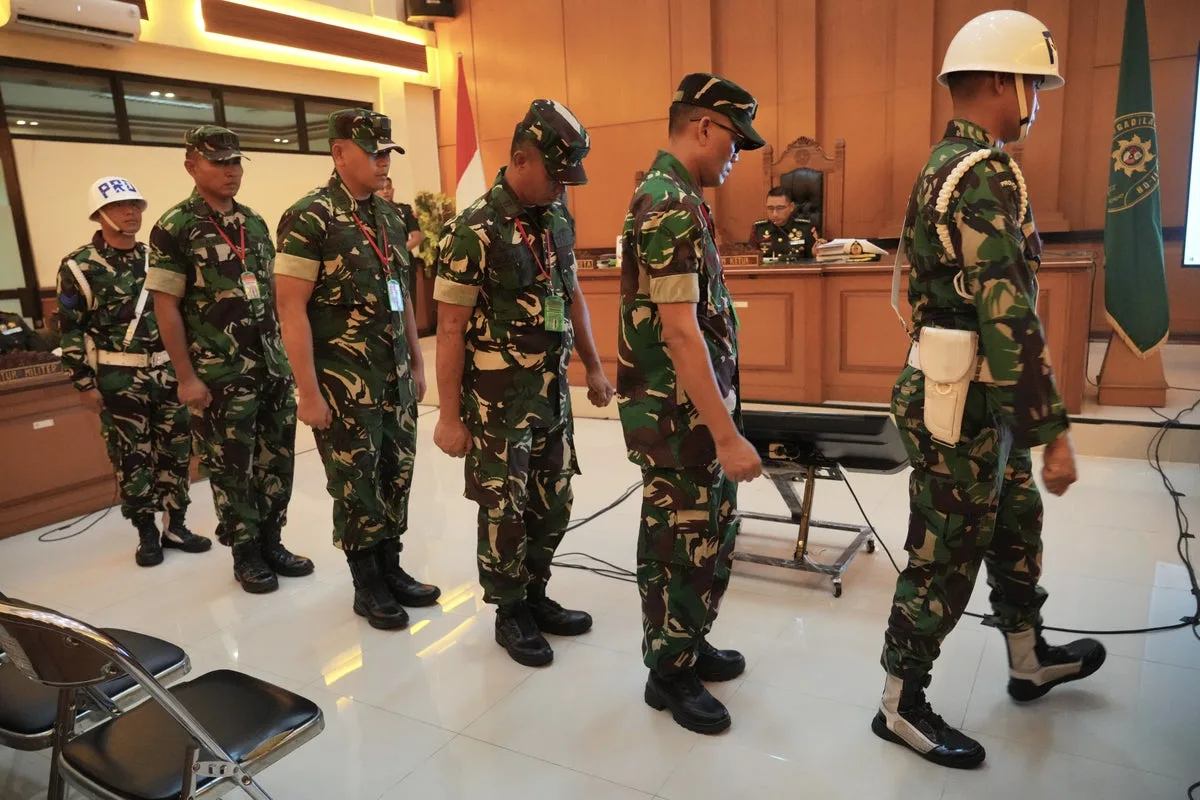
An Indonesian military court has convicted four service members for their role in an acid attack on a prominent human rights activist, sentencing them to between 18 months and three years in prison. The verdict, delivered on Wednesday, has drawn sharp criticism from rights groups who argue it fails to address potential higher-level involvement.
The convicted individuals—three navy marines and an air force officer—were all assigned to the intelligence agency of the Indonesian National Armed Forces (TNI). They were found guilty of attacking Andrie Yunus, a human rights lawyer and senior activist with the Commission for the Disappeared and Victims of Violence (KontraS), in March. Yunus suffered severe burns and permanent damage to his right eye after assailants threw hydrochloric acid at his face while he was riding a motorcycle in central Jakarta.
Presiding military judge Fredy Isnartanto stated that the defendants “betrayed their duties by deliberately throwing acid at Andrie Yunus,” adding that their actions “damaged the image of the Indonesian military and demonstrated clear arrogance.” Sergeant Edi Sudarko received the longest sentence of three years and was dismissed from the TNI, along with First Lieutenant Budhi Hariyanto Widhi Cahyono, who was sentenced to two and a half years. Captain Nandala Dwi Prasetya and Lieutenant Sami Lakka were jailed for two years and 18 months, respectively.

Rights groups, including Amnesty International Indonesia, criticised the verdict as a potential “show trial” and called for those who may have ordered or financed the attack to be prosecuted in civilian courts. Indonesia’s National Commission on Human Rights (Komnas HAM) has launched an investigation and found indications that the assault was a planned operation potentially involving more individuals. The commission identified multiple rights violations, including the right to security and freedom from torture.
Yunus, who refused to testify due to ongoing medical recovery and lack of trust in the military court, has been recognised for his advocacy against impunity and his work on security sector reform. The case has revived concerns about military impunity in Indonesia, echoing past unresolved attacks on activists, such as the 2004 poisoning death of KontraS founder Munir Said Thalib.