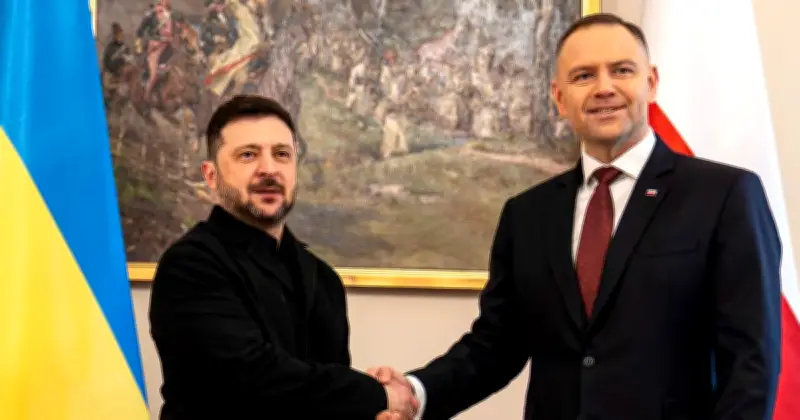
In a significant diplomatic move, Poland has revoked the honorary Order of the White Eagle from Ukrainian President Volodymyr Zelensky, following a decision by Kyiv to name a military unit after the Ukrainian Insurgent Army (UPA). The UPA, a World War II-era organization, is remembered in Poland for its role in the massacres of Polish civilians in the Volyn region, a painful chapter in the history of both nations.
Polish President's Decision
Polish President Karol Nawrocki announced the revocation on Friday, June 19, stating, "We must not betray the sacrifices of our ancestors with silence. These are graves that must not be forgotten." The decision came after Ukraine refused to reconsider the naming of the military unit, despite repeated Polish signals about the issue's importance.
Public and Political Reaction
The move has sparked controversy, with Polish Prime Minister Donald Tusk remarking that the situation "pleases Putin and shocks our allies." Tusk called on both presidents to "tone down emotions, not to fuel tensions," warning that Moscow could benefit from a rift between the two countries. A recent poll indicated that 52% of Poles now view Ukraine less favorably due to the renaming.

Ukraine's Response
Ukraine reacted swiftly, with officials condemning the revocation. Kyrylo Budanov, head of the President's Office, renounced his Golden Officer’s Cross of the Order of Merit from Poland, stating he could not "stand aside and watch as the flywheel of hatred is spun against our citizens." Ukraine's ambassador to Poland, Vasyl Bodnar, also returned his award, emphasizing that Zelensky is "a friend of Poland" and that the dispute benefits Moscow.
Diplomatic Fallout
Foreign Minister Andrii Sybiha called the decision a "strategic mistake from which only Moscow benefits," and refused the Commander’s Cross Order of Merit awarded to him in 2022. The Ukrainian Presidential Office has yet to comment on the matter. Poland, a staunch supporter of Ukraine in its war against Russia, has campaigned for Ukraine in the EU and supports sanctions against Russia, but historical grievances continue to strain relations.