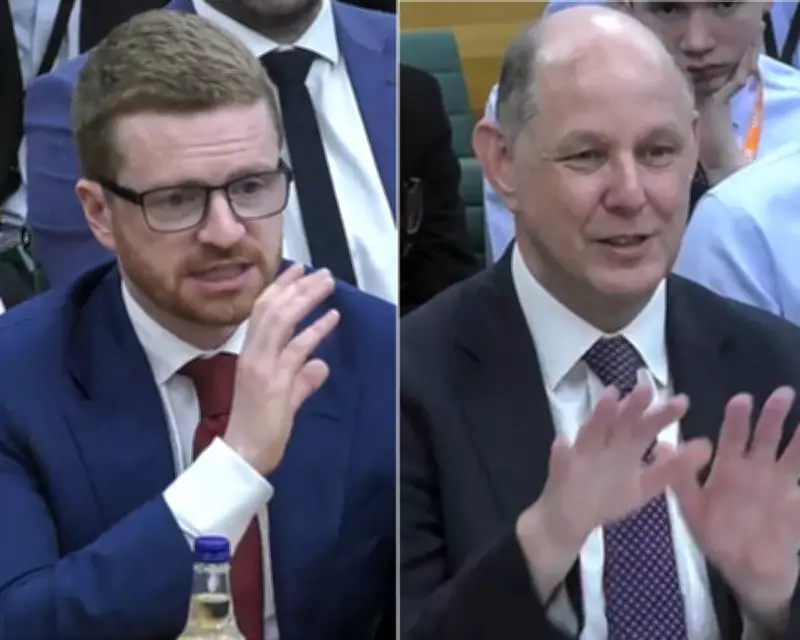
Morgan McSweeney, the prime minister’s former chief of staff, made his first public appearance at a high-stakes hearing of the foreign affairs select committee to be grilled on the appointment and vetting of the disgraced US ambassador Peter Mandelson. He was preceded by the former Foreign Office chief Philip Barton, who oversaw the early formal process for Mandelson’s appointment. Here are the key takeaways from the hearing.
1. Barton Felt Pressure to Get Mandelson Appointed Before Trump’s Inauguration
Barton said there was “absolutely” pressure on the Foreign, Commonwealth and Development Office (FCDO) to get Mandelson to Washington as quickly as possible, though he drew a distinction between pressure to grant vetting and pressure to do the process quickly. He said No 10 was “uninterested” in the vetting process, and inquiries were about the pace of his arrival, ideally before the inauguration. McSweeney stated he never personally inquired about the progress of the vetting with the FCDO. “What I did not do was oversee national security vetting, ask officials to ignore procedures, request that steps should be skipped, or communicate, explicitly or implicitly, that checks should be cleared at all costs. I would never have considered that acceptable,” he told the committee. However, he noted that the public expects government decisions to be delivered quickly by civil servants. “There’s pressure in government every day, and most of that pressure comes from within,” he said. “No 10’s job in all of this is to make sure that the prime minister’s decisions are acted on quickly.”
2. McSweeney Confirms He Advised the Prime Minister to Appoint Mandelson
McSweeney claimed that the first person to propose Mandelson as ambassador was Mandelson himself. He said that appointing him “was a serious error of judgment … I advised the prime minister in support of that appointment and I was wrong to do so.” He insisted his relationship with Mandelson had been deeply misrepresented; the two had barely met until 2017, and Mandelson was uninterested in Labour Together, which was at that stage McSweeney’s project to persuade centrist MPs to stay in Labour and wait to retake the party from Jeremy Corbyn’s allies. He said he later saw him as a “confidante” on matters of political strategy, but he was not involved in candidate vetting or reshuffles, though he admitted Mandelson had offered advice on those. He believed their priority at the time was to appoint someone who could secure a trade deal with the US, and Mandelson’s trade experience made him the right candidate. “This was not some hero I was trying to get a job for,” he said. Barton said there was no consultation of the Foreign Office. “I wasn’t involved, I wasn’t told a decision was coming,” Barton told the committee. He said the “die was cast” and that there was no possibility of advising against the appointment. “The normal order is vetting then announcement,” he said.

3. Both Barton and McSweeney Had Concerns About Mandelson’s Epstein Connections
McSweeney said he had concerns about Mandelson’s friendship with Epstein, which he put in writing and received a reply. That email is now being withheld by the Met police as part of their investigations. But he said he accepted Mandelson’s version of events that he and Epstein were not close friends. “What has emerged since then was way, way, way worse than I had expected at the time. And it was when I saw the pictures, when I saw the Bloomberg revelations in September 2025, I have to say it was like a knife through my soul,” he said. Barton said he was well aware of the “toxic” nature of the Epstein connection from his time in the US and his understanding of American politics. “I didn’t know anything that wasn’t in the public domain. Now we know a lot more about Mandelson’s links to Epstein.” He suggested the national security adviser, Jonathan Powell, also had concerns.

4. The ‘Just Fucking Approve’ Phone Call Is a Myth
Both Barton and McSweeney said it is untrue that McSweeney called Barton and told him “just fucking approve it” – a longstanding rumour that most papers did not report due to lack of evidence. Barton said he had never spoken to McSweeney apart from in group meetings and that he had never sworn. McSweeney said the swearing rumour “is something that has caused me a great deal of stress for a number of months. I do not know why people do this in politics, put around untrue rumours. They phone lots of journalists. Those journalists then phone lots of politicians … It’s damaging for people’s reputations. And I think it’s unfair for staff who can’t speak for themselves.”
5. Neither Knew Mandelson Had Failed the UK Security Vetting Process
Barton swerved the question about whether it was the right choice to sack Robbins but admitted he had never before been involved in a process that showed so many red flags. McSweeney said No 10 “didn’t have a contingency plan [for Mandelson failing vetting] in place, but was always aware that somebody could fail security vetting, was always aware that that was a possibility for any appointment that we made.” Asked if he thought Mandelson might fail vetting, McSweeney said: “No. And if it had happened, we’d have withdrawn the ambassadorship. It would have been a political embarrassment.”
6. Few Official Records and Regrets Over the Process
Both Barton and McSweeney routinely failed to identify whether proper records were taken of conversations. McSweeney admitted it had not been ideal for him and Labour’s communications chief, Matthew Doyle, to be the ones making inquiries to Mandelson about Epstein after the relationship was flagged in the initial due diligence. “When I look back on it, I certainly think it would have been much, much better if I’d asked PET [the Cabinet Office’s propriety and ethics team] to ask those follow-up questions,” he said. “I guess my thinking at the time was if I put follow-up questions to him in writing, and that if a senior member of staff did that, that he would feel more obligated to give the truth and the full truth.” But he said it was “the prime minister’s decision” and that both had assumed the developed vetting process would delve deeper. Barton swerved the question directly if due process was followed – especially as it was at the heart of the vote on referral to the privileges committee which was imminently under way in the Commons. “The bit I was responsible for, up until I stepped down on Sunday 19 January, that was proper process, done at pace as we were asked … It was unusual for the announcement to be made before he vetted.”