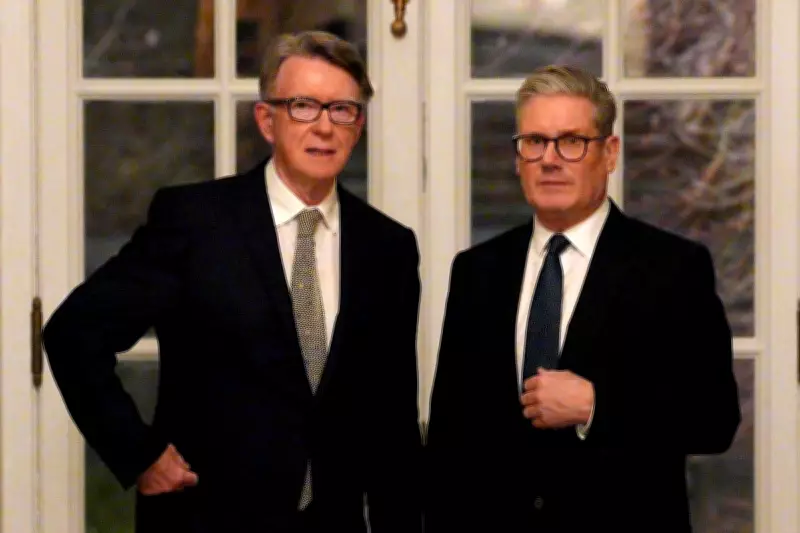
Sir Keir Starmer's former chief of staff has conceded that he made a "serious error of judgement" in supporting the appointment of Peter Mandelson as US ambassador, as the Prime Minister strives to move past the failed vetting controversy. Tuesday afternoon marks a pivotal moment for Starmer's leadership as MPs cast their votes on whether to initiate a parliamentary inquiry into the affair.
Morgan McSweeney, who served as Starmer's chief of staff until recently, placed the blame squarely on Lord Mandelson, asserting that the Labour peer had not been forthcoming about his connections. McSweeney stated that Mandelson would not have "come close" to securing the diplomatic post if the allegations contained in the Epstein files had been known at the time.
McSweeney's Testimony
During his evidence session before MPs investigating the scandal, McSweeney began by remembering the victims of Jeffrey Epstein, describing the moment he realised the full extent of Mandelson's links to the convicted sex offender as "like a knife through my soul." He denied regarding Mandelson as a hero and revealed that Mandelson himself had first suggested McSweeney's name for the Washington role.

McSweeney also disclosed that Mandelson was present inside Number 10 on the day of the last reshuffle, although he denied that the former ambassador's "ideas" influenced the outcome. Furthermore, he was compelled to refute allegations of a 'jobs for the boys' culture within Downing Street after acknowledging discussions about a separate ambassadorial position for Sir Keir's then spin doctor, Matthew Doyle. McSweeney explained that the Prime Minister wanted Doyle "to be able to land on his feet" after losing his job.
Police Inquiry and Political Fallout
Lord Mandelson is currently under police investigation over claims that he leaked sensitive government documents to Jeffrey Epstein. The scandal has intensified pressure on Starmer, who has insisted he would not have proceeded with Mandelson's appointment as his top diplomat to Washington had he been aware of the vetting issues.
The vote on Tuesday will determine whether a formal 'sleaze' inquiry is launched, potentially prolonging the political fallout from the affair. McSweeney's admission of a "serious error of judgement" is seen as an attempt to mitigate damage, but critics argue it raises further questions about the decision-making processes within Starmer's inner circle.