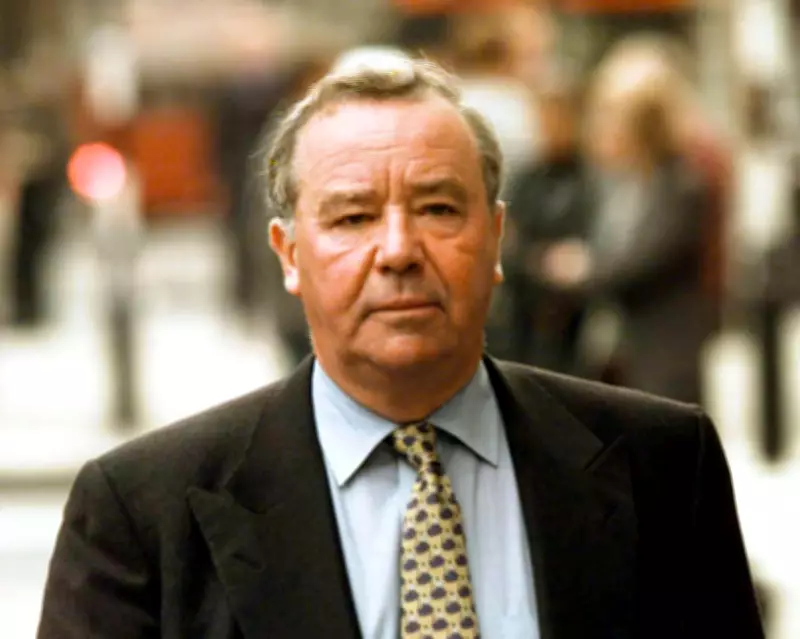
Lord Clarke of Stone-cum-Ebony, the senior judge who chaired the public inquiry into the 1989 Marchioness disaster, has died at the age of 82 after suffering from Alzheimer's disease.
Ten years after the Marchioness pleasure boat sank on a summer's night in 1989, drowning 51 people in the Thames, Anthony Clarke was asked to hold an inquiry. As a result of his authoritative and swiftly delivered reports, safety on the river has significantly improved. There are now four RNLI lifeboat stations covering the busy urban waterway from Teddington to Gravesend.
Clarke was selected for the sensitive role by John Prescott, then transport secretary and deputy prime minister. The Labour government believed there were lessons yet to be learned even after inquests and an accident investigation had been conducted.

In his first report, the Thames Safety Inquiry, published in early 2000, Clarke concluded that a fresh examination of the disaster caused by a collision between the Marchioness and the dredger Bowbelle near Southwark Bridge was needed. He chaired the judicial inquiry that followed, publishing additional reports in 2001. Altogether he made 74 recommendations, the vast majority of which were adopted.
The basic cause of the collision, he observed, was poor lookout on both vessels. Neither saw the other in time to take action to avoid the collision. One of his recommendations was for alcohol tests for mariners; the captain of the Bowbelle had drunk six pints of lager before the collision. Clarke also had to deal with the coroner's decision to cut off the hands of some victims for identification purposes, which added to public alarm.
Prescott later thanked Clarke in the Commons for a remarkable piece of work that restored confidence in investigations following such tragedies. Though a lawyer of modesty and good humour, Clarke was a formidable cross-examiner focused, tough and possessed of quick intelligence.
Clarke, known as Tony, was born in Ayr. His mother Isobel was Scottish, and his father Harry was a maltster from a family of brewers. He attended Oakham School in Rutland, and his interest in courts was first aroused by newspaper reports of the 1957 murder trial of alleged serial killer John Bodkin Adams. At King's College, Cambridge, he read economics and law.
In 1965, Clarke was admitted to Middle Temple. After contacting fellow King's alumnus Nicholas Phillips, he secured a barrister pupillage at Two Essex Court, which specialised in maritime law. Clarke had no nautical experience but took to the specialism with enthusiasm.
He married Rosemary Adam in 1968 after meeting at a Beatles concert. Clarke was appointed a QC in 1979 and appeared in shipping cases in Hong Kong and Singapore as well as at the public inquiry into the 1987 loss of the Herald of Free Enterprise ferry. He sat as a recorder from 1985 until made a high court judge in 1993, put in charge of the admiralty court. Five years later he was promoted to the court of appeal and in 2005 became Master of the Rolls.
In 2009, Clarke became the first judge who had not sat in the House of Lords to be appointed a justice of the newly created Supreme Court, though he was still made a life peer. Among landmark cases he led were Autoclenz Ltd v Belcher, which upheld employment rights of contract cleaners, and Rainy Sky SA v Kookmin Bank, a shipping case reinforcing business common sense in interpreting commercial agreements.
In Gaughran v the Chief Constable of the Police Service of Northern Ireland, Clarke ruled that it was proportionate for police to retain DNA information, though the decision was later overturned by the European Court of Human Rights. He was one of eight justices in the majority in the Supreme Court's Article 50 ruling in 2017 that the government needed parliamentary approval to authorise Brexit.
Clarke retired from the court later that year but served on the Hong Kong Court of Final Appeal until 2020. The Latin motto on his coat of arms was Festina Lente: Make haste slowly. Lord Neuberger paid tribute to him as the genial and intelligent glue which ensured the cohesion of the court. Outside law, Clarke enjoyed bridge, golf, tennis and hockey, and was a keen skier in his youth. Rosemary survives him along with their three children and six grandchildren.