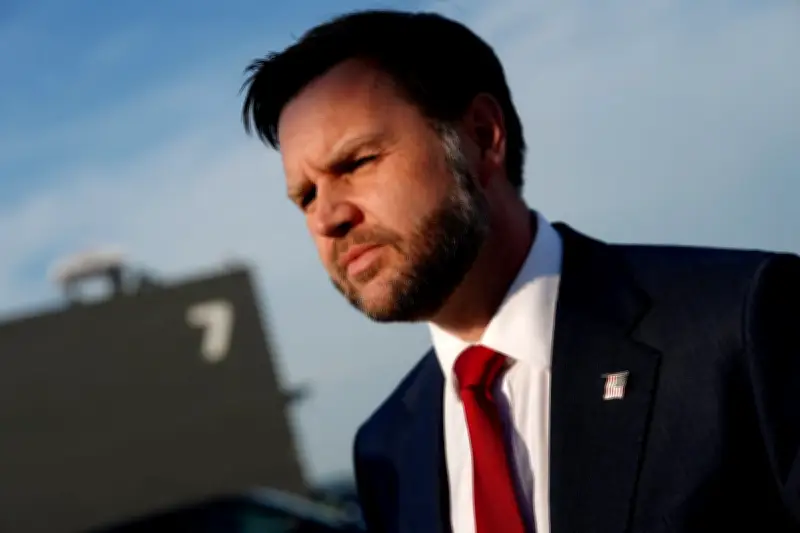
Vice-President JD Vance has staked his political future on the Iran ceasefire deal, a shaky agreement that appears to be unraveling. After months of being sidelined during the administration's war in Iran, Vance now leads negotiations, but the deal's fragility and internal opposition threaten his 2028 presidential ambitions.
Vance's Gamble on Iran Negotiations
Vance, a vocal opponent of "forever wars" who served as a combat correspondent in Iraq, was forced to defend the largest US military intervention in the Middle East in a generation. He was excluded from the Mar-a-Lago war room and distanced from war planning, with journalists briefed on his opposition. "We could see that he was deeply uncomfortable," said a former Senate colleague. "This is not what he joined the administration to do."
Taking on the mantle of negotiating with Iran through Pakistani mediators, Vance led the highest-level engagement between US and Iranian officials since the 1979 revolution. The deal's terms, including sanctions relief and frozen asset releases, made him a target for hawkish and pro-Israel members of his own party. Critics called him too credulous of Iranian promises.

Undercut by the White House
Vance has been regularly undercut by the White House, with Trump threatening to resume strikes on Iran and even assassinate Iranian negotiators. Vance sought to smooth over Trump's edges: "What we told the Iranians yesterday is that when you guys engage in what us millennials might call trash talk, you can't expect the president not to respond."
For nearly a week, Vance was trotted out to sell the deal on television, facing grilling on The View where Whoopi Goldberg and Joy Behar took potshots. "Are you his interpreter, or his vice-president?" Behar exclaimed. In an interview with Ross Douthat, Vance gave an unusually critical appraisal of Israeli policy: "You're a country of 9 million people. You can't just kill your way out of solving every national security problem."
Political Fallout and 2028 Prospects
The Iran war has imperiled Vance's likely 2028 presidential run. He remains the presumptive Republican favorite but has lost ground to Marco Rubio, a foreign policy hawk. "For many voters, Vance now represents a deeply and increasingly unpopular administration," wrote Andrew Day of the American Conservative. "What had seemed predetermined – Vance 2028 – can no longer be taken for granted."
Trump has made clear the stakes: "If it works out, I'm going to take the credit. If it doesn't work out, I'm blaming JD." This echoes a joke he made about Rubio over a year ago. Now Vance is in the hot seat, attempting to end a war and rehabilitate his anti-interventionist image.