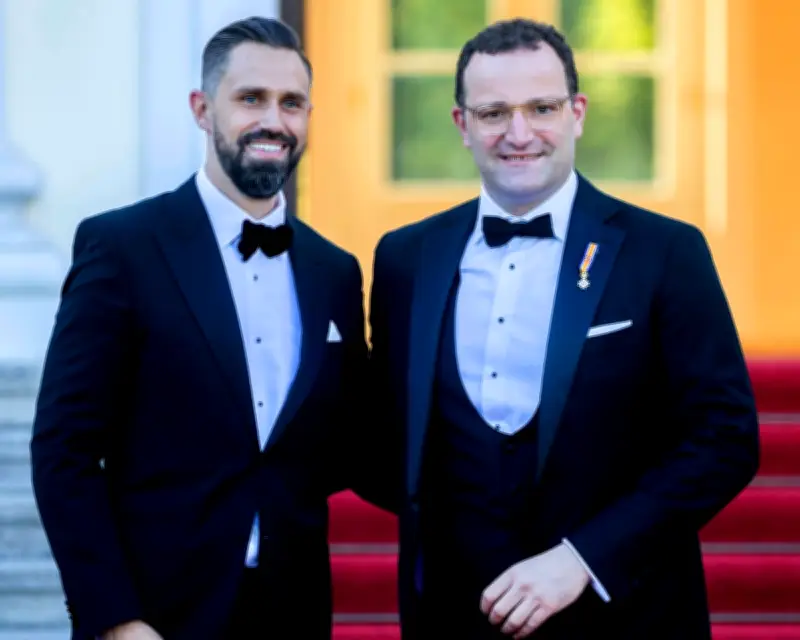
Jens Spahn, a senior German politician and ally of Chancellor Friedrich Merz, has resigned as chair of the Christian Democratic Union (CDU) after he and his husband, Daniel Funke, used a surrogate mother in the United States to become parents. The practice is banned in Germany, and Spahn had previously criticized surrogacy, calling it a 'rented womb.'
Background on Surrogacy Ban
Surrogacy is illegal in Germany under the 1990 Embryo Protection Act, punishable by up to three years in prison or a fine. In 2020, when Spahn served as health minister, he refused to relax this policy. Despite this, he and Funke pursued surrogacy in the US, where it is legal in many states.
Spahn announced the birth of their son, Georg, on Wednesday, telling the German newspaper Bild: 'Georg is our greatest joy. This feeling is almost impossible to put into words.' This announcement came just months after the CDU voted at a party conference in February to maintain the surrogacy ban while the surrogate mother was around four months pregnant.

Accusations of Hypocrisy
The news immediately drew criticism from within and outside the CDU. Marion Rosin, a CDU member in Thuringia and part of the Women's Union, told the BBC: 'Politicians who set standards for others must be measured by them too. If that credibility is gone, resignation is a matter of consequence.'
Spahn initially defended his actions in interviews, telling Bild he had 'wrestled with myself for a long time, including on the issue of surrogacy.' However, this failed to appease his critics. Daniel Peters, leader of the CDU in Mecklenburg-Western Pomerania, told Bild: 'Jens Spahn is no longer tenable as chair of the parliamentary group and must resign.' He added it was 'completely unacceptable' for Spahn to vote one way as a senior CDU politician and then 'act quite differently as a private individual.'
Janosch Dahmen, the CDU's health spokesperson, also criticized the double standards, stating: 'Anyone who advocates for rules politically should be able to explain clearly why those rules apparently do not apply to them personally.'
Resignation and Reaction
As calls for his resignation mounted, Merz declined to comment on Spahn's future, saying the issue would be discussed at the party's next executive meeting. On Friday, Spahn told Bild: 'One thing is clear to me: For me, and this becomes clearer to me every hour, there is nothing more important than my family.'
On Saturday, Spahn resigned from his position, stating: 'In recent days, I have come to realise that my personal happiness in starting a family with my husband and becoming a father is incompatible with my political office.' Merz responded on X, calling the decision 'right and inevitable. Credibility is the most valuable asset in politics.'
Spahn, 46, is a prominent voice on the CDU's right wing and has advocated for a harder line on immigration. His resignation highlights the ongoing debate over surrogacy in Germany, where many couples seek the procedure abroad due to the domestic ban.