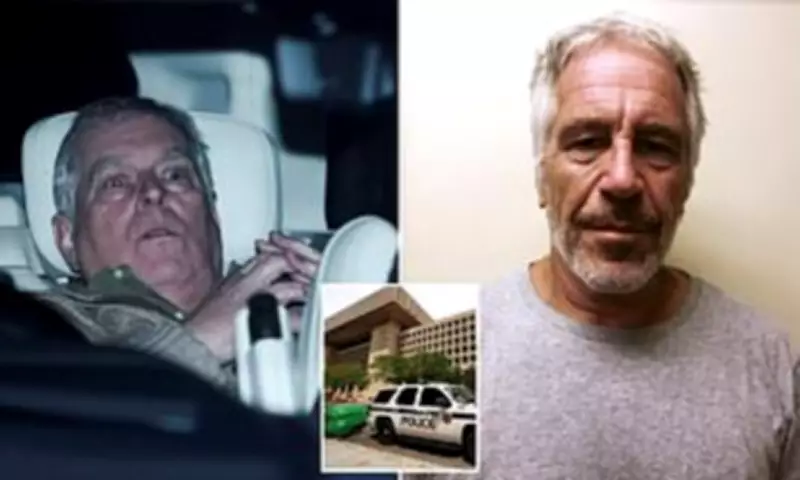
FBI Faces Mounting Pressure to Investigate Prince Andrew Following UK Arrest
Behind the imposing brutalist facade of the FBI headquarters at 935 Pennsylvania Avenue, agents are undoubtedly monitoring the escalating scandal surrounding Britain's royal family with more than casual interest. Whether an active FBI investigation into Andrew Mountbatten-Windsor currently exists remains a tightly guarded secret, as the agency typically operates in silence and refuses to confirm or deny ongoing probes.
Growing Calls for US Legal Action
In the wake of the former prince's arrest in the United Kingdom, demands for action by America's federal investigators are intensifying. Spencer Kuvin, a lawyer representing victims of Jeffrey Epstein, told the Daily Mail: 'If there is an active US investigation touching on conduct connected to American victims, or US soil, then the Federal Bureau of Investigation absolutely should seek to interview him through proper legal channels.'
Kuvin emphasized the importance of international cooperation, noting: 'The United States and the United Kingdom have well-established mutual legal assistance mechanisms. Cooperation between governments is critical in transnational abuse cases. Survivors deserve a full accounting of the facts - wherever those facts lead.'

Andrew, aged 66, was arrested on suspicion of misconduct in public office and held in custody for eleven hours before being released under investigation. He is accused of sharing sensitive information with the late pedophile financier Jeffrey Epstein during his tenure as a UK trade envoy. The former prince has previously vehemently denied any wrongdoing regarding his connections to Epstein.
Potential US Jurisdiction and Congressional Pressure
According to legal experts, if any information involved in the misconduct case relates to American companies, Andrew could face investigation in the United States. Kuvin stated: 'Given the historical association between Andrew and Jeffrey Epstein, any credible evidence of financial misconduct tied to US jurisdiction warrants thorough scrutiny.' He added that if no US information was exchanged, jurisdiction would likely remain solely with British authorities.
Despite an internal FBI memo from last July indicating no anticipated further charges related to Epstein, Andrew's arrest has sparked renewed pressure from members of Congress. Republican congressman Thomas Massie, instrumental in the release of the Epstein Files, wrote on social media: 'Prince Andrew was just arrested. This was the metric I established for success of the Epstein Files Transparency Act. Now we need JUSTICE in the United States. It's time for Attorney General Pam Bondi and FBI Director Kash Patel to act!'
The House Oversight Committee, investigating the Epstein scandal, had previously requested Andrew's cooperation. Democratic congressman Suhas Subramanyam commented following the arrest: 'He has continued to ignore our calls to cooperate with the Oversight Committee's investigation. We hope the arrest will lead to answers and show that there will be accountability even if you hide, regardless of how rich and powerful you are.'
Fifteen Years of FBI Documentation
At FBI headquarters, information about Andrew has been accumulating for fifteen years. The Epstein Files reveal his first mention in a 2011 FBI inquiry when agents interviewed a victim in Australia. Although the woman's name was redacted, she appeared to be Virginia Giuffre, who claimed Epstein abused her and that Ghislaine Maxwell trafficked her to other men, including Andrew.
Giuffre alleged that at age seventeen, Andrew engaged in sexual activity with her at Maxwell's London home and received an 'erotic massage' at Epstein's New York residence. Andrew consistently denied these claims, including during a 2019 Newsnight interview. Tragically, Giuffre took her own life last year at age forty-one.

Legal Maneuvering and Diplomatic Exchanges
A 2019 Department of Justice memo indicated prosecutors sought to interview Andrew as part of their Epstein investigation. The following year, Manhattan US attorney Geoffrey Berman publicly criticized Andrew for providing 'zero' assistance, stating: 'Prince Andrew has now completely shut the door on voluntary cooperation and our office is considering its options.'
The Epstein Files show Andrew's attorney subsequently requested Department of Justice officials cease such statements, explaining he needed to gather information from the Royal Household before cooperation could occur. Department of Justice officials then made a formal Mutual Legal Assistance treaty request for British authorities to interview Andrew as a witness.
Diplomatic correspondence from August 2021 reveals British officials inquiring whether Andrew's status had changed from witness to suspect following civil litigation. A US Embassy official noted the ambassador was keen to resolve the matter promptly. The files also indicate British complaints about American leaks suggesting Andrew's refusal to cooperate was straining UK-US relations.
Travel Restrictions and Legal Complexities
Andrew's last known US visit occurred in 2010 when he met Epstein in New York. Reports from friends suggest he fears returning to America due to potential arrest. Immigration lawyer Melissa Chavin explained: 'It is not known whether there is a criminal investigation ongoing in the US, but fear of that could keep Andrew from traveling to the United States for holidays or to visit friends.'
Chavin noted that if Andrew agreed to testify before Congress, he could potentially receive guarantees against arrest through a US Immigration and Customs Enforcement program for expert witnesses. She explained: 'ICE facilitates parole requests from government agencies like the FBI and the Department of Justice. ICE coordinates with the consulate local to the witness, like the London US Embassy, to authorize the parole. The witness would be watched carefully while in the US, and leave the country immediately following their testimony.'
Andrew has likely lost his special A-1 'Head of State' visa, which allowed minimal security checks and special airport treatment. Chavin suggested the UK probably removed Andrew from visa request rolls some time ago, as foreign governments submit names for approval by the US Secretary of State.
The FBI maintains its standard position, with a spokesman stating simply: 'The FBI declines to comment.' As legal and diplomatic complexities unfold on both sides of the Atlantic, scrutiny of Andrew's connections to Epstein continues to intensify within American law enforcement and legislative circles.