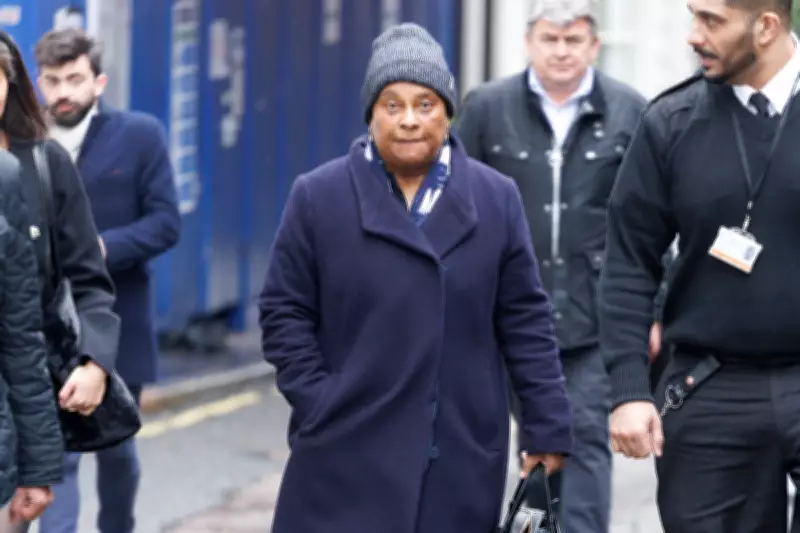
In a remarkable courtroom confrontation at the High Court today, Baroness Doreen Lawrence will deliver what promises to be one of the most emotionally charged testimonies in recent legal memory. The once-timid former bank worker, who transformed into a formidable campaigner following the racist murder of her son Stephen, now finds herself taking on the very newspaper that once championed her cause.
The Unlikely Alliance That Turned Sour
Baroness Lawrence stands alongside Elton John and Prince Harry in a breach of privacy claim against Associated Newspapers, but her testimony carries unique weight. Her legal team have described her as "haunted," "disappointed," and "determined" in the lead-up to this action against the owners of the Daily Mail.
What makes today's proceedings particularly poignant is that Baroness Lawrence faces a former media ally she believes betrayed her trust. For decades, her name has been intertwined with the Daily Mail since Stephen's murder in 1993, when the aspiring architect was stabbed repeatedly at a bus stop in south-east London in an unprovoked racist attack.

A Mother's Unwavering Fight
From the beginning, Baroness Lawrence was convinced racism underpinned both the murder and the deeply flawed police investigation. "Coming across a black family who have no criminal background is new to them, an alien concept," she told the Stephen Lawrence Inquiry in 1998. "It was like you have to be a criminal if you are black."
Refusing to be silenced, Doreen and Stephen's father Neville launched a high-profile campaign highlighting racism's impact on the case and Metropolitan Police failures. When no prosecutions followed, they initiated a landmark private prosecution against five suspects, though it ultimately collapsed due to "double jeopardy" rules.
The Daily Mail's Dramatic Intervention
Then in 1997, the Daily Mail published its explosive front page declaring "MURDERERS" above pictures of five men, daring them to sue if the accusation was wrong. Suddenly, Baroness Lawrence appeared to have gained a powerful media ally.
The convergence of the Lawrences' tireless campaigning, media coverage, public outcry, and political will triggered an official inquiry. The 1999 Macpherson report found the investigation incompetent and described the Metropolitan Police as "institutionally racist." Following reforms to double jeopardy rules, Gary Dobson and David Norris were convicted of murder in 2012.
Allegations of Covert Surveillance
Now, court filings reveal startling allegations that Baroness Lawrence was subject to covert electronic surveillance "both before and during" the Daily Mail's Justice for Stephen Lawrence Campaign. Her barrister David Sherborne told the High Court in 2023 that she finds it "hard to believe the level of duplicity and manipulation" at play.
"She now sees that the Daily Mail's true interests were about self-promotion and using her and her son's murder as a means to generate 'exclusive' headlines, sell newspapers, and to profit," Sherborne stated. "She cannot think of any act or conduct lower than stealing and exploiting information from a mother who buried her son for this reason."
Associated Newspapers have dismissed the allegations as "preposterous," noting that claimants' main potential witnesses have retracted claims, while they possess statements from over 40 journalists denying the allegations.
The Making of a Campaigner
Baroness Lawrence's transformation from quiet bank worker to powerful advocate began with personal experience of racism. After emigrating from Jamaica aged nine, teachers discouraged her despite mathematical talent. "I think they looked at us Black girls and thought we probably wouldn't come to much," she recalled.
When Stephen was murdered, her "instinct was to fight." Over nearly thirty years seeking justice, she became one of Britain's most effective campaigners, establishing the Stephen Lawrence Day Foundation, joining Liberty's board, and serving as race relations advisor to the Labour Party.
The Personal Cost of Public Campaigning
Despite her accomplishments, Baroness Lawrence has acknowledged the personal toll. "I'm a very quiet person," she confessed in 2014. "I don't like to stand out from the crowd. But I felt that because of what happened, I had to have a voice."

Her 1999 divorce from Neville after 28 years resulted from feeling "alone and unsupported," not Stephen's death or legal proceedings. "For the past 32 years, I haven't had the opportunity to grieve my son properly because I have had to challenge every step of the way," she revealed last November.
Today, as she steps into the witness box, Baroness Lawrence prepares to challenge yet another institution, demonstrating the same determination that has defined her three-decade journey from grieving mother to respected peer and relentless campaigner for justice.