Sacred Art Controversy Erupts Over Cherub Resembling Italian Premier
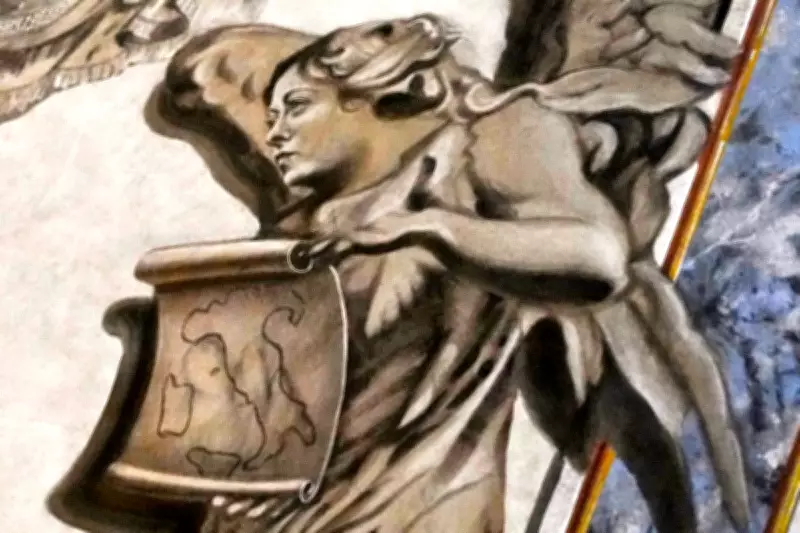
The appearance of a cherub bearing an uncanny likeness to Italian Prime Minister Giorgia Meloni within a historic Roman basilica has ignited a significant controversy, prompting parallel investigations by both ecclesiastical and state authorities. This unusual convergence of sacred art and contemporary politics has created a minor scandal that touches upon Italy's complex historical legacy and modern identity.
Dual Investigations Launched Amid Public Frenzy
The Diocese of Rome and the Italian Culture Ministry have simultaneously announced formal inquiries into recent restoration work at the Basilica of San Lorenzo in Lucina. This swift response followed the publication of photographs in Italian newspapers over the weekend, revealing the Meloni-esque cherub positioned within a side chapel near the main altar. Both institutions have demonstrated little tolerance for what they perceive as profane elements infiltrating sacred spaces.
The immediate reaction has transformed the ancient basilica, already renowned as one of Rome's oldest churches, into an unexpected tourist attraction. Throughout Sunday and Monday, the church experienced unprecedented crowds of curiosity-seekers attempting to photograph the controversial angel, at times disrupting religious services and creating logistical challenges for parish staff.

Historical Context Adds Political Complexity
The basilica, situated on one of Rome's most prestigious piazzas near the Spanish Steps and consecrated in 440 by Pope Sixtus III, holds particular historical significance. The cherub in question forms part of a 2000 renovation that included a bust of Italy's last king, Umberto II. The angelic figure appears to kneel before the monarch while holding a map of Italy, creating a politically charged tableau given Italy's rejection of monarchy after World War II due to its support for Fascist dictator Benito Mussolini.
This historical backdrop adds layers of complexity to the current controversy, as Meloni's right-wing political party traces its origins to the neo-fascist movement that succeeded Mussolini's regime. The positioning of a Meloni-resembling cherub in apparent deference to the last king has raised eyebrows among historians and political commentators alike.
Conflicting Accounts from Key Figures
Prime Minister Meloni herself has attempted to downplay the situation through social media, humorously dismissing the comparison with a lighthearted comment about not resembling an angel. Meanwhile, parish priest Reverend Daniele Micheletti has acknowledged the visual similarity while minimizing its significance, citing historical precedents where artists incorporated real-life individuals into religious works.
The restorer, Bruno Valentinetti, has firmly denied any intentional modeling on Meloni's features, asserting that he merely restored his own original 2000 painting and that any resemblance exists solely in the eye of the beholder. This claim has prompted investigators to examine archival materials to determine the cherub's original appearance before restoration.
Institutional Responses and Future Implications
Cardinal Baldassare Reina, Vicar of Rome, has taken a notably stricter stance than the parish priest, announcing a thorough investigation while criticizing what he perceived as an overly casual attitude toward the matter. The Diocese of Rome has issued a formal statement emphasizing that sacred art must serve liturgical purposes rather than being exploited for other means.
Simultaneously, the Culture Ministry has dispatched special delegate Daniela Porro alongside ministry officials to conduct an on-site assessment. Their stated objective involves ascertaining the nature of the artwork and determining appropriate next steps, potentially including modifications or removal of the controversial element.
This incident raises broader questions about the intersection of religious art, political symbolism, and historical preservation in contemporary Italy. As investigations proceed, the basilica continues to attract visitors drawn by both artistic curiosity and political intrigue, creating an unusual moment where sacred tradition meets modern controversy in the heart of Rome.