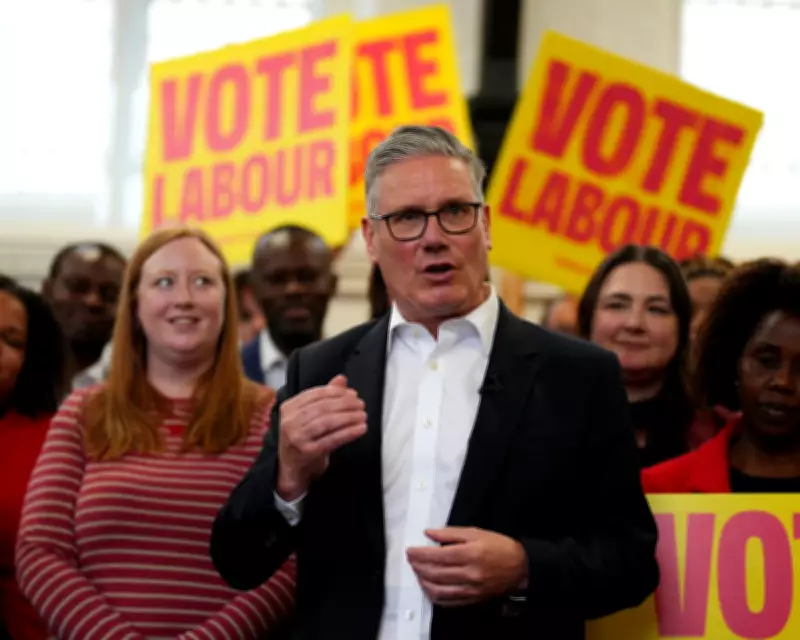
Labour is braced for a brutal set of local election results that will define either the next phase of Keir Starmer's prime ministership or bring about the end of it. Party strategists expect losses of close to 2,000 seats across England, Wales and Scotland but the damage could be a lot worse. The danger for the prime minister is not whether Labour loses heavily but where those losses come from and who those voters turn to.
Key Battlegrounds and Timing
The results will arrive in waves on Friday into Saturday. Here is a guide to the key declaration windows and what the results could mean for Britain after less than two years of a Labour government.
Friday Midnight to 3am
Key battlegrounds: Hartlepool, Oxford, Dudley. The early hours of Friday morning will produce only a handful of declarations but they could shape the mood of the entire elections. Hartlepool is one of the first major tests of whether Reform UK can convert polling momentum into real council gains. If Reform performs strongly, Labour strategists will worry less about isolated local setbacks and more about the emergence of a durable anti-establishment challenger. Oxford could offer an early sign of how fragmented progressive and anti-Tory voters have become. Dudley matters because it sits in politically volatile Midlands territory where Labour faces pressure from Reform amid frustration over immigration, living standards and distrust of Westminster politics.

3am to 7am
Key battlegrounds: Hampshire, Wandsworth, Bexley, Havering. This is the point at which the elections start to become nationally reflective. Hampshire is one of the most important Conservative stress tests. If the Tories struggle badly there, it will reinforce the sense that their decline extends far beyond Westminster. London will also begin to reveal its increasingly fragmented politics. Wandsworth remains symbolically important after Labour's breakthrough there, while Bexley and Havering are outer-London battlegrounds where Reform hopes to test its message. For Labour, these boroughs expose the tension inside Starmer's coalition, trying to hold together progressive urban voters, socially conservative suburban voters and former Labour supporters drifting towards Reform.
12pm to 3pm
Key battlegrounds: Blackburn, Manchester, Sheffield. Manchester is unlikely to produce an existential result for Labour, but the scale of any protest vote will matter. Blackburn and other northern authorities with large Muslim populations will be closely watched for signs Labour continues to suffer politically over Gaza. Sheffield may be among the most politically revealing declarations of the day, with the Greens steadily building strength there. If Labour performs badly in Sheffield, it will deepen concerns that Starmer is simultaneously leaking support to Reform on one side and the Greens on the other. Scotland will add another layer of uncertainty, with counting in Scottish parliament elections instead of local councils. For Starmer, a weak Scottish performance would matter politically even if Labour remains competitive overall.
3pm to 6pm
Key battlegrounds: Hillingdon, Suffolk, Sunderland, Barnsley, Harrow, Barking and Dagenham, Barnet, Essex, Hackney, Norfolk. This will be the busiest and politically most dangerous phase of the elections. Most Welsh declarations are expected during this period. For Labour, poor results in Wales would carry consequences far beyond local government, deepening fears ahead of next year's Senedd election. Plaid Cymru hopes to benefit from anti-Westminster frustration, while Reform UK believes it can exploit economic frustration in former Labour areas. Essex and Norfolk are key Reform battlegrounds. Sunderland and Barnsley are equally important for Labour because they represent working-class areas Reform believes it can penetrate. London also becomes politically volatile, with Hackney, Harrow, Barnet and Barking and Dagenham each representing different forms of pressure on Labour.

6pm to 9pm
Key battlegrounds: Birmingham, Camden, Hastings, Lambeth, Newham, Bromley. At this point, the national narrative is likely to have been formed, but some of the most politically symbolic declarations will arrive late. Camden and Lambeth will be closely watched for Green advances against Labour in progressive inner London. Newham reflects Labour's growing vulnerability to independents and hyperlocal campaigns in diverse urban areas. Birmingham encapsulates many of Labour's wider vulnerabilities at once. Meanwhile, Bromley remains a marker of whether the Conservatives can still dominate parts of outer London.
Saturday
Key battlegrounds: Bradford, Croydon, Lewisham, Tower Hamlets. The final declarations arrive on Saturday afternoon. These elections may reveal a country fragmenting into different political blocs: Reform doing well in towns and areas Labour once dominated, Greens growing in progressive cities, independents challenging Labour in Muslim communities and Conservatives struggling to defend even traditional heartlands. For Starmer, the most dangerous outcome would be evidence of simultaneous erosion almost everywhere. If the results suggest the party is bleeding voters to multiple rivals at once, while also weakening in Wales and failing to build decisively in Scotland, questions about the strength of Starmer's coalition and ultimately his leadership will become much harder to suppress.