
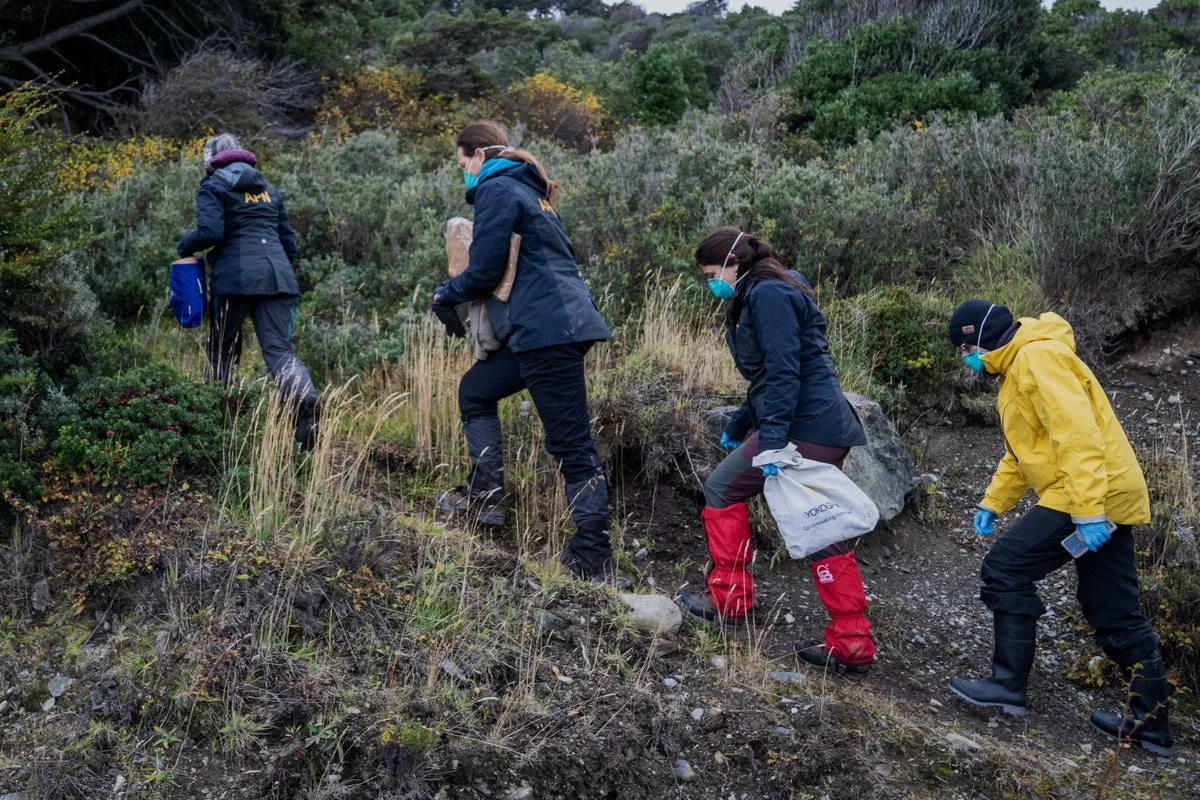
Argentine investigators are trapping rodents in forests near Ushuaia, the southernmost city in the country, to find the source of a deadly hantavirus outbreak that struck the cruise ship MV Hondius last month, killing three people and sickening several others.
Scientists from the state-backed Malbrán Institute, clad in blue gloves and surgical masks, are checking 150 box traps set overnight. Dead rats are placed in black bags and taken to a makeshift laboratory where blood samples will be drawn for testing. The operation began on Tuesday and will continue for three more days before samples are sent to Buenos Aires for analysis, which could take up to a month.
The outbreak has prompted a global effort to trace passengers and their close contacts. Local health authorities in Tierra del Fuego have rejected the national government's initial hypothesis that a Dutch couple, both of whom died, contracted the virus at a landfill near Ushuaia. The couple, keen birdwatchers, had spent several days trekking in the area before boarding the ship on 1 April.
The Andes virus, a type of hantavirus found in southern Chile and Argentina, is usually spread through contact with the faeces and urine of the long-tailed pygmy rice rat, known locally as the 'colilargo'. While the colilargo is absent from Tierra del Fuego, believed to be too cold and isolated, a subspecies is present in forests around Ushuaia, and scientists have never tested whether it can transmit the virus.
Health authorities in Tierra del Fuego, which relies heavily on tourism, say they welcome the investigation's broader aim: to determine whether the province has hantavirus at all, particularly in the context of climate change. The number of hantavirus cases has increased in Argentina in recent years, a trend attributed to colilargos expanding their range due to warming temperatures and human encroachment.
“The province has never done this kind of testing before,” said Martín Alfaro, spokesperson for the local health ministry. “It's important that we rule out the possibility of transmission occurring here.”




