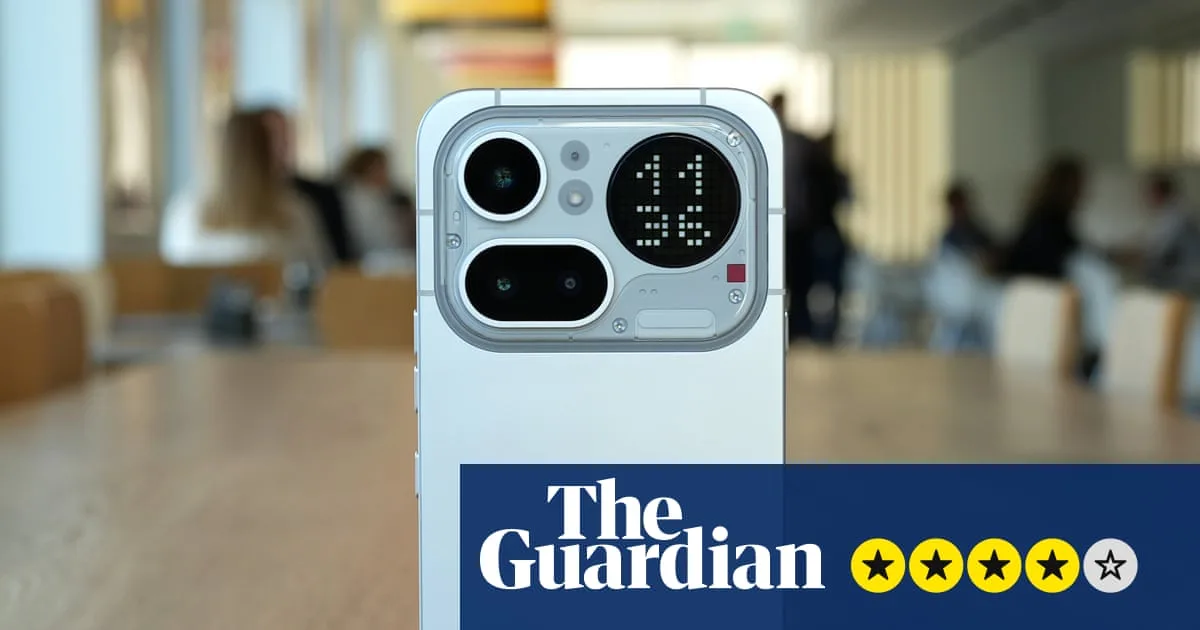
Nothing's latest quirky smartphone, the Phone 4a Pro, is a large aluminium Android device with three cameras and a prominent LED matrix screen on the back, challenging the notion that mid-range phones cannot be fun. The Phone 4a Pro represents a departure from UK-based Nothing's previous glass-clad transparent designs. While it retains some of those elements in the camera island at the top, the rest of the body is now solid aluminium, a rare sight in the Android phone market.
Priced at £499 (€479/$499/A$949), the Phone 4a Pro sits above the regular Phone 4a at £349 and below the top-of-the-line Phone 3 at £699. This places it in direct competition with excellent but less interestingly designed rivals such as the Google Pixel 10a.
Design and Display
The slim aluminium body feels premium, but the Phone 4a Pro is a very large device with a huge 6.83-inch OLED screen on the front. Only a handful of phones, such as the Samsung Galaxy S26 Ultra or iPhone 17 Pro Max, are quite that big, making it a two-handed affair most of the time. The screen is bright, colourful, and crisp with a high 144Hz refresh rate that ensures smooth scrolling, making it ideal for watching videos on the commute.
The large camera island on the back contains a bright circular dot-matrix LED screen, capable of displaying notification icons, the time, timers, volume, and charge levels. It can also serve as a rough selfie screen for the rear camera or show fun widgets like a moon phase tracker, downloadable from Nothing's user community. While similar to previous iterations of Nothing's Glyph interface, much of it is gimmicky, but having the time on the back or notification icons is surprisingly useful.
Specifications and Performance
- Screen: 6.83in 144Hz QHD+ OLED (450ppi)
- Processor: Qualcomm Snapdragon 7 Gen 4
- RAM: 8 or 12GB
- Storage: 128 or 256GB
- Operating system: Nothing OS 4.1 (Android 16)
- Camera: 50MP main, 50MP 3.5x tele, 8MP ultrawide, 32MP selfie
- Connectivity: 5G, eSIM, WiFi 6, NFC, Bluetooth 5.4, GNSS
- Water resistance: IP65 (25cm depths for 20 minutes)
- Dimensions: 163.6 x 76.6 x 7.9mm
- Weight: 210g
The Phone 4a Pro is powered by a Qualcomm Snapdragon 7 Gen 4 chip, which may not win raw processing awards but handles daily tasks smoothly. It can run games at medium settings, though the phone warms up during extended play. The battery lasts a solid two or more days between charges, with over seven hours of active screen use across a mix of WiFi and 5G for messaging, browsing, video, and apps. Gaming reduces battery life significantly, but the 4a Pro outlasts even the heaviest days with about 20% remaining. Most users will only need to charge every other day. The battery fully charges in 72 minutes, reaching 58% in 30 minutes with a 50W or higher USB-C adapter (not included).
Software: Nothing OS 4.1
Running Nothing OS 4.1, the Phone 4a Pro offers one of the slickest and most customisable versions of Android 16. Users can choose standard app icons and widgets or dot-matrix-style designs that add retro coolness. For those who find other phones boring, this is the antidote. The software supports live notifications from apps like Uber or Google Maps on an improved lock screen, and includes Google Gemini built-in along with Nothing's own AI tools.
The Essential Space app now syncs to Nothing's cloud, backing up up to 2.15GB of AI-analysed images, text, voice notes, and call recordings, though access requires a Nothing phone, limiting its usefulness. The phone features AI-powered search integrated with Essential Space. The new Essential Voice is an AI dictation system that cleans up speech errors and recognises phrases like "my phone number" to insert it automatically. While a nice idea similar to Google's Rambler tool, it is somewhat slow and requires an internet connection.
Nothing promises only three years of Android version updates and six years of security updates, which falls short of the best in this price range. Additionally, some apps like Netflix do not support HDR content playback due to certification issues, limiting the screen's potential.
Camera Performance
The Phone 4a Pro features a triple rear camera and a solid 32-megapixel selfie camera. The main 50MP camera excels in good light, capturing detailed photos with a wide dynamic range, but struggles in dimmer conditions, appearing soft. The 50MP 3.5x telephoto camera is the standout, delivering sharp details and good colour in good light, with an effective 7x magnification via 2x crop zoom, and digital zoom up to 140x (though quality degrades beyond 30x). The 8MP ultrawide camera is disappointingly weak on detail, suitable only for casual viewing. Night mode is softer than expected, and exposure and colour balance can be inconsistent, but overall, the main and telephoto cameras offer good value. Video recording is solid but lacks 4K at 60fps, which is becoming standard.
Sustainability
The battery maintains at least 80% of its original capacity for 1,200 full charge cycles. The phone is generally repairable in the UK, made from recycled aluminium, plastic, steel, and tin, with a carbon footprint of 50.5kg CO2 equivalent. Nothing publishes sustainability reports for some devices.
Price and Verdict
The Nothing Phone 4a Pro costs from £499. For comparison, the Phone 4a is £349, Phone 3 is £699, Google Pixel 10a is £449, Samsung Galaxy A57 5G is £529, and Apple iPhone 17e is £599.
The Phone 4a Pro is another slick, striking Android device from Nothing, bucking the trend of dull metal and glass slabs. The aluminium body feels expensive, the screen is huge and vibrant, and the eye-catching camera cluster with dot-matrix display is its standout feature. Combined with a visually interesting version of Android, it is a fun daily driver. Some AI tools are useful, and it offers decent mid-range performance, two-day battery life, and good main and telephoto cameras.
However, the Phone 4a Pro is quite expensive for a mid-range phone, even with rising costs. The cheaper Phone 4a offers many similar features for less, providing better value. For now, buyers can get better cameras or stronger performance elsewhere, though alternatives are less interesting.
Pros: Great software, solid build, eye-catching dot-matrix screen, 3.5x telephoto camera, large good screen, fingerprint scanner, fast charging, six years of security updates, solid battery life.
Cons: No WiFi 7, camera can't match the best, AI features still in development, only three years of Android upgrades, Glyphs a bit gimmicky, expensive for mid-range performance.