Donald Trump has made no public comment on the “All-American” alternative Super Bowl halftime show staged by the conservative group Turning Point USA, which went head-to-head with Bad Bunny’s record-breaking performance. The organisation has already confirmed plans for another such event in 2027, according to a spokesperson.
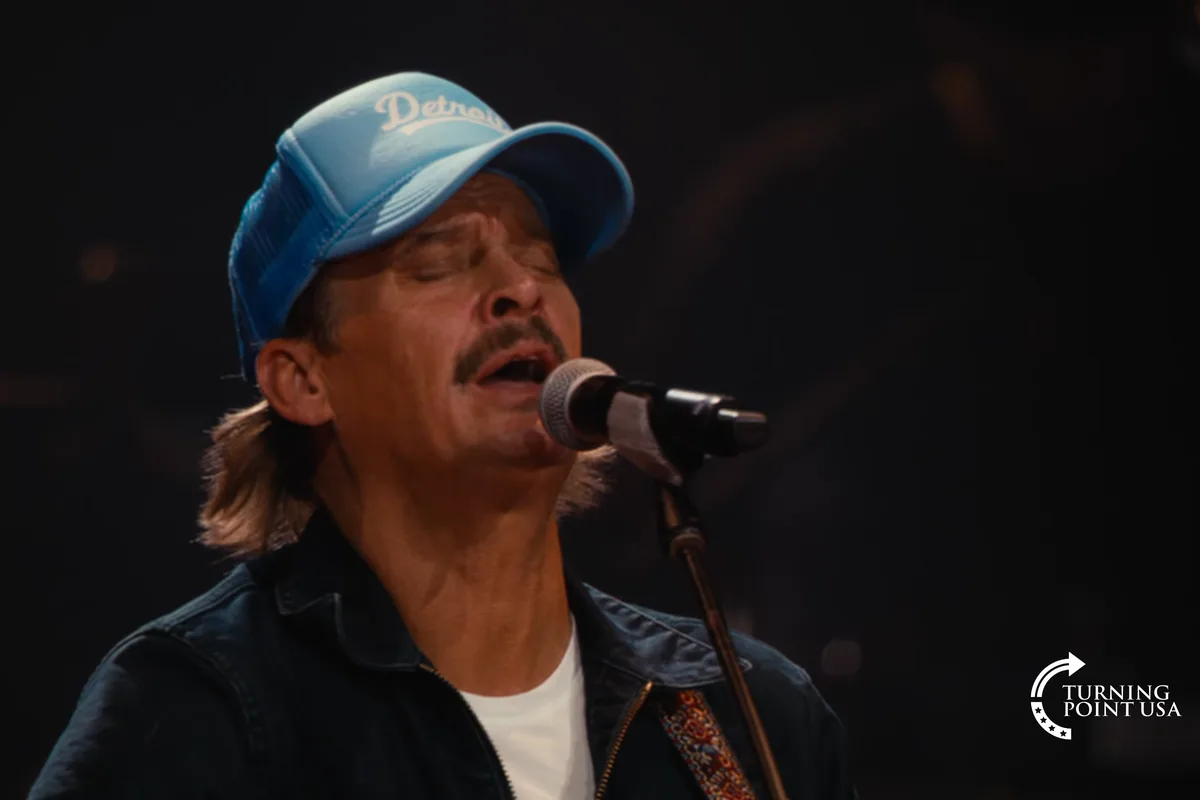
Turning Point’s livestream, featuring Kid Rock and other country artists, attracted up to 6.1 million concurrent viewers at its peak, coinciding with Bad Bunny’s set at Levi’s Stadium in California. Early estimates suggest more than 100 million watched the Puerto Rican star, who made history as the first Super Bowl headliner to perform predominantly in Spanish. His show celebrated his heritage and the Americas, with scenes of Puerto Rico, flags, a wedding, and surprise appearances by Lady Gaga and Ricky Martin. At the end, stadium screens displayed the message: “The only thing more powerful than hate is love.”
The “All-American” event lasted 35 minutes, double the length of Bad Bunny’s performance, and was recorded on a stage in Atlanta, according to Variety. A Kid Rock song played during the Turning Point show reached number one on iTunes the following day, outranking the nearest track by Bad Bunny.
Trump had previously criticised Bad Bunny on Truth Social, calling the official halftime show “one of the worst, EVER!” However, video circulated on social media showed that the performance visible on a large screen at a Mar-a-Lago watch party was the official NFL show, not the Turning Point USA concert. Days before the event, Kid Rock appeared to address the controversy by sharing a Kobe Bryant quote on Instagram: “Learn to love the hate. Embrace it. Enjoy it. You earned it.”
Turning Point USA, founded by the late Charlie Kirk, has positioned the event as a response to conservative anger over Bad Bunny’s selection. Country artist Brantley Gilbert, one of the performers, told Fox News he was taking part because of his love for America, adding that he was a “recovering addict” and proud of his choices. The venue for the event was not revealed, but it was streamed live on several platforms.