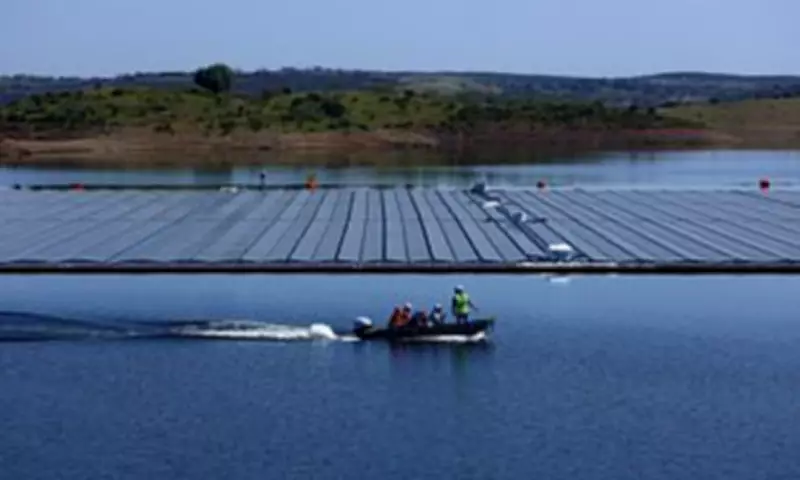
Labour is facing demands to cut red tape so firms can install arrays of solar panels capable of powering tens of thousands of homes and businesses on water reservoirs instead of farmland.
Ministers have backed a new report suggesting that floating barrages could provide enough power for a city the size of Birmingham by the end of the decade, and equal the current generation from all UK offshore wind by 2050.
Supporters hope it could mean fewer solar farms controversially being placed on rural fields, which critics say is a waste of valuable land for cultivation and an eyesore.

Many reservoirs are in or near existing population centres and the barrages can also improve water quality by reducing evaporation and impeding algae growth.
But fears have been raised that the planning system could stymie efforts to increase its use.
Currently water utilities enjoy Permitted Development Rights (PDR) that allow them to install floating solar without planning permission on reservoirs - but only if the electricity generated is for their own use on site. If the panels are to be connected to the National Grid commercially they must go through the full planning system, which takes time and money and could see them rejected.
The report, produced for solar operator Bluefield by CBI Economics, suggests that with government support floating solar could cover 30 per cent of the UK's 65,000 hectares of water utility and other man-made water bodies - like disused quarries - by the middle of the century.
It noted: 'Reservoirs are often located near population centres and planned AI growth zones, creating opportunities to co-locate clean generation with energy-intensive data infrastructure.'
Tory MP Lincoln Jopp, whose Spelthorne constituency contains four reservoirs that provide half of London's drinking water, told the Mail: 'Floating solar is twice as efficient as land-based systems and means we don't have to use good farming land for solar. It reduces evaporation by 70 per cent and actually improves the water quality underneath. It's good for energy security, water security and food security. It also means we don't have to suffer the visual vandalism of carpeting our beautiful countryside in the stuff.'
Dillon Smith, Head of Policy for the Conservative Environment Network, added: 'With the Iran war once again exposing our lack of energy security, this report shows the potential of floating solar to bolster our domestic energy production. But meddlesome government red tape is blocking this innovative technology and undermining Britain's energy security. Two small changes could turbocharge our floating solar industry. Firstly, it is ridiculous that floating solar gets automatic planning permission on reservoirs but only if they don't sell it to the grid. This holds back investment and stops British households from benefiting from clean energy. Ministers should also expand PDRs for floating solar on docks, small on-farm reservoirs, and disused quarries, cutting this additional red tape that the industry needlessly faces.'
It comes at a time when the UK's energy mix is being bitterly fought over, with demands for greater oil and gas extraction in the North Sea being rejected by Net Zero Secretary Ed Miliband. Mr Miliband has previously vowed to 'double down, not back down' on the transition to clean energy in the light of the Iran war which has led to soaring fossil fuel prices, even as political opponents call for a slowdown on net zero.
The National Energy System Operator has said solar set new records in March, generating more than 15GW of power for the first time, as the grid nears the milestone of 100 per cent clean power for a short period of time for the first time in history.
Endorsing the Bluefield report, Energy Minister Michael Shanks said: 'It's time Britain stopped letting our solar potential float on by. For too long, we have failed to harness the huge potential of our reservoirs for floating solar. As this report shows, floating solar could generate the equivalent of around 11 gas power stations by 2040 - cutting our dependence on volatile global gas markets we do not control. In the wake of the conflict with Iran, which has once again exposed the risks of relying on fossil fuels, we are moving further and faster to deliver clean power - protecting bills and making us energy secure.'