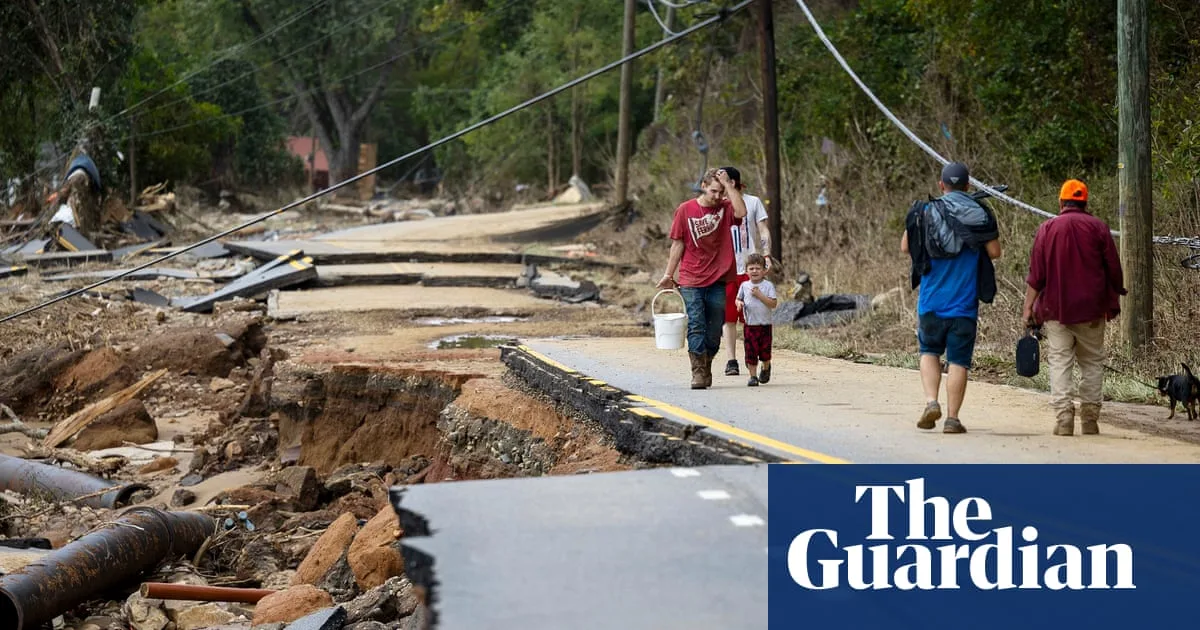
A federal judge in Boston has blocked the Trump administration from diverting funds from a multibillion-dollar grant program designed to protect communities against natural disasters. US District Judge Richard Stearns issued a preliminary injunction preventing the government from spending money allocated to the Building Resilient Infrastructure and Communities (Bric) program for other purposes.
Twenty mostly Democratic-led states sued the administration last month, arguing that the Federal Emergency Management Agency (Fema) lacked the authority to cancel the Bric program without congressional approval. Fema, part of the Department of Homeland Security (DHS), did not immediately respond to requests for comment.
The Bric program, created in 2018 during Donald Trump’s first term, helps state and local governments protect major infrastructure such as roads and bridges before floods, hurricanes and other disasters. According to the lawsuit, Fema approved about $4.5bn in grants for nearly 2,000 projects, primarily in coastal states, over the last four years.

In April, Fema announced it would end the program, calling it wasteful, ineffective and politicised. Judge Stearns said that while Fema does not appear to have cancelled grants since then, states should not have to wait to sue until after losing funding, and the cancellation of new grants suggested Fema considered an eventual shutdown a fait accompli.
“There is an inherent public interest in ensuring that the government follows the law, and the potential hardship accruing to the states from the funds being repurposed is great,” the judge wrote. “The Bric program is designed to protect against natural disasters and save lives. The potential hardship to the government, in contrast, is minimal.”
The 20 states that sued are led by Massachusetts and Washington, and include Arizona, California, Colorado, Connecticut, Delaware, Illinois, Maine, Maryland, Michigan, Minnesota, New Jersey, New York, North Carolina, Oregon, Pennsylvania, Rhode Island, Vermont and Wisconsin. The offices of Massachusetts’ and Washington’s attorneys general had no immediate comment.