Burnham's Defence Spending Plan Alarms Economists Amid Market Turmoil
Burnham's Defence Plan Alarms Economists Amid Market Turmoil

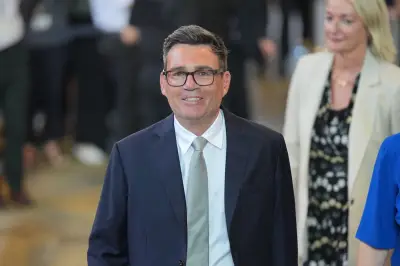
Economists have voiced alarm after Andy Burnham suggested the Government could ditch fiscal rules to boost defence spending. The Labour Manchester Mayor floated the prospect as he gave more heavy hints about a bid to succeed Keir Starmer as Prime Minister.

He suggested that defence spending — roughly £40 billion a year plus another £20 billion of capital investment — could be excluded from limits designed to keep the finances sustainable. That would potentially allow ministers to bolster the military by borrowing more, instead of cutting things like welfare.

However, markets have already been pumping up the costs of servicing the UK's debt in recent weeks, with the Iran war causing turmoil. Speaking to Bloomberg at a summit in Madrid yesterday, Mr Burnham said the Government would need to take a 'different course' after looming local elections.

Wide Pickt banner — collaborative shopping lists app for Telegram, phone mockup with grocery list

'There's certainly a case, when we look at the pressure on defence spending, to consider that exceptionally outside of the rules,' he said.

Traders were spooked last September when Mr Burnham argued that the Government needed 'to get beyond this thing of being in hock to the bond markets'. He later tried to reel the comments back by saying he had not been making the case to 'ignore' the bond market.

'What I do say is that it is the decisions of politicians from the 1980s onwards that have left us in hock to them with little headroom and room for manoeuvre,' he told a Resolution Foundation event.

Defence bonds, which are essentially debt sold to institutional or public investors, have been mooted as a way out, raising ring-fenced cash without impacting welfare spending or tax. But one Labour MP told the Financial Times that Mr Burnham's latest intervention showed he was 'making stuff up without having a clue what he's saying'.

Rupert Harrison, an economist and former Treasury aide, said: 'Talk like this is exactly what will cause guilt market jitters during a leadership election. Markets obviously won't be fooled that borrowing for defence is somehow different to borrowing for anything else.'

Simon French, of investment firm Panmure Liberum, said: 'If the Mayor of Manchester thinks that an accounting change within the fiscal rules will have a different impact (on Gilt yields) to loosening existing fiscal rules then I'd like to know the thinking. You could, perhaps, argue that alongside differential tax treatment of special issue Gilts (war bonds) might see a yield discount. But even that only delays the incidence of the cost to taxpayers (for example reduced debt coupons now in return for reduced lHT receipts later).'

He said that taking around £40 billion a year outside normal budgets would be seen as 'an explicit loosening of the fiscal rules and Gilt issuance expectations would adjust (upwards) accordingly'.

Rachel Reeves has been under huge pressure to say how she will find extra money for defence, with alarm that Britain's military has been hollowed out. A long-promised Defence investment plan has yet to appear as Keir Starmer, the Chancellor and the MoD haggle over what can be afforded.

Speaking in Washington DC earlier this month as she attended a summit of the International Monetary Fund, Ms Reeves said she had already provided a 'big uplift' for defence spending. 'Obviously, we're working through a range of options, but my two budgets have both increased taxes substantially, and I would prefer not to have to do that again,' she said.

Pointing out the current Iran conflict had increased the cost of Government borrowing, she added: 'We already spend one in every £10 of what Government spends on servicing the debt. And if we increase that debt further, we'd only be increasing how much we're spending.'

Pickt after-article banner — collaborative shopping lists app with family illustration