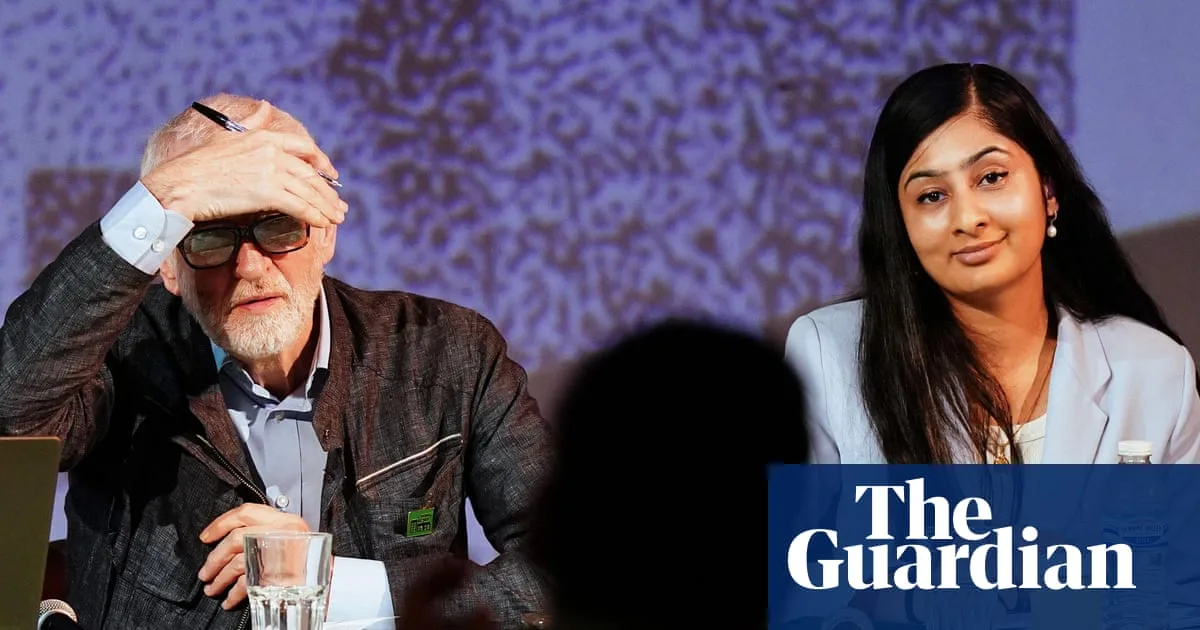
Your Party's Liverpool Launch Marred by Infighting as Corbyn and Sultana Clash
Your Party's Founding Conference Hit by Internal Rifts

The founding conference of the new left-wing political project, Your Party, was held in Liverpool on 30 November 2025, but the event intended to unify the British left was instead dominated by a very public schism between its two leading figures.

A Launch Overshadowed by Division

Jeremy Corbyn and Zarah Sultana, the party's principal founders, were present at the conference, yet their partnership has been fractured by bitter disagreements over strategy and control. This internal conflict has played out through legal threats, public denunciations, and anonymous briefings to right-wing newspapers, threatening to repel the very voters the party seeks to attract.

Your Party initially generated significant momentum, with 800,000 people registering interest after its soft launch in late July. However, by the time of the Liverpool gathering, only 55,000 had signed up as full members—a figure still comparable to the Liberal Democrats but a dramatic scaling down of initial hopes. Conference attendance was reduced to 2,500 delegates.

The Roots of the Rift

The discord stems from a series of unilateral moves. Sultana announced both the party's launch and a membership portal without full agreement from Corbyn and other colleagues. This led to the raising of hundreds of thousands of pounds through a separate entity, resulting in mutual legal threats. Corbyn revealed that the party's finances were so precarious they were recently worried about "being able to even pay for the conference."

At the conference itself, tensions boiled over when several delegates, mostly from the Socialist Workers Party (SWP), were banned from attending. In protest, Sultana boycotted the first day, accusing the leadership of conducting a "witch-hunt." The conference later voted decisively to reject a blanket ban on dual membership, though the final decision on which parties are allowed will rest with a central executive committee.

The Green Party Alternative and a Race Against Time

While Your Party has been consumed by internal process, the Green Party, under co-leader Zack Polanski, has successfully repositioned itself on the unapologetic left. It has been rewarded with a surging membership of 170,000 and polling that sometimes places it ahead of Labour, attracting many politically disillusioned voters.

Delegates in Liverpool expressed a palpable sense of urgency. One told the Guardian, "This is the last throw of the dice, we know that... it is socialism or barbarism." This sentiment reflects fears over a resurgent far-right and multiple global crises. Yet, the party's leadership appears divided on how to respond. Sultana advocates a more militant, ideologically pure stance—demanding immediate NATO withdrawal and the nationalisation of the entire economy—to differentiate from the Greens. Corbyn's appeal remains rooted in the broader, less dogmatic "spirit of 2017."

The conference did see some structural changes, with a narrow vote passing a motion for a larger, 20-person collective leadership body, pushed by a faction called Democratic Socialists. This sets the stage for an experiment in ultra-democratic organisation. However, the fundamental question remains: in an age of looming climate catastrophe and economic turmoil, does the British left have the luxury of time for such internal battles, or will this promising new project succumb to the sectarian infighting that has historically plagued it?