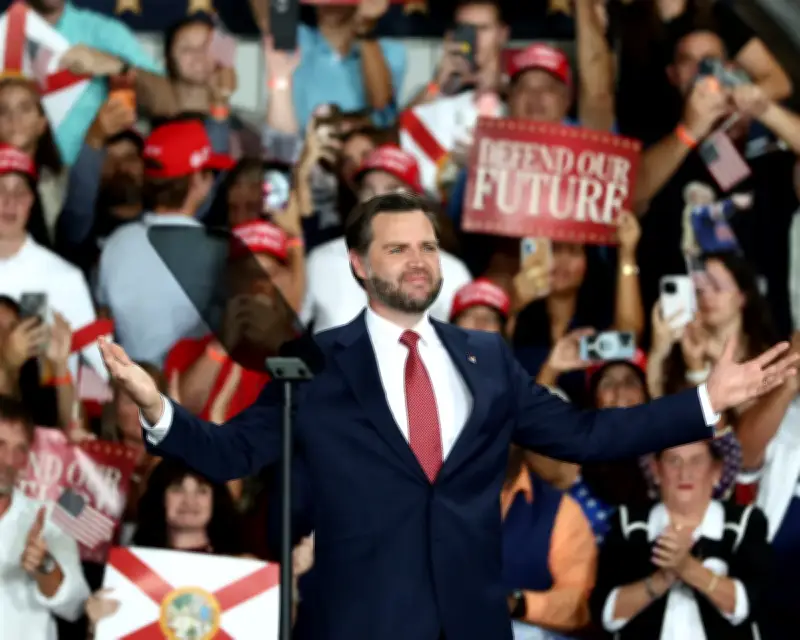
JD Vance has entered the midterm election campaign as a self-styled risk management consultant, urging voters to "give us another chance" while Republicans distance themselves from the Trump administration's record. His remarks, made on 15 September, frame the election as a choice between continued Republican rule and a Democratic Party "consumed by craziness."
Vance's Strategy and Its Limits
Vance's pitch emphasizes harm reduction rather than apology or policy change, avoiding any acknowledgment of error or wrongdoing. This approach allows him and former President Donald Trump to maintain a posture of unwavering strength, but it also exposes the administration's vulnerabilities as some Republican candidates begin to break ranks.
His plea for "another chance" is also a bid to position himself as the heir apparent for the 2028 Republican presidential nomination. However, his defensive stance has dampened fervor among supporters and opened the door to internal party criticism.
Republican Candidates Distance Themselves
Several Republican Senate candidates, previously in lockstep with Trump, have started to edge away. Mike Rogers in Michigan, who once dismissed concerns about rising fuel costs and supported Trump's authority in the Iran War, now says "the best option now is to wind it down." Senator Ashley Hinson of Iowa, who voted repeatedly against the War Powers Resolution, now pleads that "the war needs to be brought to a successful and immediate end."
These Republicans have not offered specific reasons why Trump policies are flawed, but their shift underscores the political risk of continuing the status quo. Their attempts to distance themselves validate voter anxieties and undermine the administration's narrative of Democratic radicalism.
Internal Fractures and Political Identity
Vance's advice to House Republicans to demonize Democrats, even those "not that crazy," reveals the hollowness of his strategy. Polls from The Economist/YouGov show that 51 percent of registered voters describe Trump as "dangerous," 53 percent as "corrupt," and 47 percent as "out-of-touch," with only 18 percent calling him "steady."
Vance's own political journey, from criticizing Trump in 2016 to becoming his vice president, has been marked by multiple identity shifts. His recent memoir, Communion: Finding My Way Back to Faith, credits Peter Thiel for his conversion, but critics like James M Patterson and Thomas D Howes describe his new-found faith as "an ideology that failed."
Vance's ritualistic non-apology, "another chance," may have cornered him into his last political identity—the unapologetic apologist—from which he cannot escape through the 2028 election.