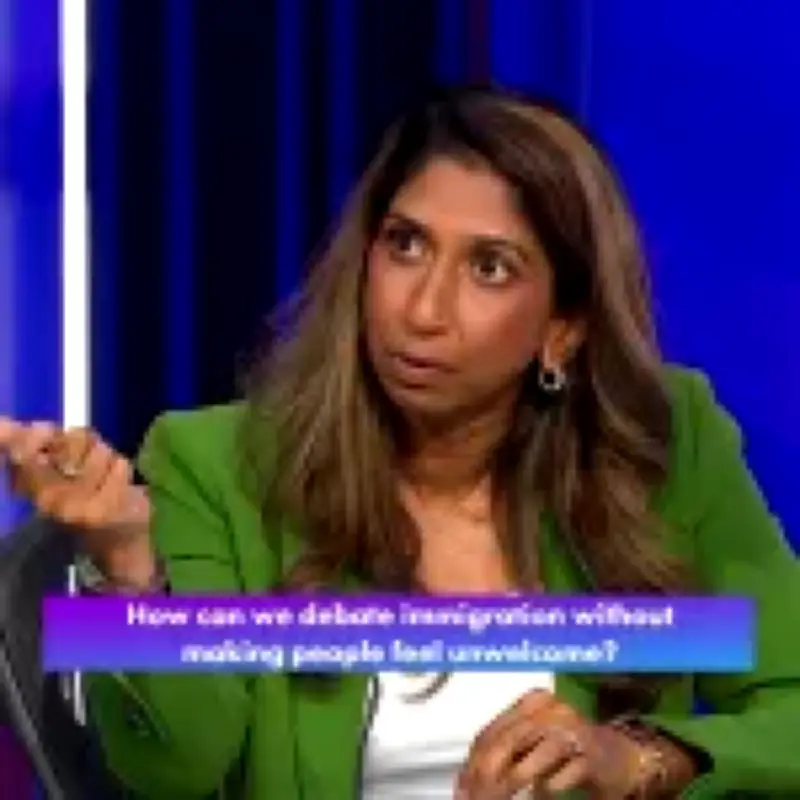
Suella Braverman refused to explain what makes someone English during a heated debate on BBC's Question Time, after appearing to suggest that people who are not white could not be English.
The Reform MP, who was born in London, was challenged by presenter Fiona Bruce to define who can call themselves English and how far back heritage must go to warrant the label. Braverman said her parents and grandparents were not born in England, so she is not of English origin.
Braverman's definition of Englishness
When pressed by Bruce, Braverman eventually offered her definition, suggesting that a 'few generations' of lineage is appropriate. She said: 'I think it becomes pretty obvious when people have got a lineage, an ancestry, a connection, to the heritage of this country, which dates back a few generations. I think that's not unreasonable to expect of people who come to this country.'
An audience member, a black man, accused Braverman of reinforcing 'the racist argument' and internalised racism. He said: 'I've been on this planet for 54 years, and the amount of times I've been told I'm not English, even though I was born here. If I had a penny for every time I've been given that, I'd be a very rich man.'
Social media response
Braverman, who defected to Reform from the Conservatives earlier this year, took to social media after the episode. She wrote: 'You've called me racist this evening- albeit in a contorted way- but in doing so, you've lowered the tone of the debate with divisive and inflammatory language. And absurdly, you're suggesting that I'm being racist against myself. It's because of irresponsible language like yours that we in Reform need security. The left can keep smearing us as racist for challenging the cosy consensus on mass migration but we will not be bullied into silence.'
New Statesman journalist Oli Dugmore also weighed in, saying that while Braverman is allowed to personally identify as she wants, 'the political function of what she was saying, that you can only be English if you're white, is a racist point of view.'