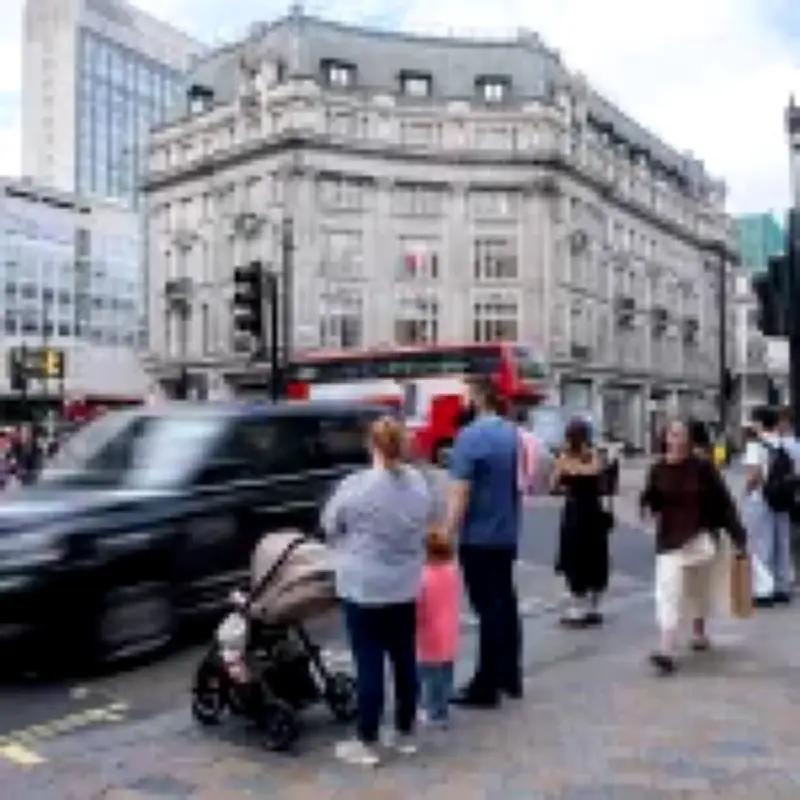
The pedestrianisation of Oxford Street will begin on October 26, 2026, when cars, buses, taxis and bicycles will be banned from a one-kilometre stretch of Europe's busiest shopping street. The London Mayor's flagship project will start with a 'transition phase' that will make the change permanent for the first time, following previous temporary trials.
Scope of the initial phase
Vehicles will be removed from the entire section between Selfridges near the Marble Arch end and Great Portland Street, east of Oxford Circus. This includes Oxford Circus itself, where Oxford Street intersects with Regent Street. Ten bus lines will be re-routed to avoid the section.
Emergency services will continue to have access to all areas, and servicing vehicles such as delivery trucks will be allowed entry between midnight and 7am. Push bikes, e-bikes and e-scooters will not be allowed through the new pedestrianised section, with new cycleways under development. Cars will still be able to cross Oxford Street at certain points, including Duke Street, Davies Street and New Bond Street, although some junctions will be one-way.
Mayor's vision and economic impact
Sadiq Khan said: 'Following strong support from Londoners and businesses, I'm excited to see my bold vision for Oxford Street really coming to life next month as we start going traffic-free, just in time for the busy Christmas shopping period.' He added: 'I'm delighted that on 26 October the transformation of the nation's high street into a pedestrian plaza will begin in earnest – a world-class space where flagship retail will sit alongside next-generation workplaces, designed to host exciting retail and leisure experiences from sport to fashion and cultural events in the future.'
The Greater London Authority says the scheme could generate up to £40million in VAT receipts, as well as £20million extra in business rates. Pedestrianised sections will be revamped with new planters and seating areas to replace the traffic lanes.
Governance and bus re-routing
The Oxford Street Development Corporation (OSDC), led by a board of political figures and business leaders, wants the road to be vehicle-free by the end of October. Following resistance from residents and Westminster City Council, the Mayor placed control of the programme in the hands of the OSDC, which took over planning last month. All applications, from redevelopments to store frontage changes, will now be considered by the authority instead of the council.
Ten bus routes will be redirected down Wigmore Street and Henrietta Place at the rear of John Lewis, with routes 7, 94, 98, 139 and 390, as well as N7, N98, N113, N137 and N207 affected. Buses will rejoin Oxford Street at Great Titchfield Street, except for route 139, which will continue on Regent Street. Passengers will need to walk an additional distance of around 100 to 200 metres to the new bus stops.
Opposition and next steps
The pedestrianisation has opponents, including the now Conservative-led council, which believes the plans will increase pollution in surrounding areas and create traffic bottlenecks elsewhere. Councillor Tim Barnes, deputy leader of Westminster City Council, criticised the plans, saying: 'While we finally now have a timetable for the proposed pedestrianisation, Westminster City Council, residents and businesses on Oxford Street still have a long list of unanswered questions about how it will work. If this is going to be the “greener, better and more prosperous” success that the Mayor has promised, then issues around access, air pollution, street cleaning and public safety, need answers urgently. Right now there's a danger that we will have all of the downsides and too little upside. Traffic will be pushed to the small streets nearby causing economic and environmental harm. We are writing to the Oxford Street Development Corporation with our serious concerns now it is obvious the Mayor is rushing preparations with little time left.'
During the initial testing phase, visitors and businesses will be asked to give feedback until the changes are made permanent in 2027. The project is also slated to establish two new public squares, although their exact locations have yet to be revealed.