Russia's escalating drone and missile strikes against Ukrainian cities are unlikely to break the population's will to resist, according to a new analysis. The bombing campaign, targeting residential buildings, markets, and medical centres, aims to force Ukraine to accept Moscow's territorial demands, but historical evidence and Ukrainian public opinion suggest it will fail.
Escalating Attacks on Cities
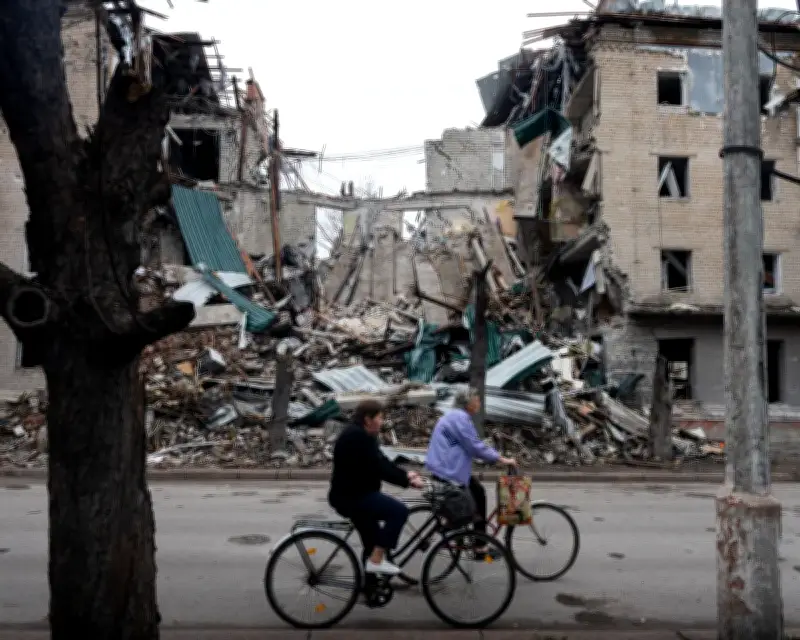
Vladimir Putin's army has made little territorial progress this year, with his goal of annexing four Ukrainian provinces still unfulfilled after more than four and a half years of war. In response, Russia has intensified strikes on cities including Kyiv, Dnipro, Kharkiv, Kherson, Odesa, Mykolaiv, and Sumy, targeting residential buildings, large markets, shopping malls, the Dobrobut medical centre, and the National Academy of Sciences in Kyiv.
During September, Russia launched 3,177 jet-powered drones, mainly Geran variants, at Ukraine—nearly 12% more than in August and a massive increase from 350 in June. These are often supplemented by ballistic missiles like the Iskander, which is difficult to intercept due to its top speed of 5,600mph and ability to swerve in flight.
Public Opinion Remains Defiant
A December 2025 poll by the Kyiv International Institute of Sociology found that three-quarters of Ukrainians rejected a hypothetical deal that included withdrawing from the unoccupied part of Donetsk, recognizing Russia's legal ownership of Crimea and Donbas, and abandoning Nato aspirations. Two-thirds also rejected a settlement requiring ceding the unoccupied parts of the two southern provinces.
These responses are significant because Russia had begun attacking Ukraine's power grid as winter approached. However, the historical record shows that bombing campaigns rarely crush morale; they often strengthen it. Ukrainians view resistance as essential for national survival, and many believe Putin would use any deal to regroup and renew his assault.
Russia's Own Pressures
Russia faces its own challenges. According to the UK's chief of defence staff, the Russian army has suffered 1.5 million casualties. During the first six months of 2026, it captured only 28% as much land as in the same period last year, and troop losses exceed monthly intake by 6,000. Ukrainian drone attacks on Russian supply routes have left troops in Crimea, Kherson, and Zaporizhzhia short of critical supplies, and Operation Vivaldi by Ukraine's 3rd Army Corps forced Russian troops to retreat in the Lyman sector of northern Donetsk.
The war has also harmed Russia's economy, with labour shortages and a 2027 budget draft allocating 35% of federal expenditures to defence. Ukrainian strikes on refineries had cut throughput by about 30% year on year by June, causing fuel shortages, rationing, and a 21% surge in petrol prices since January.
Given Ukrainians' opposition to sacrificing land, the historical failure of bombing campaigns to shatter civilian morale, and Russia's own problems, Putin's drones and missiles are unlikely to force Ukraine to accept peace on his terms, even under the stress of winter.