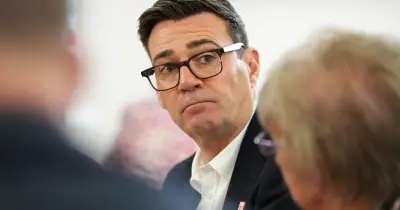
Jon Ossoff, the Democratic US senator for Georgia, has repeatedly stated he has “zero interest” in running for president in 2028, a message he has delivered in debates, interviews, and to multiple media outlets. Despite his insistence, speculation persists in Washington and beyond about his political future, fueled by his rise in a Republican-leaning state and his viral speeches on national issues.
Ossoff, 39, has maintained a consistent lead of between four and eight points in most polls against his Republican challenger, Congressman Mike Collins, a margin no Democrat has posted in Georgia since the late 1990s. This comes after expectations of a bruising contest following Donald Trump's two-point win in Georgia in the 2024 presidential election.
Debate Performance and Strategy
During an October debate, Ossoff dubbed the encounter the “trial of Mike Collins,” pressing Collins on his votes supporting the Iran war, the president's tariffs, and alleged ties to white nationalists. Ossoff declared, “If John Lewis were marching today from Selma to Montgomery, Mike Collins would be grabbing a billy club. His office has been in cahoots with some of the most notorious white supremacists in the country. He himself has amplified neo-Nazi propaganda. He’s never apologized for it. And he should tonight.”
Charlie Bailey, director of the Georgia Democratic party and a trial lawyer, compared Ossoff's approach to a jury trial, saying, “The best trial lawyers, they are themselves. They talk plainly to the jury. They say straightforward things, and the jury can tell that they’re being themselves, and they just believe what they are saying.” Bailey added that when Ossoff talks to voters, “it not only matches up with their experience, their anger, and their frustration; they know he’s telling the truth. That’s leadership.”
Early Political Rise and 2017 Defeat
Ossoff's political rise began with a defeat in 2017, when he ran in a special election for Georgia's sixth congressional district after Tom Price resigned to become health and human services secretary. The district was described by John Ernst, former mayor of Brookhaven, as “the bastion of the proto-Maga movement, but without the craziness. It’s the business wing of the movement.”
Despite raising $23m in small donations, Ossoff lost to Karen Handel in a runoff, 52-48. However, he walked away with the largest Democratic donor database in the US. Lynn Deutsch, mayor of Dunwoody, recalled the energy of that time, saying, “There was just an energy about him... everybody was operating kind of from a space of panic... We flipped because there were people who were independents, mostly, that said, ‘I can’t vote for Republicans any more.’”
Path to the Senate and Current Challenges
In 2020, Ossoff defeated incumbent Republican senator David Perdue by about 56,000 votes, 50.6% to 49.4%, after accusing Perdue of corruption and opportunistic stock trading during the Covid-19 pandemic. Perdue raised about $100m, while Ossoff raised more than $150m. Ossoff later debated an empty podium after Perdue pulled out of the final debate.
Ossoff still faces the challenge of motivating the Democratic base. A young CDC worker, who requested anonymity for fear of political retribution, described burnout, saying, “We’re personally very, very burnt out, and very overstretched... We’re just nervous that we’re going to get fired every single day.” She plans to vote for Ossoff but will not volunteer as she has in the past.
Ossoff has raised more than $98m for November's election, with about 90% of donations under $100. He had about $43m cash on hand at the end of July, the largest war chest of any US Senate candidate this cycle. As senator, he has pushed to end stock and cryptocurrency trading by members of Congress, campaigned for a constitutional amendment to eliminate corporate spending in elections, and investigated abuses in federal prisons.