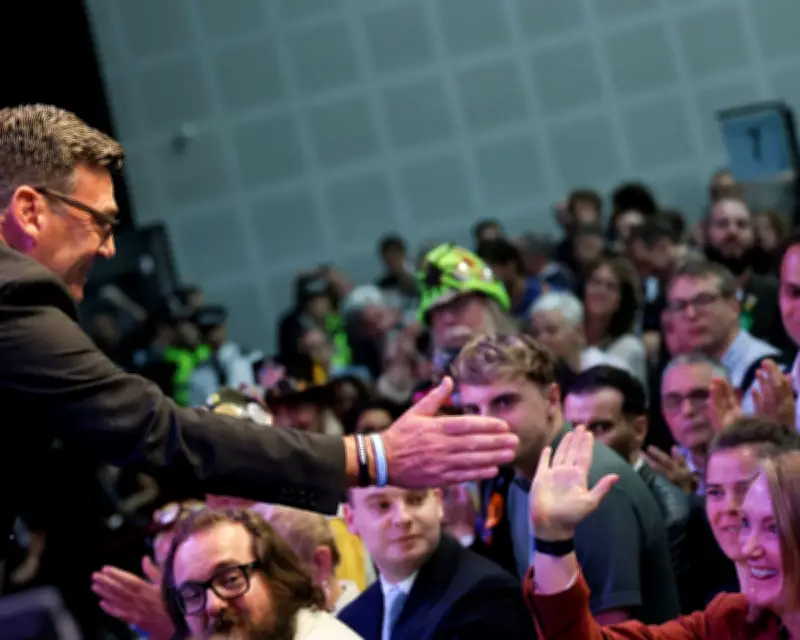
That tingle of emotion you felt when you awoke today? That is the long-lost feeling of progressive hope. That it comes from Makerfield is all the more remarkable. Reform has been defeated in a seat that it should have won at a canter – trailing Labour, even when its voteshare is combined with that of Restore. It finished second there in the 2024 election and it recently won all of the council seats. If Reform had faced any other politician, its candidate, Robert Kenyon, would be heading to Westminster.
But Reform was up against Andy Burnham, probably the only Labour candidate who could have held Makerfield. He is the only candidate for the party’s leadership who can defeat Reform, and the causes of Reform, and bring in a new era of progressive government. To say there was a lot riding on Makerfield would be a massive understatement.
Labour would have been in total despair had it lost this byelection – and that bears witness to the existential crisis the party is in. That situation will not change after this remarkable win. But it gives Labour a lifeline.

For Burnham, it was only ever going to happen this way. In echoes of Labour before Tony Blair was carried to the leadership in 1994, the party would come to him. It took Keir Starmer’s disastrous decision to block Burnham from standing in the Gorton and Denton byelection, and the meltdown Labour experienced in May’s local elections in England, Wales and Scotland, for the party to arrive at the inevitable conclusion: Burnham must lead it.
Only Starmer knows whether he will go with grace. He should be given every opportunity to do so, but be in no doubt that judgment day has come from both the party and the country. A dignified and orderly transition in September would be the best outcome, leaving Starmer to embed his legacy and Burnham to prepare for the challenges ahead. Because they are mighty.
It’s useful to consider the similarities and differences between 1997 and now. New Labour was born into a benign era of economic growth and global harmony. And while it was ultimately insufficient, it fed a rich intellectual debate about stakeholding, communitarianism and a politics that went beyond left and right.
Blair himself was respected but never loved by Labour, who begrudgingly accepted his third way agenda until their tolerance ran out. He said that his “project will be complete when the Labour party learns to love Peter Mandelson”. In that respect alone, Blair’s project failed. Will Burnham do better?
In short, he must. Otherwise, those he vanquished at the ballot box on Thursday will return in darker and more dangerous form. Unlike Blair, he will be welcomed to the leadership with incredible warmth. That popularity would have to be well deployed given the unstable world he would be governing in. But, as well as popularity, he brings a plan. Yes, it’s undercooked – but it’s a big plan nonetheless.
He wants to roll back the frontiers of markets that are too free and a state that is too remote. Fundamentally, “Burnhamism” is about the connection between transforming politics and transforming the economy and society. He gets it. Fixing our misfiring economy requires a rewiring of the state and a redrawing of our democracy. Starting with proportional representation, Burnhamism will look to disperse power to the whole country – and build a progressive consensus so that business and the public sector can invest in the long term.
This is an exciting agenda at a time when Labour politics has been poisoned by hyper-factionalism and a lack of ambition. Suddenly, progressives can breathe again, not just inside Labour but across the range of centre-left parties as we face up to a two-party system morphing into a two-block reality.
And what have we learned from the Starmer interlude? That you can’t govern without a vision, a plan or a deep public conversation about how to navigate and negotiate the complexities of the world we now live in.
Nothing can prepare you for being prime minister. But being a metro mayor is probably the best possible training. The ability to lead emotionally and build consensus for deep abiding change are now key attributes for running not just a region, but a nation.

So, as we respond to that tingle of hope, we all must strike the right tone. Burnham can and must lead, but this cannot just be on him. He has incredibly good political instincts and is developing a pragmatic but purposeful leadership style. People see in him a character that is nuanced, open, inquiring and imaginative. Uniquely, he bridges the working and cosmopolitan classes in terms of support. It means no one will get everything they want, but it does present a workable alliance for long-term change. So, in the words of the Italian political strategist Antonio Gramsci, we must “live without illusions without being disillusioned”.
Burnham’s campaign slogan was “Vote Andy for us”. Now his governing mantra must be politics by us. Because this is Labour’s last chance. It was plain when knocking on doors in Makerfield that this was a vote for Andy, not Labour, and they were only going to give him one chance. But he (and we) must deliver. A new dawn has broken, has it not?