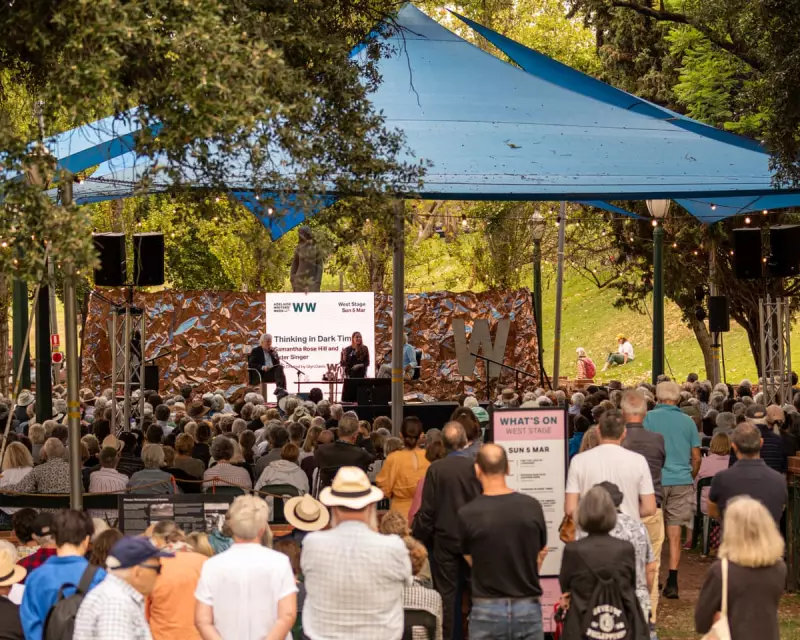
Award-winning journalist and professor Peter Greste has made a principled stand by withdrawing from this year's Adelaide Writers' Week, following the festival board's controversial decision to remove author Dr Randa Abdel-Fattah from the programme.
A Decision Driven by Fear
Greste, a former foreign correspondent and director of the Alliance for Journalists' Freedom, stated that his career has been fundamentally shaped by a commitment to free speech. This principle guided his work as a journalist, was central to the campaign for his release from an Egyptian prison, and now underpins his difficult choice to step away from the literary festival.
The catalyst was an announcement made by the Adelaide Festival board on Thursday. The board removed Dr Abdel-Fattah, a writer and academic, not for anything she planned to say at the event, but due to past statements re-examined in the tense aftermath of the Bondi Junction attack. The board cited a need for "cultural sensitivity at this unprecedented time."

While Greste unequivocally condemned the horrific Bondi attack and expressed empathy for communities living in fear, he argued the board's response was a grave error. He contends that fear narrows moral and intellectual horizons, leading to a dangerous simplification of complex voices into categories of 'safe' and 'unsafe'.
The Defence of the 'Grey Zone'
Central to Greste's argument is the concept of the "grey zone" – the essential civic space where people of differing identities and beliefs can coexist and debate without being forced to choose sides. He draws a direct parallel to a 2015 essay published by Islamic State, the ideology that inspired the Bondi attackers, titled "The Extinction of the Grey Zone."
"Extremist violence seeks to polarise," Greste writes. "It aims to strip away nuance and force us into ideological, sectarian or ethnic camps. Our response should not be to help that project by shrinking civic space further."
He warns that when participation in public cultural life is judged not by potential contribution but by whether past words might cause discomfort in a volatile climate, it creates an alarmingly fragile basis for curating ideas. This logic, he believes, should trouble anyone committed to open civic debate.
A Matter of Principle, Not Agreement
Greste is careful to clarify that his protest is not an endorsement of Abdel-Fattah's specific views. "I do not need to agree with Abdel-Fattah's views to believe that removing her in this way is wrong," he states. The issue is one of principle and precedent. If writers can be disqualified based on past statements and shifting political winds, then participation becomes contingent on institutional nervousness rather than intellectual integrity.
His withdrawal is framed not as a rejection of the festival itself or its many dedicated staff, but as a specific protest against a decision he sees as undermining the event's role as a guardian of the vital grey zone. The resignation of three board members and the chair following the controversy underscores the divisive nature of the decision.
Greste concludes by insisting that fear must not be allowed to do the work of extremists. By stepping away, he aims to highlight that protecting the space for difficult, nuanced conversation is more crucial than ever in times of tension.