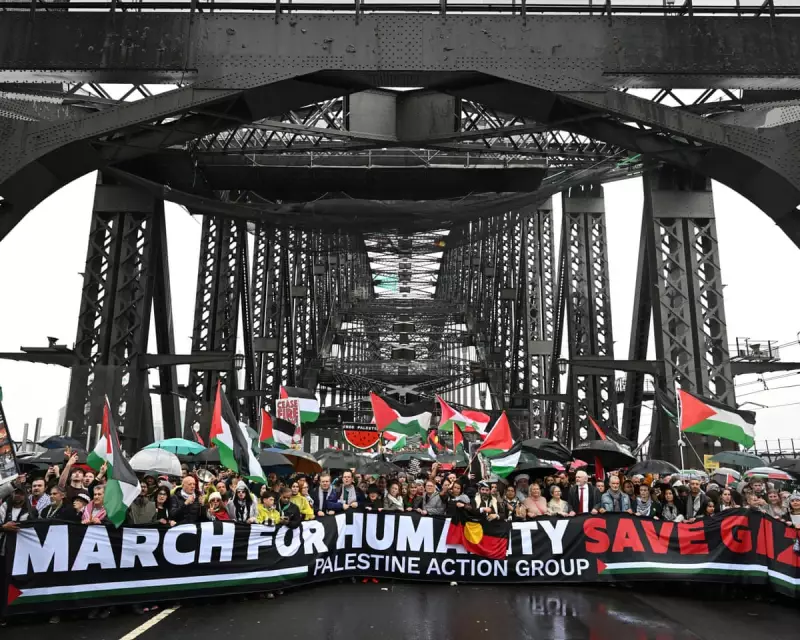
Activist organisations in New South Wales are mounting a significant legal challenge against the state government's contentious new protest laws, which they argue unlawfully strip away the fundamental right to peaceful assembly.
Coalition of Groups Prepares Supreme Court Fight
Three groups that regularly organise demonstrations in Sydney – the Palestine Action Group Sydney, Jews Against the Occupation 48, and the Blak Caucus – have announced their intention to launch a constitutional challenge in the Supreme Court. They plan to act as soon as the legislation, which was before the NSW upper house on Tuesday, is passed by parliament.
The coalition argues the new laws represent a severe infringement on the implied right to political communication within Australia's constitution. Notably, they will seek standing for the challenge without first having a protest permit application rejected, given the broad constitutional nature of their claim.

Laws Labelled a 'Betrayal' of Peaceful Protest
Flanked by representatives from a dozen supporting organisations, Palestine Action Group convener Josh Lees condemned the Minns government's approach. "The Minns government is trying to strip away the right to peacefully protest for everyone," Lees stated, adding the ban could last for "up to three months at a time with no evidence at all to say that this is going to make anyone safer."
Lees emphasised that the Palestine solidarity movement has been overwhelmingly peaceful for years, protesting "against the horrific violence and genocide playing out in Gaza." While his group has no immediate protest planned, he warned they "would need to resume protesting at some point," citing that Israel had killed over 400 Palestinians since a recent ceasefire was announced.
Broad Concerns Over Chilling Effect on Democracy
Lawyer Nick Hanna, advising the groups, warned the legislation in its current form could effectively ban all protests for any cause, whether left-wing or right-wing. "That is what's obviously going to be deeply concerning to the Australian public," Hanna said, highlighting the nation's proud history of protest movements securing many rights taken for granted today.
The laws would ban processions (moving protests) and grant police powers to move on static protests under certain circumstances. The groups also criticised the government's plan to ban the phrase "globalise the intifada," which Lees explained means supporting Palestinian uprisings against oppression. He argued that Premier Minns' ban risked making the rarely used phrase more popular.
Political Backlash and Widespread Support for Challenge
The legal challenge has garnered support from a diverse alliance, including climate group Rising Tide, the NSW Council for Civil Liberties, the NSW Greens, and Labor Friends of Palestine. The latter's convener, Peter Moss, pointed to a significant disconnect between the Labor leadership and its membership.
Moss referenced the massive August march across the Sydney Harbour Bridge protesting Israel's conduct in Gaza, which Premier Chris Minns opposed. Police estimated 90,000 attendees, while organisers claimed up to 300,000. "On that march were 200,000 or 300,000 middle Australians," Moss said, including hundreds of Labor Party members, MPs, and councillors. "That's the betrayal," he concluded.
The legislation, fast-tracked in the wake of the Bondi attack, is expected to face a rigorous legal battle that will test the boundaries of protest rights and free speech in New South Wales.