Weekly Protests Demand Closure of Florida's 'Alligator Alcatraz' Immigration Jail
Weekly Protests Target 'Alligator Alcatraz' Immigration Jail

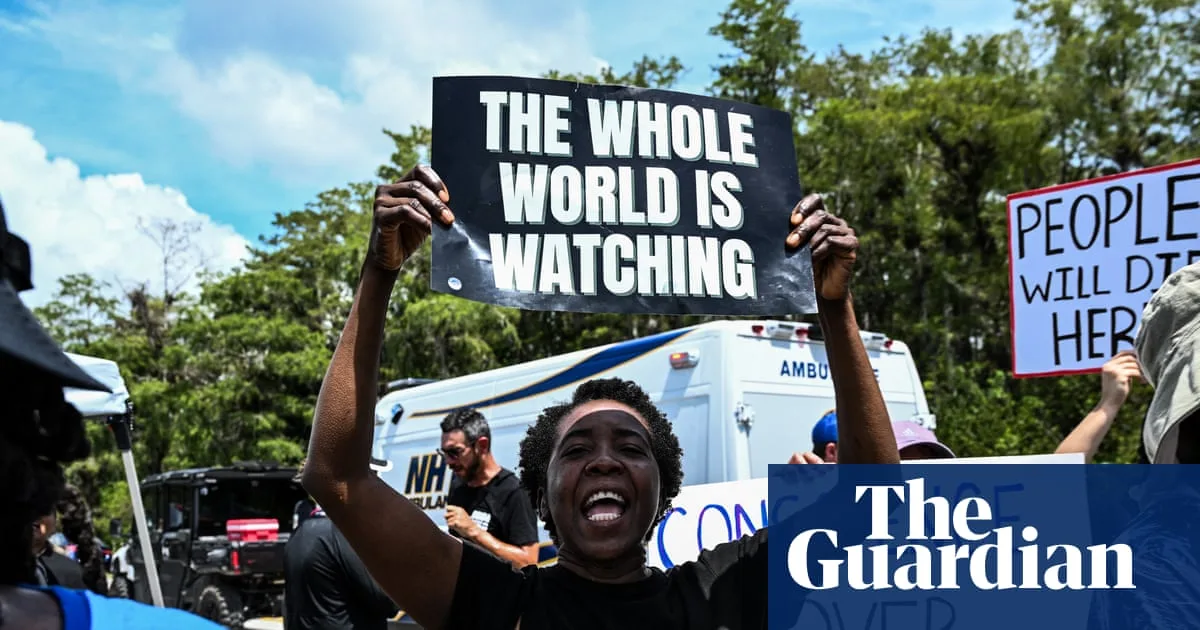
Every Sunday afternoon, a determined convoy winds its way through the remote swamplands of the Florida Everglades. Their destination is a controversial immigration detention facility, dubbed 'Alligator Alcatraz' by its critics, where they stand in vigil to demand its immediate closure.

A Sustained Protest Against Harsh Conditions

The weekly protests began in August 2025, just a month after the remote camp opened. The facility was celebrated by former President Donald Trump for its harsh conditions and hailed by Florida's Republican Governor, Ron DeSantis, as a model for an aggressive detention and deportation agenda. Despite a federal judge's order for its closure in August and a subsequent reversal by an appeals court in September, the detention centre remains operational at full capacity.

Protesters have braved the brutal south Florida heat and torrential summer rains, with their numbers swelling over time. Their focus has sharpened on alleged human rights abuses and violence inflicted on detainees, with voices growing louder as the holiday season approaches, drawing expectations of thousands more participants.

The Faces of the Resistance

At the heart of the movement are individuals and families directly impacted by the US immigration system, alongside seasoned activists and community leaders.

Arianne Betancourt attends the vigils for her father, Justo, 54. The Cuban-born man was detained during a routine immigration check-in in October and taken to 'Alligator Alcatraz'. A diabetic, he has reportedly been denied his twice-daily insulin injections. "They just told him he can get it in Mexico," said Betancourt, who finds solidarity with other families at the protests. She fears her father could be deported without due process, describing a system with "no options, no actual legal process, nothing you can appeal."

Andy Oliver, pastor of Allendale United Methodist Church in St Petersburg, organises buses to bring parishioners and locals to the site. He draws a direct line from his faith to the protest, stating, "Jesus was born as a refugee. He spent most of his ministry with people on the margins. I think that's where Jesus would be, he'd be calling for these prisons to be emptied."

For John Reynolds, an 81-year-old US Army veteran, the vigils are a continuation of a lifetime questioning injustice. Having served in Vietnam, he looks at the treatment of detainees and questions what has changed. "The way this immigrant population is being tortured, it's just beyond anything I've ever seen," he said, criticising the actions of immigration authorities.

Nonagenarian civil rights activist Lois Cohen, 91, who marched in the 1940s and lived through the Civil Rights era, says nothing has angered her more. "Other than the Holocaust, I can't imagine this any worse," she stated, emphasising the emotional impact of witnessing the protests firsthand.

A Growing Movement with National Ambitions

The coordination of the weekly action is largely credited to Noelle Damico, director of social justice at the Workers Circle. She has helped forge a diverse coalition including church groups, trade unions, veterans, Native American tribes, and various advocacy organisations.

"One of the most rewarding parts of this ongoing resistance is that people are finding one another. They're breaking their isolation," Damico said. She reports that buses are already being filled for upcoming weekends and frames the struggle in unequivocal terms. "It's not a matter of *if* 'Alligator Alcatraz' and the rest of the sprawling, cruel detention network will one day shut down, it's a matter of *when*. And when is up to us."

Damico and the protesters send a clear message to the Trump administration: "It's not up to Donald Trump. It's not up to Stephen Miller. It's not up to Kristi Noem. It's up to us. And we will end this." As the vigils persist, they aim to keep national attention fixed on the remote Florida jail and the broader US immigration detention system.




