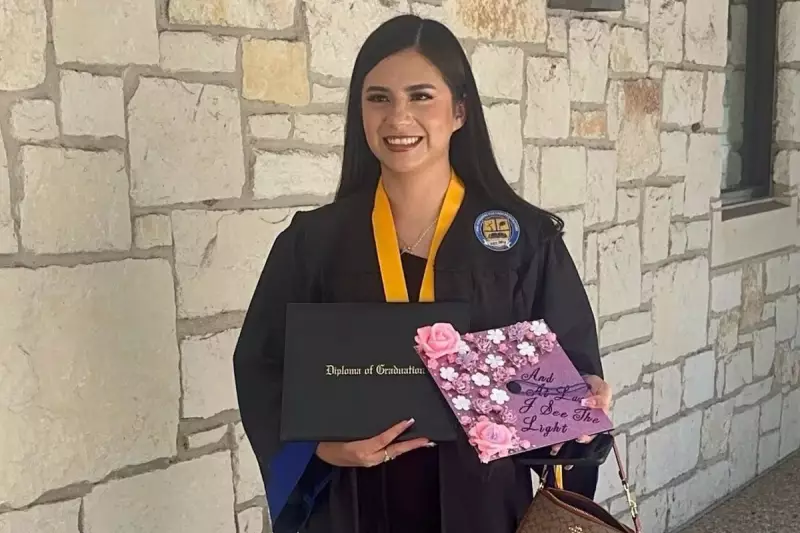
The US government has issued a formal apology in a federal court for what it termed a "mistake" that resulted in the deportation of a 19-year-old college student, despite an emergency judicial order demanding she remain in the country.
A Swift Deportation Defying a Judge's Directive
Any Lucia Lopez Belloza, a freshman at Babson College in Massachusetts, was detained at Boston's airport on 20 November and flown to Honduras just two days later. This removal proceeded even though a federal judge had issued an explicit order on 21 November, instructing authorities to keep her within Massachusetts or elsewhere in the United States for a minimum of 72 hours.
Lopez Belloza, whose family emigrated from Honduras in 2014, is now living with her grandparents and continuing her studies remotely. She is not in detention and has been able to visit family in El Salvador.
An 'Inadvertent' Error and a Contentious Legal Argument
During a hearing in Boston's federal court, Assistant U.S. Attorney Mark Sauter offered a sincere apology on behalf of the government. He stated that an Immigration and Customs Enforcement (ICE) deportation officer erroneously believed the court's order no longer applied once Lopez Belloza had left Massachusetts.
The officer failed to activate a system that alerts other ICE personnel to halt a removal when a case is under judicial review. "It was an inadvertent mistake by one individual, not a willful act of violating a court order," Sauter told the court.
However, the government controversially maintained that this error should not affect the ultimate outcome of her case. Officials argued the deportation was lawful because an immigration judge had ordered the removal of Lopez Belloza and her mother back in 2016, and their appeal was dismissed in 2017.
A Pattern of Defiance and the Question of Jurisdiction
This incident is not isolated. It marks the latest in a series of cases where deportations have been executed in defiance of court rulings:
- Kilmar Abrego Garcia was deported to El Salvador despite a protective order, only returning after U.S. Supreme Court intervention.
- Last June, a Guatemalan man was repatriated after a judge found his removal from Mexico "lacked any semblance of due process."
In court, the government also contended that the judge lacked jurisdiction because Lopez Belloza's lawyers filed their action several hours after she had already been transferred to Texas en route out of the country.
Her attorney, Todd Pomerleau, argued she was deported in clear violation of the order, depriving her of due process. "I was hoping the government would show some leniency and bring her back. They violated a court order," he said.
U.S. District Judge Richard Stearns called the situation a "tragic" bureaucratic error but suggested holding the government in contempt was unlikely as the violation did not appear intentional. He indicated Lopez Belloza might explore applying for a student visa as a potential path forward.