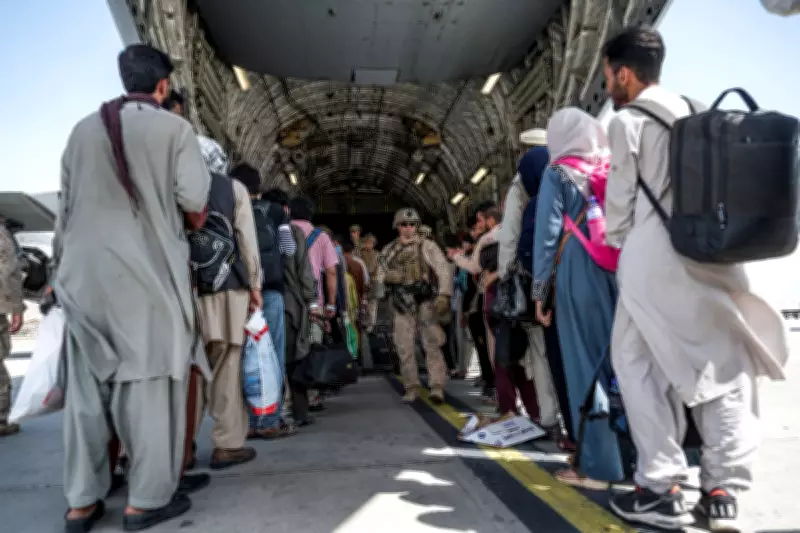
The United Kingdom has been accused of abandoning its Afghan allies by leaving them with “no safe route out” of the country after a controversial decision to terminate evacuation support for those promised sanctuary. Defence Minister Luke Pollard announced on Tuesday that nearly 9,000 Afghans eligible for relocation to the UK but still awaiting processing would no longer receive assistance from British authorities to flee the Taliban. Instead, they must make their own way to a third country, such as Pakistan, where they can access housing and visa support.
Reaction from MPs and Campaigners
The announcement has drawn sharp criticism from MPs, campaigners, and legal experts who have worked with Afghans left in limbo after serving alongside British forces. Tan Dhesi, chair of the defence committee, expressed his intention to question the minister in May, asking: “We will want to ask why the government’s policy has changed, and why only now, and what help, if any, will be available to eligible Afghans who are unable to self-move?” He highlighted that some eligible Afghans are now living in hiding and poverty, having exhausted their resources while following UK government advice to wait for instructions.
Former Afghan interpreter Rafi Hottak, a campaigner for those who served with British troops, described the decision as leaving allies “trapped in Afghanistan with no real support, no safe route out, and no practical alternative.” He added: “Many served alongside or supported British forces at great personal risk, yet for almost five years they have been left waiting, appealing, and hoping. During this time, families have survived with little or no income, selling assets, borrowing money, and living under constant fear.” He called the move a “moral and legal failure,” questioning why hope was given if no genuine evacuation plan existed.

Legal and Moral Concerns
Erin Alcock, a lawyer at Leigh Day representing Afghans in limbo, described the announcement as “a shocking and deeply disappointing development.” She noted: “We have clients stuck in Afghanistan, unable to afford the inflated costs of visas to travel to a third country for onward processing by the Home Office. They have patiently waited in fear to be helped, only to now be told help is not coming.”
Colonel Simon Diggins, a former defence attaché in Afghanistan, linked the decision to a broader hostile immigration environment. He said: “The government is trying to deem Afghanistan a safe country to return illegal immigrants to. It feels like a repetition of Theresa May’s hostile environment policy. I still believe we have a moral responsibility to those who served alongside UK troops, because the Taliban is still coming after them. These reprisals are mostly personal now.” He suggested a pragmatic approach involving frank discussions with the Taliban government about returns and sanctuary.
Impact on Vulnerable Groups
Wendy Chamberlain, Liberal Democrat MP and chair of the parliamentary committee on Afghan women and girls, warned that the MoD’s decision would “effectively force some of the most vulnerable to find their own way to safety in third countries,” risking abandonment of women who “face a systematic erosion of their fundamental human rights.”
An independent caseworker, known as Person A, who alerted the MoD to a major Afghan data breach in 2023, expressed “grave concerns that the minister and the MoD do not appreciate the huge levels of financial debt that Afghans are taking on to self-move to a third country.” They noted that sums of $20,000 to $30,000 are not uncommon, and warned that once in Pakistan, Afghan families can be targeted for deportation even when their visas are valid.