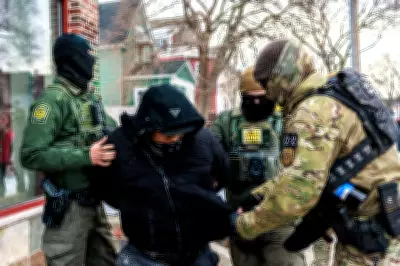
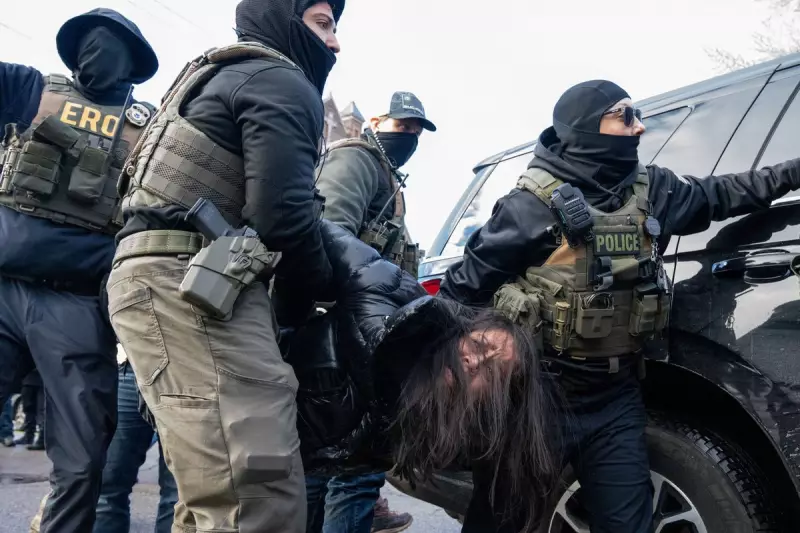
Nearly one year after Donald Trump returned to the White House vowing to execute the "largest deportation operation" in American history, his administration's aggressive campaign has transformed city streets into conflict zones, sparking widespread unrest and a mounting legal backlash.
From Campaign Promise to Urban Conflict
The president's drive to rapidly arrest and deport tens of thousands of people has seen a massive surge of federal officers into major metropolitan areas. Masked agents from Immigration and Customs Enforcement (ICE) and Customs and Border Protection (CBP), their identities obscured, have become a common and feared sight. Incidents range from a woman being forcibly removed from her car in Minneapolis while en route to a doctor, to a 21-year-old protester in Santa Ana, California, requiring eye surgery after being hit at close range by a riot-control weapon.
These events are part of a broader pattern that Democratic officials warned would unfold. They argued that deploying militarised immigration forces would deliberately stir unrest, providing a pretext for the president to invoke the Insurrection Act and deploy active-duty troops in cities largely governed by his political opponents. In Washington D.C. last summer, Trump seized control of the city's police department, deploying the National Guard and federal officers under claims the capital was overrun by criminals.
Legal Challenges and Allegations of 'Organised Brutality'
The administration's tactics have prompted fierce resistance from state leaders. Minnesota Governor Tim Walz declared the federal operation had long ceased to be "organised immigration enforcement" and had instead become "a campaign of organised brutality." The state, along with its Attorney General Keith Ellison, has filed a lawsuit accusing the Trump administration of "spreading terror," alleging that communities have been subjected to racial profiling, harassment, and forced business closures.
Federal judges have begun to intervene against the conditions within the rapidly expanding detention network. A Trump-appointed judge on Long Island rebuked "chillingly brutal conditions" in one facility, stating the agency's behaviour "shocks the conscience." Detainees have submitted sworn testimonies alleging routine beatings and squalid conditions, with some reporting serious injuries.
The Staggering Scale of Enforcement
The operational scale is unprecedented. Under Homeland Security Secretary Kristi Noem, ICE has been transformed into the nation's largest federal law enforcement agency, with a budget nearing $15 billion annually—a sum that eclipses the military budgets of many nations. According to Homeland Security data, more than 622,000 people were deported by the end of 2025.
However, the targets of this campaign have raised significant concerns. Data analysed by the Cato Institute indicates that as many as 73% of individuals booked into ICE custody in the past year had no criminal convictions. Furthermore, the administration has "de-legalised" over 1.5 million people who were living and working in the US legally, abruptly reclassifying them as undocumented after changing immigration rules.
The campaign shows no sign of abating. Following the fatal shooting of 37-year-old Renee Good by an ICE officer in Minneapolis—an event that ignited fresh protests—Trump promised a "day of reckoning" for Minnesota, ominously tweeting: "RETRIBUTION IS COMING." As the legal and political battles intensify, American cities remain the frontline of a deeply divisive domestic policy.