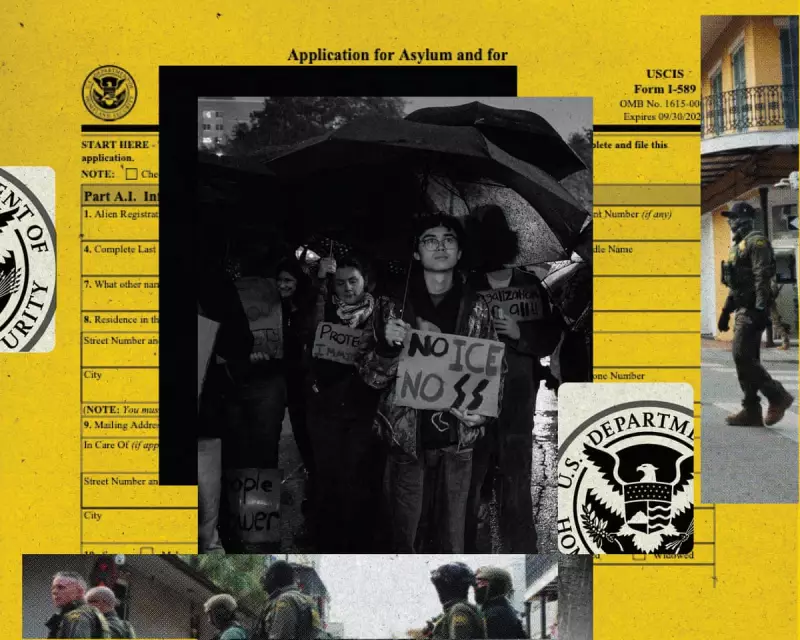
Hopes that President Donald Trump's incendiary rhetoric on immigration would remain just that have been decisively shattered in recent days. A tragic shooting near the White House has catalysed an extraordinary policy shift, moving from words to concrete action targeting foreign-born communities across the United States.
A Thanksgiving Tragedy Sparks a Political Firestorm
The chain of events began on the eve of Thanksgiving, 26 November 2025. A lone gunman opened fire on two West Virginia National Guard members, Sarah Beckstrom, 20, and Andrew Wolfe, 24, as they patrolled outside Washington DC's Farragut West metro station. Beckstrom succumbed to her injuries the following day, while Wolfe remains in a critical but recovering condition.
However, the President's focus swiftly pivoted from the victims to the origins of the suspected assailant. The charged individual is Rahmanullah Lakanwal, 29, a recent immigrant from Afghanistan. Lakanwal had served with a CIA-linked force before arriving in the US in 2021 under a resettlement programme created by the Biden administration. He was granted asylum by Trump's own administration this year after vetting but reportedly faced acute mental health struggles.
From Rhetoric to Reality: A Sweeping Immigration Crackdown
Ignoring these nuances, President Trump used the tragedy to announce a drastic hardening of immigration policy. On Thanksgiving Day, he issued a social media statement devoid of sympathy for Afghan allies. Instead, he vowed to "permanently pause migration from all Third World Countries", terminate millions of what he called "Biden illegal admissions", and remove anyone not deemed a "net asset".
He further pledged to denaturalise US citizens accused of undermining "domestic tranquility" and deport "foreign nationals" considered incompatible with "Western Civilization". This vision was championed by Stephen Miller, the White House deputy chief of staff and architect of the crackdown, who argued that mass migration imports entire societies and their problems.
The tangible impact was immediate and severe. In Minnesota, home to a large Somali community, Professor Larry Jacobs reported people were too frightened to leave their homes, attend school, or go to work, fearing ICE kidnappings. Trump escalated his attacks, calling Somalis and Congresswoman Ilhan Omar "garbage" in a cabinet meeting, remarks shamefully met with applause.
ICE Operations and Legal Challenges Intensify
The rhetoric quickly translated into enforcement. Immigration and Customs Enforcement (ICE) launched "Operation Catahoula Crunch" in New Orleans, targeting 5,000 arrests. Similar raids occurred in Chicago, Los Angeles, and the Twin Cities of Minneapolis and St. Paul.
Homeland Security Secretary Kristi Noem amplified the vitriol, recommending a "full travel ban" on 32 unspecified countries, far exceeding Trump's first-term Muslim ban. The crackdown's reach extended to legal residents, with reports of green card holders having their naturalisation appointments cancelled.
Legal experts like Professor Amanda Frost have warned aspects of this campaign are illegal, noting presidential authority does not extend to cancelling green cards or denaturalising citizens based solely on national origin. Meanwhile, former Republican congressman Joe Walsh suggested Trump's sagging approval ratings are driving an ever-more racist and extreme strategy to mobilise his base.
The events of late November 2025 mark a stark turning point, demonstrating how a single act of violence can be leveraged to justify a sweeping assault on immigrant communities, with profound consequences for American society and the rule of law.